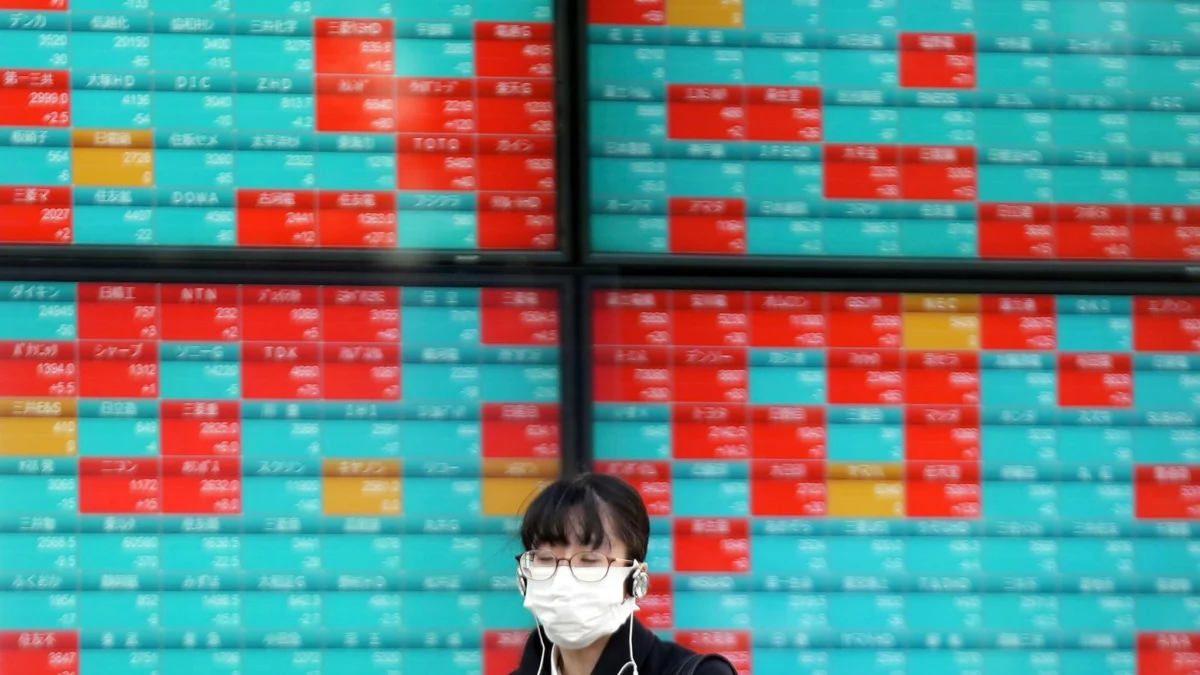
SINGAPORE — Asian equity markets kicked off the week on a robust note, fueled by growing investor optimism that the United States Federal Reserve may soon pause its aggressive cycle of interest rate hikes. As traders digested cooling economic data from Washington, risk appetite returned to regional bourses, with Tokyo leading the charge in a session characterized by optimism, albeit tempered by widespread regional holidays.
Main Facts: A Bullish Start to the Week
The primary driver of Monday’s market rally was a distinct shift in sentiment regarding U.S. monetary policy. The Nikkei 225 index in Tokyo closed with a gain of 2.5%, reaching a milestone of 70,038 points. Similarly, the broader Topix index climbed 1.2% to settle at 4,139 points.
This rally was not merely a local phenomenon but a broader reaction to macroeconomic indicators suggesting that the U.S. labor market—a key metric for the Federal Reserve—is showing signs of softening. For investors, this cooling is not viewed as a harbinger of doom, but rather as the "goldilocks" signal that the Fed’s tightening campaign is finally achieving its goal of curbing inflation without necessitating further restrictive interest rate hikes.
However, the session was notably subdued in terms of trading volume. Significant markets, including Shanghai, Shenzhen, and major exchanges in South Korea and parts of Australia, remained closed for public holidays. This lack of participation from major institutional hubs in China meant that the day’s momentum was largely dictated by the spillover effect from positive sentiment on Wall Street late last week.
Chronology of Market Sentiment
The path to Monday’s rally was paved by the release of U.S. labor market data that fell short of market expectations. The timeline of this shift in sentiment is critical to understanding the current market psyche:
- Mid-Last Week: Markets were pricing in a 64% probability of a significant interest rate hike during the next Federal Open Market Committee (FOMC) meeting. Investor anxiety was high, fueled by persistent inflation data and hawkish rhetoric from central bank officials.
- Friday: The U.S. Bureau of Labor Statistics released employment figures that missed consensus forecasts. The data, which revealed a slower pace of job creation and downward revisions for previous months, sent shockwaves through the Treasury markets, with yields falling sharply as traders recalibrated their expectations for the Fed.
- Monday Morning: Asian markets opened with immediate upward momentum. Japan’s Nikkei 225 surged in early trading, as investors brushed aside concerns regarding domestic economic drag in favor of the relief provided by the U.S. pivot narrative.
- Monday Mid-Day: As trading progressed, the absence of activity in China and South Korea acted as a stabilizer, preventing excessive volatility. By the close of the Tokyo session, the index remained firmly in positive territory, reflecting a sustained conviction among investors that the peak of the interest rate cycle is now in sight.
Supporting Data: The Pivot in Probability
The shift in investor expectation is quantified by the stark change in interest rate hike probabilities. According to market-based gauges, the perceived likelihood of a rate increase this month has plummeted to just 22%, a precipitous drop from the 64% consensus held only one week prior.
This massive adjustment in sentiment is underpinned by structural concerns regarding the U.S. economy. While the labor market remains relatively stable, the granularity of the data paints a more complex picture. Jose Torres, a senior economist at Interactive Brokers, noted, "The labor market conditions are stable overall, but the downward revisions from Friday signal that the U.S. economy has seen job losses in two of the nine months this year."
This data point is pivotal. The implication is that the Federal Reserve, while committed to price stability, is now boxed in by the dual mandate. The risk of further job losses provides a compelling argument against a further 100-basis-point hike, which many analysts previously feared would be the catalyst for a systemic slowdown. Consequently, capital is rotating back into Asian equities, which were previously battered by the "strong dollar" narrative that often accompanies high U.S. interest rates.
Official Responses and Expert Analysis
The consensus among market analysts is that we are witnessing a transition phase in global finance. For months, the "higher-for-longer" narrative dominated boardrooms and trading floors. Now, the rhetoric is shifting toward "sustainability."
Economists point out that the Fed is no longer operating in a vacuum. With global growth already facing headwinds from geopolitical tensions and supply chain fragmentation, the U.S. central bank is under immense pressure to avoid a policy error.
"The Federal Reserve is clearly entering a period of data dependency," says a veteran market strategist based in Singapore. "They have reached a level of restrictive territory where the marginal cost of another hike is potentially higher than the marginal benefit of further cooling inflation. The market has sensed this, and the relief rally we are seeing in Tokyo and beyond is a direct reflection of that realization."
While the Fed has not officially signaled a pause, the market’s aggressive repricing suggests that the era of "shock and awe" interest rate hikes is coming to a close. This has provided a much-needed breathing room for Asian markets, which rely heavily on the stability of the USD/local currency exchange rates and the availability of global liquidity.
Implications for Global Investors
The implications of this shift are far-reaching, affecting everything from currency markets to corporate earnings.
1. The End of the "Strong Dollar" Dominance
For the better part of the last year, a surging U.S. dollar acted as a vacuum for global capital, drawing funds out of emerging and developed Asian markets. As the prospect of a Fed pause becomes more solidified, the greenback is likely to soften. This depreciation of the dollar is a boon for Asian economies, as it lowers the cost of servicing dollar-denominated debt and makes local exports more competitive.
2. A Focus on Corporate Fundamentals
With the "macro noise" of interest rate uncertainty beginning to fade, investors are expected to shift their focus back to corporate fundamentals. As the holiday season concludes in China and activity resumes, analysts expect a flurry of earnings reports and stock-specific analysis to take center stage. The absence of such data on Monday was the only factor preventing a more significant rally, suggesting that as these markets reopen, we could see a "catch-up" effect.
3. Monetary Divergence
A key trend to watch will be the divergence between the Federal Reserve and other major central banks. While the Fed considers a pause, other central banks in Asia, such as the Bank of Japan, are navigating their own unique challenges regarding yield curve control and inflation targets. The market will be watching closely to see if the Fed’s pause allows the Bank of Japan more room to maneuver without triggering a massive currency devaluation.
4. Volatility Management
Despite the current optimism, risks remain. A premature pause could lead to a resurgence in inflation, forcing the Fed to revert to a hawkish stance later in the year. Investors are advised to remain cautious, as the market is currently pricing in a "soft landing" scenario—a notoriously difficult outcome to achieve in economic history.
Conclusion
Monday’s trading session serves as a testament to the influence of U.S. economic policy on the global financial architecture. The rally in Tokyo and the calm in regional markets are not merely local reactions to domestic growth; they are the ripple effects of a massive global shift in the interest rate narrative.
As we move further into the week, the focus will shift from the initial shock of the U.S. labor data to the broader economic implications. With the Chinese markets set to return, the true test of this market sentiment will be whether the rally can be sustained in the face of deeper, more granular economic analysis. For now, however, the message from the markets is clear: the era of aggressive tightening is being challenged, and investors are responding with a cautious, yet undeniable, surge of optimism.