


As the world turns its gaze toward Stockholm and Oslo this week, the annual ritual of the Nobel Prize announcements marks a significant milestone. For 125 years, these accolades have served as the ultimate barometer for human progress, intellectual rigor, and humanitarian effort. From the quiet drafting of a testament in 1895 to the global media spectacle of today, the Nobel Prize remains a singular force in shaping history.
The Genesis of an Icon: Alfred Nobel’s Vision
The story of the world’s most prestigious award began not with a grand ceremony, but with a document of introspection. On November 27, 1895, Alfred Nobel, the Swedish inventor of dynamite whose wealth was built on the foundations of industrial chemistry and weaponry, signed his final will and testament in Paris.
Disturbed by the potential misuse of his inventions and seeking a legacy that transcended the destructive nature of war, Nobel directed that the bulk of his vast fortune be invested into a fund. The annual interest was to be distributed as prizes to those who, during the preceding year, had conferred the "greatest benefit to humankind."
The will specified five distinct fields: Physics, Chemistry, Physiology or Medicine, Literature, and Peace. It was a visionary blueprint that prioritized the advancement of knowledge and the alleviation of human suffering. When the first prizes were awarded in 1901—five years after Nobel’s death—the world was introduced to an institution that would soon become synonymous with genius and moral leadership. While the "Nobel Memorial Prize in Economic Sciences" was added later in 1969 by the Swedish Riksbank, the original five remain the core pillars of the Nobel brand.
A Chronology of Excellence
The history of the Nobel Prize is essentially a timeline of the 20th and 21st centuries.
- 1895: Alfred Nobel signs his will, establishing the Nobel Foundation.
- 1901: The inaugural Nobel Prizes are awarded. Wilhelm Conrad Röntgen receives the prize in Physics for his discovery of X-rays.
- 1903: Marie Curie becomes the first woman to win a Nobel Prize (Physics), later becoming the only person to win in two different scientific categories (Chemistry, 1911).
- 1969: The Prize in Economic Sciences is established, expanding the scope of the institution.
- 2000s–Present: The Nobel committees have increasingly focused on interdisciplinary breakthroughs, recognizing the complexities of modern climate change, gene editing, and global conflict resolution.
- 2026: Celebrating 125 years of the Nobel tradition, the institution continues to serve as the global standard for academic and humanitarian excellence.
Why the Nobel Remains the Gold Standard
In an era of hyper-specialization and digital noise, why does the Nobel Prize retain such an ironclad grip on public attention? Ralph Burmester, an esteemed exhibition curator and science historian at the Deutsches Museum, argues that the secret lies in the institution’s early commitment to internationalism.
"At the turn of the 20th century, most academic awards were narrow, nationalistic affairs," Burmester explains. "The Nobel Prize was radical because it was designed to be borderless. By choosing neutral Sweden and Norway as the hosts—nations that, at the time, were not entangled in the complex power-bloc alliances of the Great Powers—the Nobel committees established a reputation for impartiality that has survived over a century."
This neutrality provided a sanctuary for intellectual pursuit, allowing the prizes to rise above the political fray of two World Wars and the Cold War. Furthermore, the sheer caliber of the early laureates—Albert Einstein, Paul Ehrlich, and Max Planck—cemented the prize’s status. To be named a Nobel laureate is to be placed in a lineage of history-makers, creating an "aura of excellence" that no other award has successfully replicated.
The Mechanics of Selection: A Rigorous Gauntlet
Behind the glitz of the medal ceremony lies a grueling, year-long bureaucratic process that is as secretive as it is exhaustive. The selection process is decentralized, with specific committees tasked with evaluating candidates for each category.
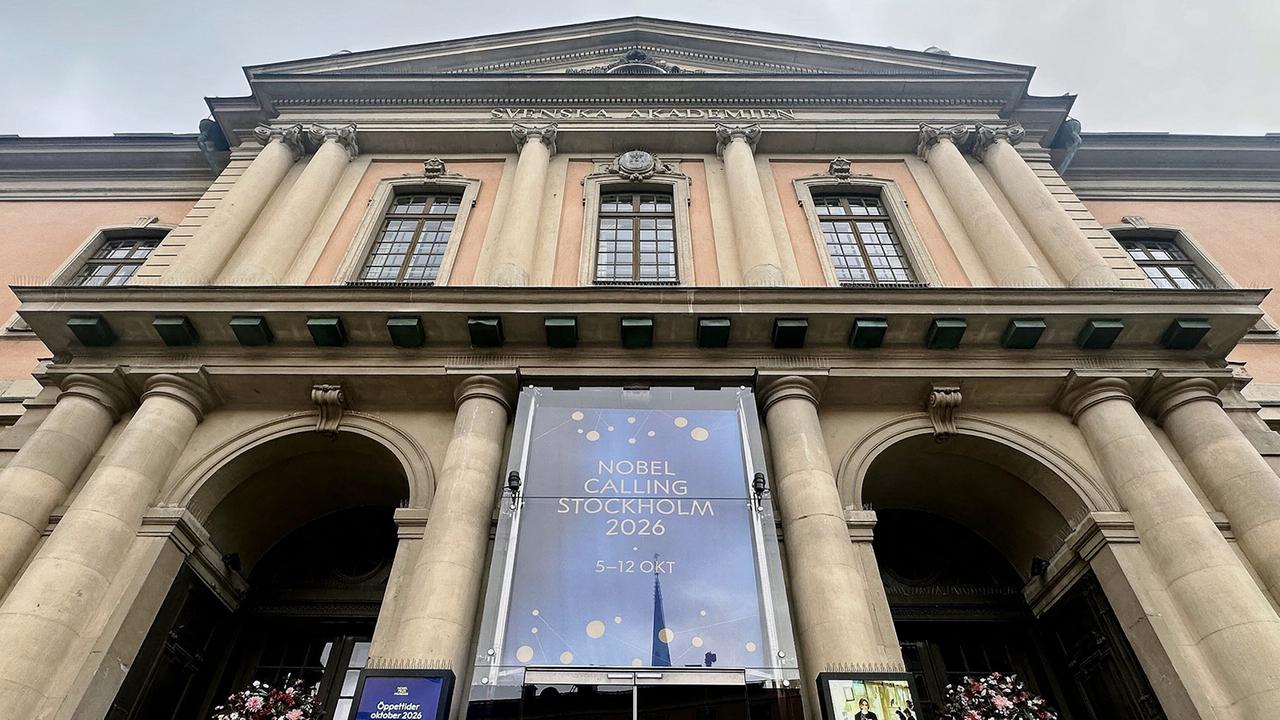
Professor Heiner Linke, a renowned nanophysicist at Lund University and a current member of the committee evaluating Chemistry candidates, provides insight into the "machine" of selection. "The process begins the moment the previous year’s ceremony concludes," Linke notes.
- Global Nomination: Every autumn, thousands of professors, past laureates, and researchers from across the globe are invited to submit nominations. These are not open to the public, ensuring that the process remains focused on peer-vetted merit rather than popularity.
- External Review: The committees do not work in isolation. They solicit detailed assessments from external subject-matter experts to verify the impact and reproducibility of the nominees’ work.
- Deliberation: The committees debate the shortlists throughout the year. The final selection is typically not settled until the very morning of the announcement. This adds an element of genuine suspense, a rarity in modern scientific circles.
This rigorous filtering process is designed to ensure that the prize is not merely a reward for a singular "eureka" moment, but often for research that has stood the test of time and fundamentally altered its field.
Implications: More Than Just a Medal
The impact of a Nobel Prize extends far beyond the $1 million cash award and the gold medal. For a scientist, it is the ultimate validation of a career. For a writer, it is a global coronation. For an activist, it is a protective shield and a megaphone for their cause.
Scientific Advancement
The prize often directs global funding and attention toward specific scientific disciplines. When the Nobel committee recognizes a breakthrough in CRISPR gene editing or mRNA vaccine technology, it accelerates policy shifts and investment in those sectors.
Socio-Political Influence
In the realms of Literature and Peace, the prize acts as a moral compass. By spotlighting authors from marginalized regions or activists fighting against authoritarianism, the committee often forces the international community to confront uncomfortable truths. As Burmester notes, "The Academy essentially acts as a global spotlight. When they highlight an individual or an institution, they are setting a political and social agenda for the following year."
Public Engagement
Perhaps the most significant implication is the bridge the Nobel Prize builds between the ivory tower and the general public. "What has changed significantly is how science is perceived in society," says Professor Linke. "During the week of announcements, the entire world watches. We explain why these discoveries matter—how they change the way we live, how they fight disease, or how they help us understand the cosmos. The Nobel Prize turns the abstract work of the laboratory into a narrative of human hope."
Conclusion: Looking Toward the Next Century
As we mark 125 years of the Nobel Prize, the institution faces a changing world. Challenges such as artificial intelligence, climate catastrophe, and the erosion of scientific trust require new ways of thinking. Yet, the core mandate established by Alfred Nobel in 1895 remains surprisingly resilient.
The prize continues to serve as a reminder that human ingenuity, when directed toward the "greatest benefit to mankind," is our most powerful tool. Whether it is a chemist in a Swedish lab or a peace activist in a conflict zone, the Nobel Prize ensures that the quiet, often unrecognized work of progress is given the loudest possible platform.
As the 2026 announcements commence, we are reminded not just of what we have achieved, but of the vast, untapped potential of the human spirit to solve the crises of the next 125 years. The Nobel Prize is not just a reflection of history; it is a catalyst for the future.












