Executive Summary: A Tale of Two Economies
On September 30, 2026, global financial markets presented a stark contrast between the European and North American outlooks. While Wall Street found cause for optimism in cooling price pressures, the German DAX index faced a day of significant decline, closing down 0.8% at 25,199 points. The primary driver for this bearish sentiment in Frankfurt was a wave of alarming inflation data across the Eurozone, which reignited fears of further interest rate hikes by the European Central Bank (ECB).
The market’s reaction underscores a growing sensitivity to macroeconomic indicators. As the DAX slipped below the critical 100-day moving average—a key technical indicator for medium-to-long-term trends—investors signaled a lack of confidence in the short-term outlook. This dip punctuated a difficult September, a month historically known for volatility, which saw the index shed 4% of its value, despite a modest 0.8% gain over the third quarter as a whole.
Chronology of the Trading Day
The trading session in Frankfurt began under a cloud of uncertainty. Early morning reports regarding the Eurozone’s inflation trajectory set the tone, with traders rapidly re-evaluating risk assets in light of the expectation that the ECB would be forced to maintain a hawkish stance.
- Morning: Early trading revealed a lack of buying momentum as institutional investors digested inflation data from France, Italy, and Germany.
- Mid-Day: Sentiment worsened as Volkswagen confirmed the termination of various long-standing collective bargaining agreements, sparking fears of labor unrest and operational instability.
- Afternoon: The downward trend accelerated as the Commerzbank share price plummeted, weighed down by a significant analyst downgrade.
- Close: The DAX finished at 25,199, failing to reclaim its 100-day support line, while US markets opened in the green, offering a glimmer of hope for global sentiment.
The Inflation Nexus: Why the ECB is Under Pressure
The primary catalyst for the day’s sell-off was the release of regional inflation figures. In Germany, the September inflation rate climbed to 3.3%, the highest level observed since late 2023. This figure significantly exceeds the European Central Bank’s mandate of price stability, which targets a mid-term inflation rate of 2%.
Analysts at Helaba noted that the market is already pricing in a hawkish shift from the ECB. "The data suggests that the inflation impulse is proving stickier than initially anticipated," the firm stated in a briefing. The market is currently factoring in a total rate hike by the end of the year, with a high probability of a secondary increase in the first quarter of 2027. This environment is inherently negative for equities, as higher interest rates increase the discount rate for future cash flows and make fixed-income alternatives more attractive.
Corporate Focus: Volkswagen’s High-Stakes Restructuring
Volkswagen (VW) dominated the corporate headlines today after the company announced its intention to cancel several collective bargaining agreements at the end of the year. Personalvorstand Arne Meiswinkel cited a "radically tightened economic environment" over the past 18 months, emphasizing the urgent need to make the company "future-proof."
The IG Metall Conflict
The decision has immediate implications for the German labor market. The IG Metall union, a powerhouse in German industrial relations, has reacted with sharp criticism. Daniela Cavallo, chair of the General Works Council, explicitly warned of a "fierce confrontation" as the year draws to a close. Investors fear that a protracted labor dispute could hinder production and disrupt the company’s transition to electric vehicles, leading to a climate of institutional uncertainty that saw VW shares struggle throughout the session.
Commerzbank and the UniCredit Overhang
The banking sector faced its own set of headwinds, with Commerzbank emerging as the worst performer on the DAX. The stock shed nearly 4% of its value at its lowest point. Two primary factors contributed to this slide:

- Analyst Downgrade: A negative reassessment by the Deutsche Bank analyst team triggered an automatic sell-off by algorithmic traders and institutional portfolios.
- The UniCredit Takeover Saga: The ongoing acquisition efforts by Italy’s UniCredit remain a source of volatility. Reports suggest that UniCredit CEO Andrea Orcel intends to reorganize key supervisory board positions, a move that could jeopardize the German government’s influence as a secondary shareholder. This uncertainty regarding control and strategy has left shareholders in a defensive posture.
Sectoral Volatility: CTS Eventim
In the mid-cap space, CTS Eventim experienced significant turbulence following the abrupt departure of CFO William Willms. Having served for only nine months, his exit sparked fears of internal management instability, driving the share price toward its lowest level since early July.
However, the company managed to stabilize by the closing bell. The market reacted positively to a mandatory disclosure revealing that CEO Klaus-Peter Schulenberg had personally acquired company shares worth roughly 10 million euros at a price of 51.93 euros per share. This "insider vote of confidence" proved sufficient to prevent a total collapse in the stock price, demonstrating how executive behavior remains a primary signal for retail and institutional investors during times of crisis.
Global Divergence: The View from Wall Street
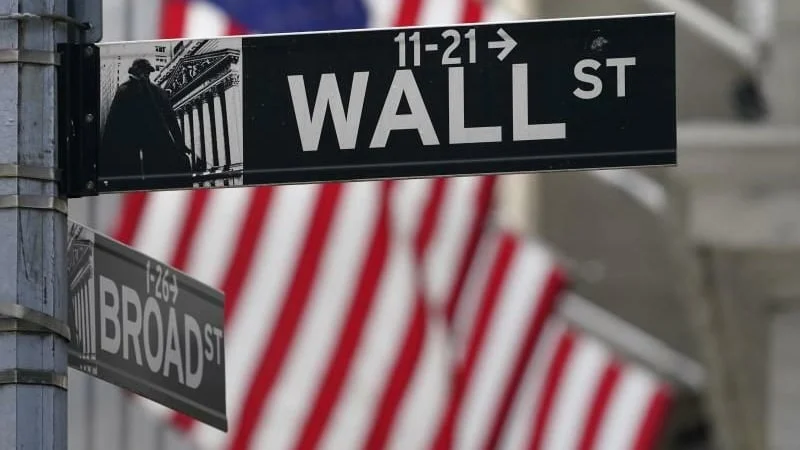
In a sharp departure from the European experience, US markets reacted with optimism to domestic inflation data. The Personal Consumption Expenditures (PCE) price index, the Federal Reserve’s preferred inflation gauge, rose by 3.4% in August, with a core rate of 3.0%. Crucially, both figures came in lower than analyst projections.
This "goldilocks" scenario—inflation that is falling, yet not at a rate that suggests a recession—provided the necessary fuel for the Dow Jones, S&P 500, and Nasdaq to start the day in positive territory. Neil Wilson of Saxo Bank observed, "The fact that inflation is coming in softer than expected eases the pressure on the Fed, even if the absolute level of inflation remains clearly too high."
The AI Narrative
The technology sector, particularly the semiconductor industry, remained a focus of interest. Following US President Donald Trump’s recent comments at the White House advocating for industry-led self-regulation rather than global mandates for Artificial Intelligence, tech stocks have been bolstered. While the European market is currently preoccupied with immediate cost-of-living and labor issues, the US market continues to lean heavily on the long-term growth story of AI. Investors are now awaiting the next test of this sentiment: the upcoming earnings release from chip manufacturer Micron.
Implications for the Future
The divergence between the US and European markets poses a complex challenge for global investors. For the DAX and the broader Eurozone, the path forward appears fraught with macroeconomic friction.
- Monetary Policy: If inflation remains above the 3% threshold, the ECB will be forced into a corner, likely resulting in restrictive policy that could dampen economic growth throughout 2027.
- Industrial Competitiveness: The situation at Volkswagen serves as a bellwether for German industry. If major corporations cannot find a path to restructuring without triggering massive labor disputes, the "German model" of manufacturing excellence will face an existential threat.
- Bank Consolidation: The Commerzbank/UniCredit drama is a microcosm of the European banking sector’s struggle to achieve scale. Success or failure in this integration will dictate the investment climate for European financials for the coming decade.
As the quarter turns, the market narrative is shifting from "growth at all costs" to "resilience against inflation." The events of September 30 demonstrate that until price stability is restored, volatility will remain the defining characteristic of the European trading floor.