

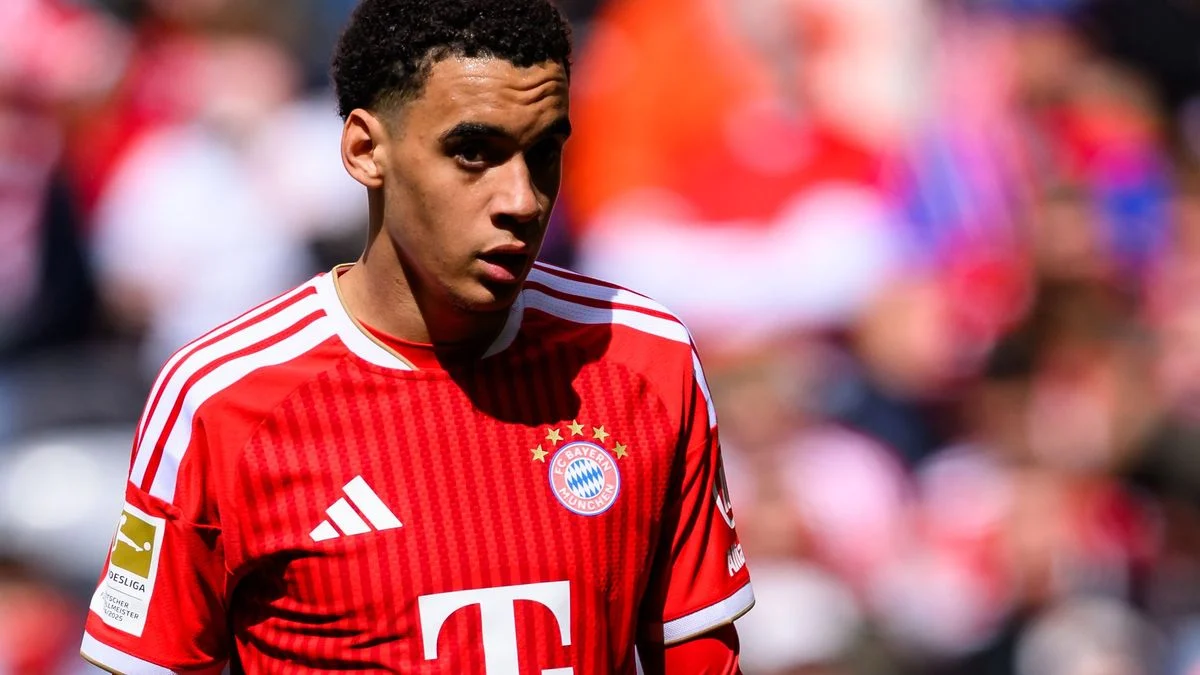
In the high-octane world of professional football, few names shine as brightly as Jamal Musiala. The Bayern Munich and German national team prodigy has become synonymous with technical brilliance, agility, and a vision that seems to defy the frenetic pace of the Bundesliga. However, behind the headlines of spectacular goals and intricate dribbles, a more sober conversation has emerged regarding the physical and neurological toll of the sport. Recent medical inquiries surrounding Musiala—specifically regarding reports of "absences" and the broader, more insidious risks of repetitive heading—have sparked a critical debate in sports medicine.
This article examines the intersection of elite athletic performance and neurological health, exploring what science tells us about the risks inherent in the "beautiful game."
1. Main Facts: The Intersection of Talent and Vulnerability
The core of the current medical discourse involves the potential for neurological incidents, often referred to as "absences," in high-performance athletes. In a clinical sense, an absence seizure (petit mal) is a brief, sudden lapse in consciousness. While not inherently linked to Jamal Musiala’s specific health profile as a confirmed diagnosis, the public discussion has been catalyzed by reports questioning whether such occurrences could affect professional footballers, and if so, how they might be mitigated.
Furthermore, the discussion moves beyond transient lapses to the structural risks posed by chronic repetitive head impacts. Football, unlike many other contact sports, utilizes the cranium as a primary tool for ball control. This constant percussion raises significant questions about the long-term integrity of the brain. The primary facts remain:
- Neurological Vulnerability: The brain is a fragile organ suspended in cerebrospinal fluid; it is not designed for the repetitive G-force impacts inherent in heading a ball traveling at high speeds.
- The "Absence" Phenomenon: Medical experts are investigating how extreme physical exertion and fatigue might trigger non-epileptic or epileptic events in athletes who have previously shown no symptoms.
- The Cumulative Effect: Current data suggests that it is not necessarily the singular "big hit" that causes the most damage, but the thousands of sub-concussive impacts sustained during training and match play over a career.
2. Chronology: From Training Ground to Clinical Inquiry
The evolution of football safety has been a slow, often reactive process. To understand the current climate surrounding players like Musiala, we must look at the timeline of medical awareness in the sport.
The Early Eras (Pre-1990s):
For much of the 20th century, a header was simply a header. The "thud" of the ball was part of the game’s aesthetic. Medical intervention was largely limited to orthopedic injuries—torn ligaments and broken bones. Neurological health was rarely discussed, and "shaking it off" was the standard protocol for any head collision.
The Awareness Turning Point (2000–2015):
As neurodegenerative diseases began to be identified in retired professional players—particularly in the NFL and, later, in football—the sport began to reckon with its past. Studies in the UK and Germany started to correlate long-term cognitive decline with professional heading history.
The Modern Era (2015–Present):
Protocols have shifted. Concussion substitutes are now standard in the Bundesliga and the Premier League. The current focus has narrowed on the specific physiological triggers that might lead to "absences" or momentary lapses in concentration. The medical community is now questioning whether high-intensity, high-pressure environments, coupled with the dehydration and physical stress of a 90-minute match, create a "perfect storm" for neurological irregularities.
3. Supporting Data: What the Science Says
Neurologists specializing in sports trauma emphasize that the brain is not a static object. When a player heads a ball, the brain undergoes rapid acceleration and deceleration within the skull.
The Physics of the Header
Research suggests that a ball traveling at 50 km/h creates significant force. If a player performs 20 headers in a training session, the cumulative impact is non-trivial. Data from recent studies indicate that:
- Sub-concussive Impacts: These do not cause immediate loss of consciousness but are linked to white-matter changes in the brain over time.
- Cognitive Load: Players in Musiala’s position, who act as "playmakers," are subjected to immense cognitive demands. Neurological fatigue—the brain’s inability to process information as rapidly as the body is moving—can lead to errors in judgment and, in extreme cases, potential absences.
- The "Absence" Mechanism: While often associated with epilepsy, absence-like states can be triggered by extreme metabolic shifts, heat stress, or electrolyte imbalances, all of which are common in elite football.
4. Official Responses and Medical Stance
The medical community, including neurologists who consult for clubs like Bayern Munich, maintains a stance of "proactive monitoring."
"We are not dealing with a uniform pathology," notes one expert in neuro-sports medicine. "When we discuss a player’s health, we must distinguish between an acute neurological event and the long-term risks of the sport. For a talent like Musiala, the goal is longevity. That requires minimizing unnecessary exposure to head impacts in training."
The German Football Association (DFB) has begun implementing stricter guidelines regarding youth training, specifically limiting the amount of heading practice for players under the age of 14. This is a direct acknowledgement that the developing brain is significantly more vulnerable to the cumulative effects of impact than the adult brain. However, for professional clubs, the challenge remains: how do you train the skill of heading without exposing the player to the risk of damage?
5. Implications: The Future of Football
The implications of these findings are profound. If the sport acknowledges that repetitive heading is inherently dangerous, it may be forced to fundamentally alter how the game is taught and played.
Tactical Shifts
If clubs continue to limit heading in training, we may see a shift in playing style. Tactical setups that rely on high, long balls—the "target man" strategy—may become less prevalent in favor of ground-based, technical play, which aligns perfectly with the current trend in modern football and the specific skill set of players like Jamal Musiala.
The Role of Technology
Smart helmets and sensors are being tested, though they remain controversial in a sport that prides itself on minimalism. The goal is to provide real-time data on the force of impacts, allowing medical staff to pull a player off the pitch if they exceed a certain "impact budget" for the week.
The Cultural Shift
Perhaps the greatest hurdle is cultural. Football has long been a game of "toughness." Changing the perception of what constitutes bravery—moving away from the "head-first" mentality—requires a sea change in how fans, coaches, and players value the sport. Protecting a player’s long-term neurological health must eventually be seen as just as important as protecting their ACLs or hamstrings.
Conclusion
The spotlight on Jamal Musiala is a microcosm of a larger, necessary evolution in professional football. As we marvel at the agility and genius of the modern playmaker, we must also ensure that the sport provides a framework where such brilliance is not bought at the cost of the player’s future health. By acknowledging the risks of neurological stress and sub-concussive impacts, the footballing world is taking the first steps toward a safer, more sustainable future. The game will always be physical, but it is time for the science to catch up to the spectacle.



























