
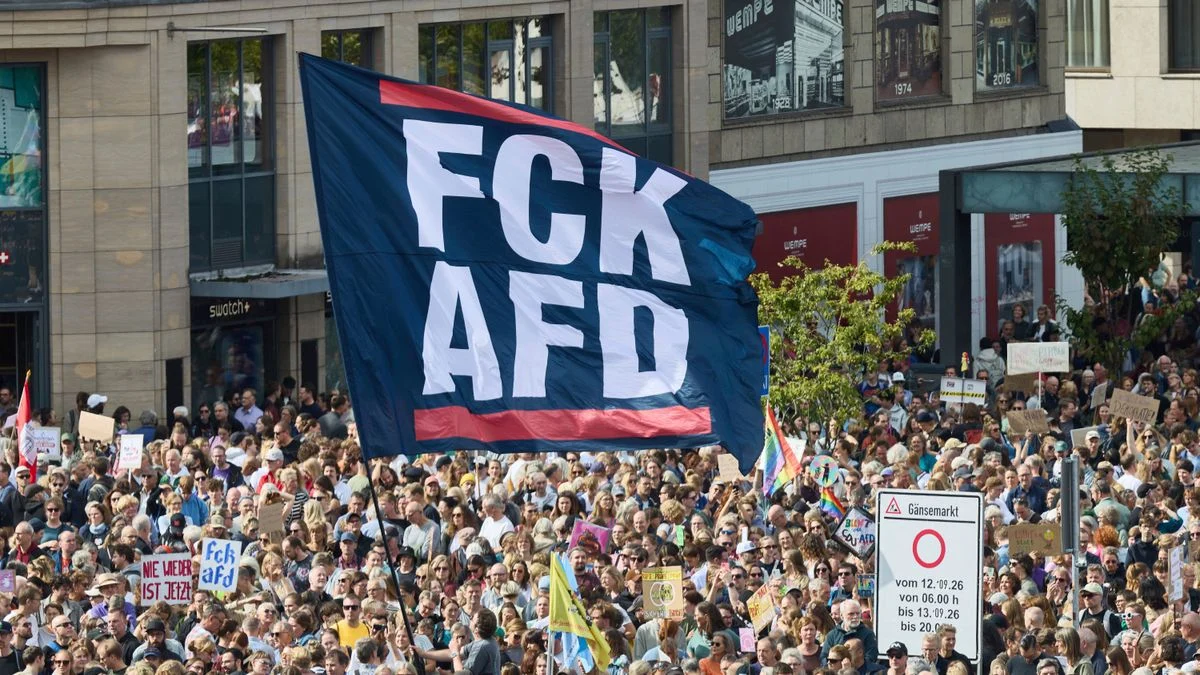
The political landscape in Germany has been undergoing a seismic shift. For months, millions of citizens have taken to the streets to protest against the rise of the Alternative für Deutschland (AfD) and the broader phenomenon of right-wing extremism. However, as the initial wave of mass demonstrations—often sparked by the revelations surrounding the Potsdam "remigration" meeting—begins to settle into a new, more permanent rhythm, a critical question arises: What comes next?
"Zeit zum Handeln" (Time to Act), a nascent but influential coalition, argues that while mass marches are a vital expression of democratic vitality, they are not a sufficient strategy to counter the systemic challenges posed by populist right-wing movements. The group is now spearheading an effort to move beyond ephemeral protest and into the realm of long-term civic engagement, institutional reform, and strategic grassroots organizing.
The Evolution of Protest: From Spontaneity to Strategy
The current wave of anti-AfD protests represents the largest civil society mobilization in post-war Germany. Triggered by reports from Correctiv regarding a secret meeting in Potsdam where AfD politicians and neo-Nazis discussed the mass deportation of citizens with migration backgrounds, the protests drew millions to city centers.
Initially, the strategy was simple: show force, show numbers, and demonstrate that the "silent majority" is not actually silent. But as the excitement of the first few weeks wanes, organizers like those in "Zeit zum Handeln" are pivoting. They contend that the protests have succeeded in creating a "shock" effect, but they risk stagnation if they do not translate this energy into durable political infrastructure.
The Chronology of Mobilization
- January 2024: The Correctiv report breaks, sending shockwaves through the German political establishment. Within days, the first spontaneous demonstrations erupt in Berlin, Hamburg, and Cologne.
- February 2024: The scale of the protests grows, reaching smaller municipalities and rural areas, signaling that the resistance is not confined to liberal urban bubbles.
- March-April 2024: The "Zeit zum Handeln" coalition begins to formalize. They shift the discourse from "We are against the AfD" to "What are the structural solutions to the problems the AfD exploits?"
- Summer 2024 and Beyond: The coalition focuses on mobilizing voters for upcoming state elections in Eastern Germany, aiming to replace large-scale rallies with targeted voter education and community-building workshops.
Supporting Data: Understanding the Voter Sentiment
The necessity of this new approach is backed by sobering data. While the protest movement has undoubtedly made an impact, it has not yet translated into a significant drop in AfD polling numbers in key regions, particularly in Thuringia, Saxony, and Brandenburg.
Recent socio-political surveys indicate that the AfD’s base is remarkably resilient. Their voters are not necessarily motivated by a singular issue, but rather by a deep-seated disillusionment with the established political parties—the "Ampel" (traffic light) coalition.
- The "Protest Voter" Phenomenon: Data shows that a significant portion of the AfD electorate views their vote as a "warning signal" rather than an ideological endorsement.
- The Economic Factor: Inflation, energy costs, and anxieties surrounding the housing market continue to act as catalysts for anti-establishment sentiment.
- The Rural-Urban Divide: While the protests have been highly successful in urban centers, they have struggled to bridge the gap with voters in peripheral regions where the perception of being "left behind" by the state remains acute.
"Zeit zum Handeln" is now analyzing this data to create "counter-narratives." Instead of focusing solely on moral outrage, they are training volunteers to engage in "kitchen-table conversations" that address economic anxieties directly, rather than dismissing them as mere symptoms of right-wing ideology.
Official Responses and Political Implications
The response from the established parties—the CDU, SPD, Greens, and FDP—has been mixed. While they initially welcomed the protests as a defense of the "Grundgesetz" (Basic Law), there is now a palpable tension. Some political leaders fear that if the protest movement becomes too institutionalized or radical, it could alienate the very center-ground voters they need to win back.
Government officials have acknowledged that the state cannot solve the problem of right-wing extremism through security measures alone. Federal Minister of the Interior Nancy Faeser has repeatedly emphasized the role of civil society in fostering resilience. However, "Zeit zum Handeln" remains critical of the government, arguing that the political establishment has been too slow to deliver tangible economic relief, thereby inadvertently providing the AfD with their most effective campaign material.
The Institutional Shift
The coalition is pushing for three major pillars of change:
- Civic Education 2.0: Moving away from state-funded seminars and toward peer-to-peer democratic dialogue.
- Local Resilience Programs: Establishing permanent community centers that offer legal aid, social services, and political discussion spaces.
- Digital Strategy: Countering the AfD’s dominance on platforms like TikTok and Telegram with professionalized, youth-oriented content that demystifies democratic processes.
Implications for the Future of German Democracy
The movement led by "Zeit zum Handeln" signifies a transition from a reactive to a proactive phase of democratic defense. If they succeed, the legacy of the 2024 anti-AfD protests will not be just a series of successful marches, but a profound renewal of Germany’s civil society.
However, the risks are high. If the movement fails to maintain momentum, or if it becomes perceived as a tool of the political elite, it may struggle to sustain public interest. The challenge for organizers is to prove that democracy is not just a concept to be defended on the streets, but a practical tool for improving lives in the daily grind of local governance.
As Germany heads toward a critical series of elections, the efforts of groups like "Zeit zum Handeln" will serve as a bellwether for the country’s political health. Whether they can convert the "shock of Potsdam" into a sustainable, long-term political movement remains the most pressing question for the future of the Federal Republic.
Conclusion: A Call to Sustained Engagement
The message from the organizers is clear: "The streets were just the beginning." To effectively counter the surge of the far-right, the energy of the millions must be channeled into the quiet, often unglamorous work of building community trust, debating policy at the local level, and ensuring that no citizen feels ignored by the democratic process.
The battle for the future of German democracy is no longer being fought solely in the plazas of Berlin or Munich; it is now being fought in the digital forums, the village halls, and the conversations between neighbors. "Zeit zum Handeln" is betting that, in the end, that is where the real political change will take root.