In the evolving landscape of home networking, the security and efficiency of the central router have become paramount. As households become increasingly dense with IoT devices, smartphones, and professional-grade communication requirements, the demands placed on hardware are higher than ever. AVM, the Berlin-based manufacturer behind the iconic FRITZ!Box series, has recently taken a significant step forward in addressing these challenges. With the release of a new beta version for its upcoming firmware, FRITZ!OS 8.50, the company is introducing a suite of features designed to enhance user visibility, security, and connectivity stability.
The update, currently available through the "FRITZ! Labor" initiative, represents a pivotal moment in AVM’s product roadmap, signaling a transition toward more proactive, intelligence-driven network management.
The Core Developments: A New Beta for a New Era
AVM has officially opened the doors for early adopters to test the upcoming FRITZ!OS 8.50. This beta firmware is currently compatible with seven of the manufacturer’s most popular router models, including the 5690, 5690 Pro, 5590 Fiber, 7690, 7590 AX, 7590, and 7530 AX.
This rollout builds upon the initial preview launched in May 2024. While the early spring announcements focused primarily on cosmetic user interface improvements and the foundational integration of the "Matter" smart home standard, the latest beta release shifts the focus toward robust security and real-time diagnostics. By placing these tools directly into the hands of users via the MyFRITZ!App, AVM is effectively democratizing complex network administration.
Smart Check: Real-Time Diagnostics in Your Pocket
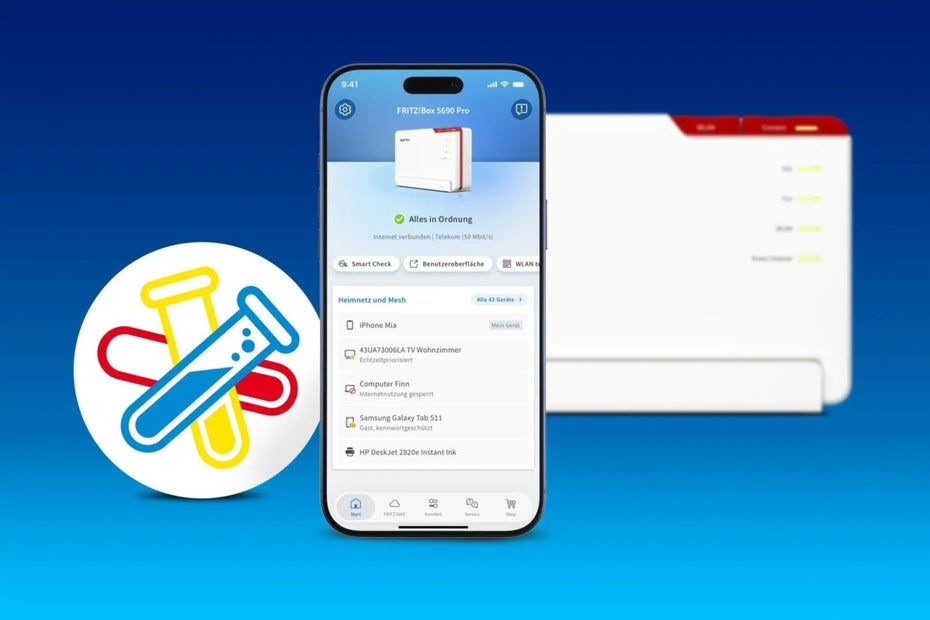
Perhaps the most notable addition to the user experience is the "Smart Check" feature. Historically, monitoring a router’s health often required a desktop browser, navigating through sub-menus, and interpreting technical logs that were not always accessible to the average consumer.
With Smart Check, this paradigm changes. The diagnostic tool pulls critical data directly onto the start screen of the MyFRITZ!App. In real-time, users can now view the status of telephony, local network performance, and WLAN connectivity. More importantly, the system provides proactive alerts. For example, if a mesh repeater is losing connection or a specific node in the network is underperforming, the app flags the issue immediately. This transformation of the smartphone into a centralized command-and-control dashboard for the home network is a clear indicator of where AVM sees the future of domestic IT: mobile, instant, and intuitive.
DNS-Filtering: Security at the Perimeter
While diagnostic tools improve convenience, the new DNS-filtering capabilities address a more critical concern: the growing sophistication of cyber-attacks. By implementing filtering at the router level, AVM is effectively creating a protective bubble around every device in the home.
Unlike traditional antivirus software that must be installed on individual computers or smartphones, this router-based filter covers everything—including devices that are notoriously difficult to secure, such as Smart TVs, internet-connected refrigerators, and various "headless" IoT sensors.
According to AVM, the system works by intercepting requests at the DNS level. If a device attempts to connect to a known malicious domain associated with phishing, botnets, or malware distribution, the FRITZ!Box blocks the request before a connection can be established. Beyond security, users can leverage community-maintained blocklists to curate their own browsing experience, filtering out aggressive trackers and intrusive advertising. This proactive approach to perimeter security provides a much-needed layer of defense for the modern connected home, where the weakest link is often an unpatched smart device.
Prioritization, Failover, and the Future of Connectivity
The updates in FRITZ!OS 8.50 extend far beyond security and diagnostics. Acknowledging the "new normal" of remote work, AVM has introduced automatic prioritization for real-time communication protocols. Users engaged in high-stakes video conferences will benefit from intelligent traffic shaping, ensuring that critical data packets are routed with minimal latency, even when other household members are streaming or gaming.
Furthermore, the "FRITZ!Failsafe" mechanism, previously reserved for specific models, is being expanded to include 4G and 5G-capable routers. This failover technology allows a router to utilize a wired LAN connection as its primary path to the internet. If that connection drops, the router seamlessly switches to the integrated cellular modem, ensuring that critical connections remain active.
This, combined with new energy-saving features for the smart home and expanded SOS-call functionality, positions FRITZ!OS 8.50 as a comprehensive maintenance and performance update rather than a simple incremental version jump.
Chronology of Development
The path to FRITZ!OS 8.50 has been a methodical, iterative process:
- May 2024: The first hints of the 8.50 update emerge, focusing on the Matter smart home standard and smartphone-app enhancements.
- Summer 2024: Internal testing and refinement of diagnostic algorithms.
- Current Phase: Public beta release via the FRITZ! Labor website, allowing for mass-market feedback on seven core models.
- Future: Awaiting the official stable release, which will likely depend on the stability reports generated by the current beta user base.
Implications for the Market and the Consumer
The shift toward router-level security and mobile-first management has broad implications. For consumers, it reduces the complexity of managing a secure home environment. By offloading security tasks to the router, AVM is alleviating the "security burden" from the user.
For the market, this move places AVM in direct competition with emerging "mesh-security" solutions offered by companies like Google or Amazon’s Eero. However, AVM’s strength remains its depth of configuration and its long-standing reputation for professional-grade hardware reliability. The integration of the Matter standard, specifically for the 5690 Pro, further cements the FRITZ! ecosystem as a future-proof hub for the fragmented world of smart home technology.
Official Stance and User Guidance
AVM emphasizes that the current beta is intended for testing purposes and may contain bugs. Users are encouraged to report findings via the feedback forms provided within the lab environment. While the company has not yet provided a definitive release date for the final version of FRITZ!OS 8.50, the current beta’s stability is reportedly high.
For users wishing to participate, the process is straightforward:
- Verify the model number of the existing FRITZ!Box.
- Visit the official AVM FRITZ! Labor website.
- Back up current settings—a standard recommendation before installing any beta software.
- Download and apply the firmware via the router’s web interface.
As the lines between professional network management and domestic use continue to blur, AVM’s latest efforts demonstrate a clear commitment to providing users with the tools to navigate a complex digital world. Whether through the real-time insights of the Smart Check or the invisible shield of the DNS-filter, FRITZ!OS 8.50 is shaping up to be one of the most consequential updates in the brand’s history. For the home user, it means a safer, more stable, and more intelligent connection—one that is increasingly managed from the palm of the hand.