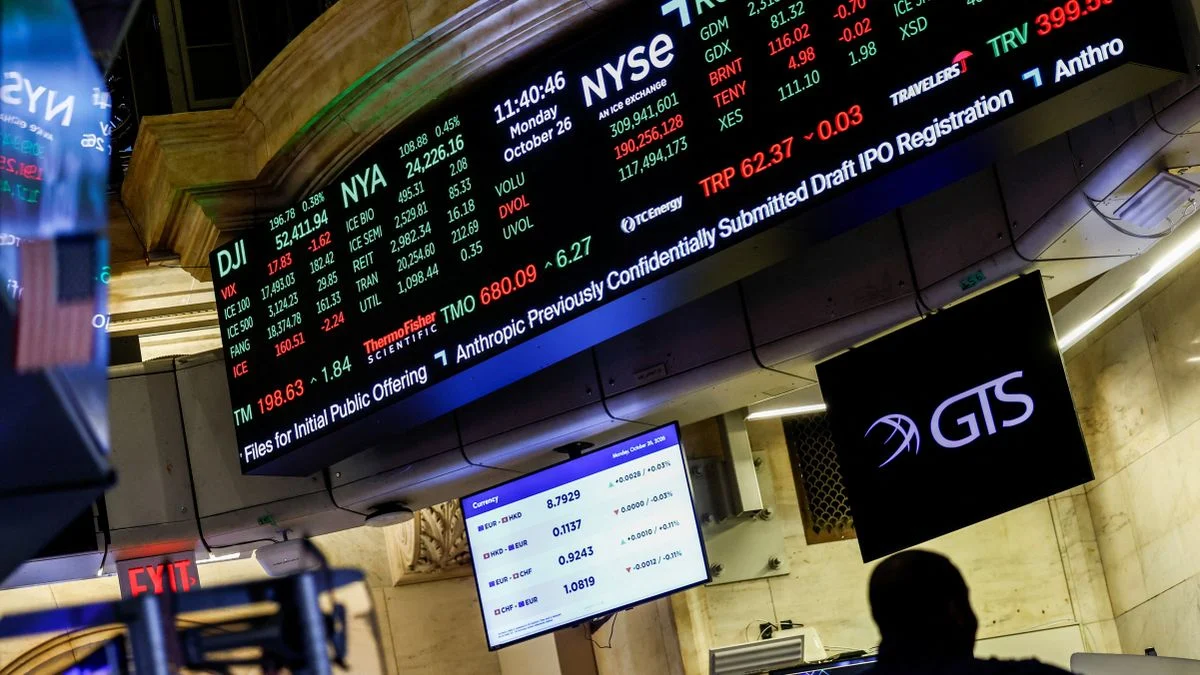
New York — Following a period of blistering momentum that pushed major U.S. stock indices to a series of historic record highs, the mood on Wall Street shifted to one of cautious consolidation on Thursday. Investors, having feasted on a steady diet of positive earnings reports and optimistic economic sentiment, chose to step back and evaluate the sustainability of the current bull run. As trading closed, the major benchmarks finished in a mixed pattern, signaling that the market is currently caught between the enthusiasm of a strong corporate earnings season and the mounting pressures of geopolitical volatility.
The State of the Market: A Technical Overview
After weeks of sustained gains that saw the Dow Jones, S&P 500, and Nasdaq reach unprecedented levels, the market environment has shifted into a more defensive posture. This consolidation is not necessarily a sign of weakness, but rather a characteristic of a "high-altitude" market. When indices trade at all-time highs, technical resistance often triggers profit-taking, as institutional investors look to lock in gains before further uncertainty emerges.
The recent rally has been fueled by a combination of robust corporate fundamental data—specifically, earnings reports that largely outperformed analyst expectations—and a pervasive "risk-on" sentiment. However, as the old adage on Wall Street goes, "the higher the mountain, the thinner the air." The current volatility is a testament to this, as participants weigh whether current valuations are fully justified by forward-looking projections or if the market has outpaced its own recovery narrative.
Chronology of the Current Sentiment Shift
The week began with a wave of exuberance, driven by tech giants and industrial leaders reporting stronger-than-anticipated quarterly results. This momentum pushed the indices into uncharted territory. However, the mid-week sessions introduced a cooling effect as external factors began to weigh more heavily on investor psychology.
- Early Week: Markets surged as investors reacted to positive earnings surprises from major technology players, including Amazon, which crossed significant valuation milestones, fueling a broader market rally.
- Wednesday: Reports regarding diplomatic shifts concerning the Iran-Oman shipping routes in the Strait of Hormuz provided a temporary reprieve for oil markets, briefly lowering energy prices and providing a stabilizing effect on broader market sentiment.
- Thursday: The momentum plateaued. Despite no singular "black swan" event, the absence of further catalysts led to a lack of conviction, resulting in the mixed closing figures witnessed across the major boards.
Supporting Data: The Earnings Paradox
A recurring theme during this reporting season is the "Earnings Paradox." While companies like SanDisk and other technology leaders have delivered impressive quarterly results, their stock prices have faced unexpected downward pressure. Market analyst Markus Koch notes that this is a symptom of heightened expectations.
"The bar has been raised to an uncomfortable height," Koch explained. "For a company to see its stock price climb today, it is no longer enough to simply deliver a ‘good’ quarter. The market is demanding perfection, double-digit growth forecasts, and impeccable guidance. When a company reports solid growth but misses the ‘whisper number’ or offers a conservative outlook, investors are using that as an excuse to sell into strength."
This dynamic suggests that the market is currently pricing in a near-perfect economic scenario, leaving very little room for error. Any deviation from the projected growth path is being met with swift, sometimes harsh, corrections.
Geopolitical Implications: The Iran Factor
Central to the current market anxiety is the ongoing geopolitical tension in the Middle East, specifically regarding the Iran-U.S. standoff. President Donald Trump has expressed a willingness to pursue a new diplomatic agreement with Iran, a development that has been welcomed by markets hoping for a de-escalation of regional instability.
However, the lack of specific details regarding these potential talks has kept investors on edge. The uncertainty surrounding the diplomatic process is directly linked to the energy markets. Oil prices remain a volatile proxy for these geopolitical developments. On Thursday, Brent crude for October delivery held steady at approximately $80 per barrel, while U.S. WTI crude hovered around $76.
These prices reflect a "geopolitical premium." Should diplomatic efforts fail, analysts fear a rapid spike in energy costs, which would act as an immediate tax on the broader economy, squeezing consumer spending power and increasing input costs for manufacturers.
Expert Analysis: A Warning Against Premature Optimism
Frank Sohlleder, a seasoned analyst at Activtrades, provides a sobering perspective on the current rally. He argues that the market is perhaps too optimistic regarding the speed and impact of geopolitical resolutions.
"We are currently witnessing a tug-of-war between fundamental corporate performance and exogenous risks," says Sohlleder. "While the earnings season has been a net positive, investors are ignoring the fragility of the energy markets. The diplomatic pendulum is swinging in a delicate arc. Depending on which way it lands, we could see immediate reactions in the oil markets that would send shockwaves through the equity indices within minutes. This is not the time for blind optimism; it is a time for risk management."
The Path Forward: What Investors Are Watching
As we move into the next week, market participants are looking for three key indicators to determine the next direction for the indices:
- Macro-Economic Data: With the earnings season beginning to wind down, the focus will return to Federal Reserve commentary and inflation data. Any sign of persistent inflation could force a re-evaluation of interest rate expectations, which would likely pressure growth-heavy indices like the Nasdaq.
- Diplomatic Clarity: The market is hungry for concrete details on the Iran talks. Vague assurances are no longer sufficient to maintain the current record-high momentum. Investors will be looking for confirmed meeting dates or verified diplomatic back-channels.
- Volume and Participation: Analysts will be monitoring trading volumes. If the market continues to drift sideways on low volume, it suggests that the "smart money" is sitting on the sidelines, waiting for a clearer trend. If volume spikes during a decline, it could signal a broader trend reversal.
Conclusion: Caution in the Face of Success
The current situation on Wall Street is a classic example of a market transitioning from a momentum-driven phase to a data-dependent phase. Having achieved historic heights, the market is now tasked with proving that its valuation is sustainable.
While the underlying corporate data remains robust, the looming shadow of geopolitical instability and the pressure of hyper-inflated expectations create a delicate environment. Investors are no longer blindly buying the dip; they are scrutinizing the future. For the average participant, the message is clear: the rally has been successful, but the road ahead requires a much more selective and cautious approach. As the diplomatic and economic puzzle pieces continue to fall into place, the next move—whether to new heights or a necessary correction—will be dictated by the clarity of the signals that emerge from both the White House and the boardrooms of America’s largest corporations.