

By Sports Editorial Team
Updated: August 2, 2026
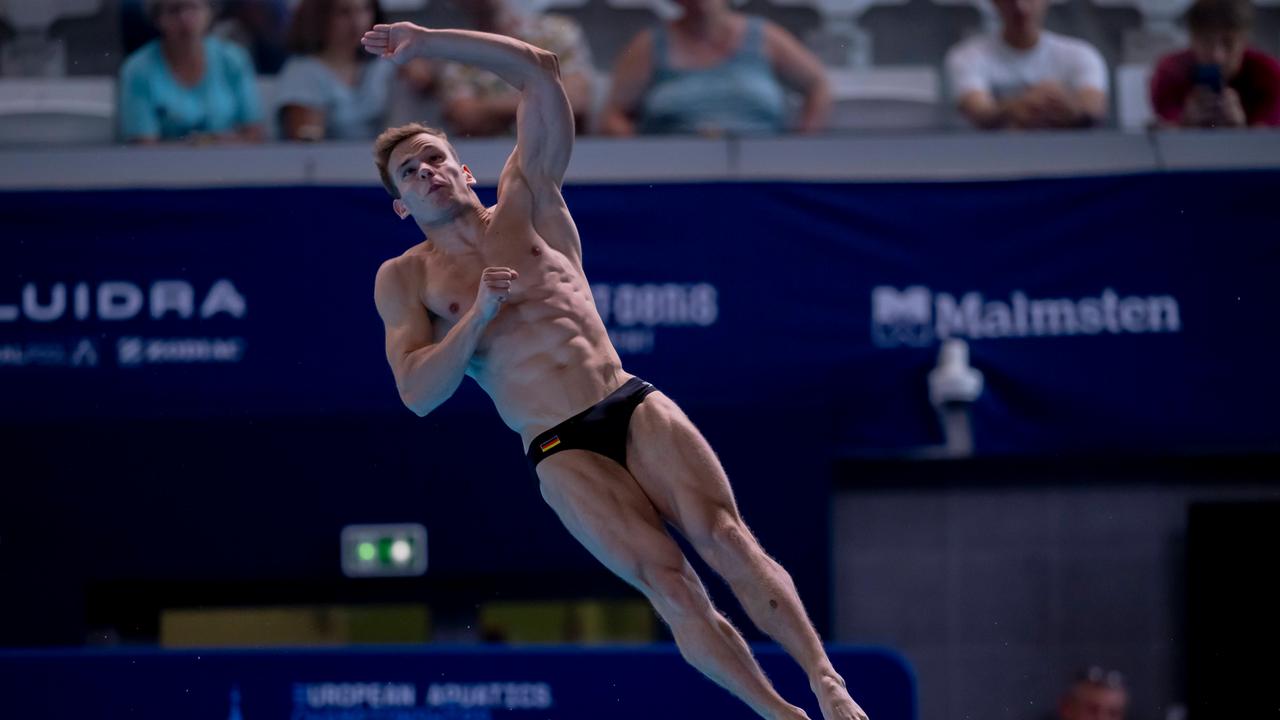
In a spectacular display of athletic poise and technical precision, German diver Moritz Wesemann has successfully defended his European title in the 1-meter springboard event. Competing at the Centre Aquatique Olympique in Paris on Saturday, August 1, the 24-year-old from Halle silenced any doubts following a shaky tournament start, securing Germany’s first gold medal of the 2026 European Swimming Championships.
With a final score of 431.45 points, Wesemann demonstrated why he is considered one of the continent’s premier talents, navigating a high-pressure final with the kind of consistency that separates champions from contenders.
The Path to Victory: A Chronology of the Final
The atmosphere in the Centre Aquatique Olympique was electric as the men’s 1-meter springboard final commenced. For Wesemann, the event was not merely a chance to add to his trophy cabinet, but a critical opportunity to reclaim his psychological footing after a disappointing opening day.
The Opening Rounds
From the very first dive, Wesemann signaled his intent. Unlike his performance in the mixed team event just 24 hours earlier, his movements were fluid and his entries exceptionally clean. He maintained a top-three position throughout the early rounds, keeping his composure while competitors succumbed to the nerves of the Parisian stage.
The Turning Point
By the fourth round, the competition narrowed to a three-way battle between Wesemann and the British duo of Jack Laugher and Jordan Houlden. The pivotal moment arrived during his penultimate dive, where Wesemann executed a high-degree-of-difficulty maneuver with near-perfect form, distancing himself from the field.
The Final Dive
Entering the final round with a lead, Wesemann remained unshaken. As he stood on the edge of the springboard, the silence in the arena was palpable. His final dive was a masterclass in control, earning high marks from the judges and confirming his status as the European champion. As he emerged from the water, he looked toward the stands, blowing kisses to his teammates who had erupted in celebration.
Supporting Data: A Statistical Breakdown
Wesemann’s performance was defined by consistency across all six required dives. While his opponents struggled to maintain their trajectory, Wesemann’s scoring profile remained remarkably stable.
| Diver | Nation | Final Score |
|---|---|---|
| Moritz Wesemann | Germany | 431.45 |
| Jack Laugher | Great Britain | 418.25 |
| Jordan Houlden | Great Britain | 410.30 |
The 13-point margin between Wesemann and second-place Jack Laugher is significant in the world of high-stakes diving, where fractions of a point often determine the color of a medal. His performance metrics indicated an improvement in "rip" entries compared to his previous outings this season, suggesting that his training regimen under the guidance of the national coaching staff has yielded tangible results.
Official Responses: "I Am Extremely Happy"
Speaking to reporters shortly after the medal ceremony, an exhilarated Wesemann reflected on the emotional roller coaster of the past 48 hours.
"I am extremely happy," Wesemann stated, still visibly buzzing from the adrenaline of the victory. "Especially because I managed to get through the entire competition without a single major mistake. I was able to showcase a highlight at the very end. Most importantly, I was able to convert the courage that I apparently lacked on the board yesterday into today’s performance. Walking away with this result is just incredible."
When asked about his plans for the night, the 24-year-old laughed, noting that the adrenaline made sleep an unlikely prospect. "I have so much energy right now that I probably won’t be able to sleep at all," he admitted. "But that is a good problem to have."
Contextual Analysis: Overcoming the EM Fehlstart
To understand the magnitude of Wesemann’s gold, one must look at the context of his tournament opening. On Friday, July 31, the German team—comprising Wesemann, Pauline Pfeif, Lena Hentschel, and Jaden Eikermann—finished a lackluster seventh in the mixed team event.
For Wesemann, that performance was a source of frustration. "Yesterday, the courage just wasn’t there," he noted in his post-victory interview. The pressure of competing in a major international event, combined with the expectations surrounding the German diving squad, appeared to have hindered the team’s collective rhythm.
The recovery from a seventh-place finish to a gold-medal performance within 24 hours speaks volumes about Wesemann’s mental fortitude. Sports psychologists often emphasize the "short memory" required of elite athletes, and Wesemann provided a textbook example of this trait in Paris. By isolating the technical errors from the team event and resetting his focus for the individual board, he transformed a potential tournament slump into a career-defining moment.
Implications for the Future: Looking Toward the 3-Meter Event
The victory at the 1-meter event has ripple effects for the remainder of the Championships. Firstly, it has galvanized the German team, providing a morale boost that could influence performances in subsequent events.
The 3-Meter Challenge
Wesemann’s focus now shifts to the 3-meter springboard event, scheduled for Wednesday. The 3-meter event is arguably more competitive and technically demanding, requiring a different set of physical conditioning and spatial awareness. Having now secured gold, Wesemann enters the 3-meter competition with a target on his back but also with the confidence of a champion.
National Standing
For the German Swimming Federation (DSV), this gold is a vital indicator of their current program’s success. As European diving becomes increasingly competitive—with British, Italian, and Ukrainian athletes consistently pushing the limits of difficulty—Wesemann’s dominance serves as a benchmark for the German national team.
Strategic Adjustments
Looking ahead to future international cycles, including the lead-up to global qualifying events, Wesemann’s success in Paris provides a template for success. His ability to handle the "mental game"—moving past a poor performance to achieve excellence the following day—is a trait that will be essential as he looks toward the next major global stage.
Conclusion: A Champion’s Mindset
Moritz Wesemann’s victory in Paris is more than just a tally of points on a scoreboard. It is a testament to the resilience required in elite sports. By turning the page on a disappointing team result and delivering a masterclass on the 1-meter board, Wesemann has cemented his reputation as a formidable force in European diving.
As the Championships continue, all eyes will be on the 3-meter board this coming Wednesday. If Saturday’s performance is any indication, Wesemann is not merely satisfied with his current title; he is in the prime of his career and ready to test the limits of his potential. For now, however, the German team and their fans can celebrate a golden night in Paris—a night where courage, technical brilliance, and redemption converged at the edge of the springboard.