By International Affairs Desk
Updated: July 21, 2026
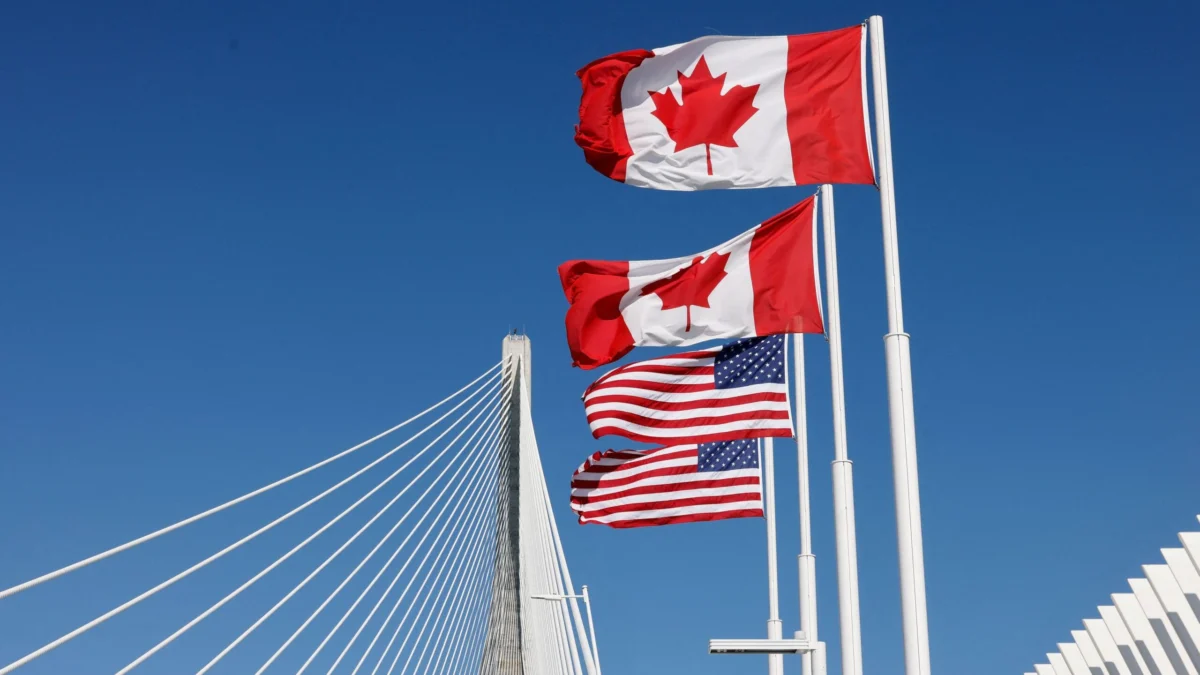
The brief window of diplomatic camaraderie fostered by the recently concluded joint Football World Cup has slammed shut, replaced by a harsh, protectionist reality. Only days after sharing the global stage, the United States and Canada have entered a volatile new phase of economic warfare. On Monday, U.S. President Donald Trump, citing "discriminatory practices" and a controversial environmental grievance regarding transboundary air pollution, authorized a sweeping 50 percent tariff on a wide array of Canadian imports.
The move marks a significant escalation in the bilateral relationship, potentially upending the North American supply chain and signaling a return to the "America First" trade policies that characterized the President’s previous tenure.
Main Facts: A 50 Percent Blanket Tariff
The White House announced that the new duties are set to take effect on August 19, 2026. The mandate, which relies on legal authority derived from a century-old trade statute dating back to 1930, targets a diverse spectrum of goods. According to the administration’s statement, the tariff covers:
- Consumer Goods: Furniture, clothing, and household items.
- Industrial Materials: Cement and various building supplies.
- Specialty Exports: Canadian wine and sporting equipment, most notably hockey sticks.
While energy exports and sectors already covered by existing branc-specific trade agreements appear to be excluded for now, the breadth of the list is expected to hit small and medium-sized Canadian businesses particularly hard.
U.S. Trade Representative Jamieson Greer defended the move, stating: "While the administration continues to secure fair and reciprocal trade agreements, Canada continues to exercise retaliation against the United States, unlike other partners and allies."
Chronology of a Deteriorating Relationship
The trajectory toward this economic confrontation has been building for months, characterized by a mix of political posturing and genuine environmental crises.

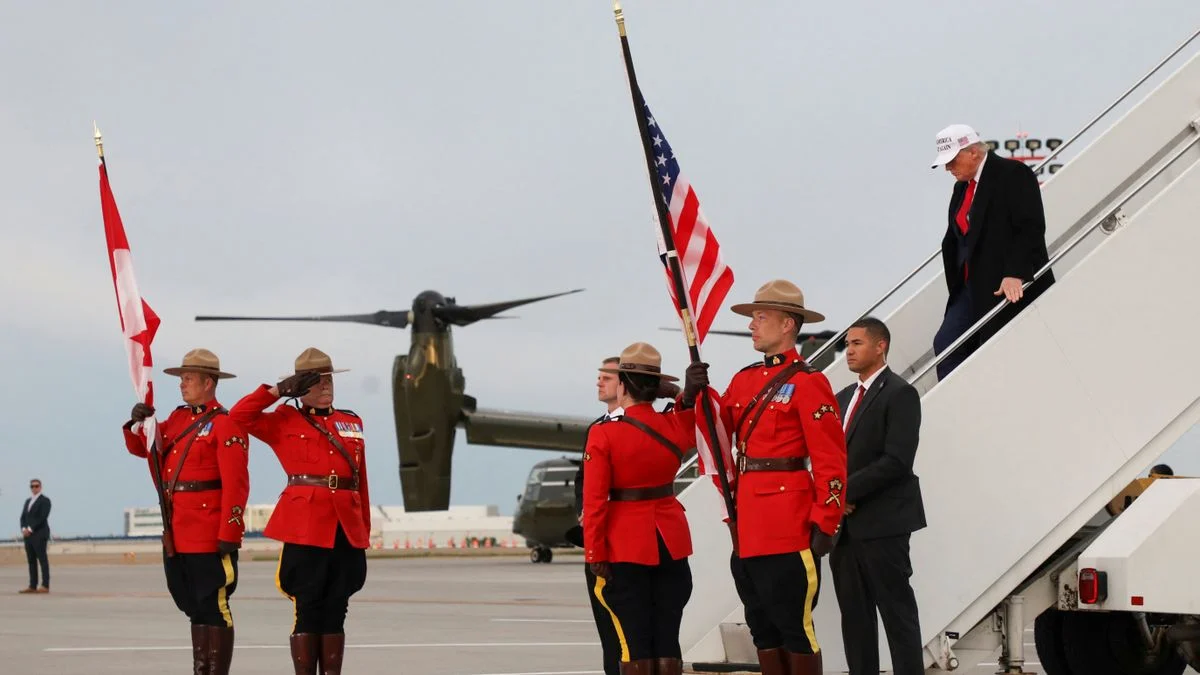
- June 2025: President Trump conducts a high-profile visit to Calgary, where, despite public displays of cooperation, internal tensions regarding trade imbalances in the automotive and dairy sectors reportedly simmered behind closed doors.
- Early July 2026: As the Football World Cup reaches its climax, massive wildfires break out across Ontario and Minnesota. The resulting smoke creates hazardous air quality levels, causing visible haze and poor breathing conditions across the U.S. Northeast and Midwest.
- Mid-July 2026: President Trump uses his Truth Social platform to lash out at the Canadian government, blaming the fires on poor forest management and threatening that the "costs" of the smoke—including health impacts and cleanup—would be added to the price of Canadian goods.
- July 19, 2026: The World Cup final concludes in New York. Despite the tension, Trump attends as an honorary guest, where he is met with audible boos from the crowd.
- July 20, 2026: President Trump signs the executive order formalizing the 50 percent tariff, citing both the trade disputes and the environmental damages.
Environmental Friction: Smoke as a Trade Weapon
Perhaps the most unprecedented aspect of this trade dispute is the President’s attempt to link environmental policy with economic penalties. The heavy smoke from the wildfires in Ontario and Minnesota severely hampered daily life in major urban centers, including Toronto, Chicago, Detroit, and Washington, D.C.
President Trump has consistently maintained that the fires are a result of "neglected forest floors and brush," effectively holding Ottawa responsible for the atmospheric consequences felt by American citizens. "We are being unnecessarily burdened with dirty, polluted, and unhealthy air," Trump stated, noting that he intends to call Canadian Prime Minister Mark Carney to demand accountability.
The scientific community, however, remains largely at odds with the President’s narrative. Meteorologists and environmental researchers have identified the primary driver of the increasingly severe fire seasons as climate change—specifically prolonged droughts and record-breaking heatwaves—rather than localized land management policies. The weaponization of this environmental issue into a trade dispute is viewed by many analysts as a strategic attempt to distract from broader climate policy debates within the U.S.
Official Responses and Diplomatic Fallout
The reaction from Ottawa was immediate and stern. While the Canadian government has yet to announce specific retaliatory measures, sources close to Prime Minister Mark Carney suggest that a "proportional and targeted" response is being drafted.
"Trade agreements are not meant to be held hostage by unrelated environmental grievances," a senior official in the Canadian Ministry of Finance stated. "These tariffs are a violation of the spirit of our partnership and will ultimately hurt consumers on both sides of the border."
In Washington, the response is divided. While some protectionist-leaning lawmakers have praised the President for "standing up for American interests," economists have warned of a looming inflationary impact. Because many of the goods targeted—such as lumber, cement, and furniture—are essential inputs for the U.S. housing and construction industries, the tariffs are expected to raise costs for American families at a time when the economy is still navigating post-tournament volatility.
Economic Implications: The Path Ahead
The decision to invoke a 1930s-era trade law is a signal that the administration is prepared to bypass standard diplomatic channels in favor of unilateral executive action. The economic implications of this 50 percent tariff are profound:

1. Supply Chain Disruption
The North American manufacturing sector is highly integrated. By placing a 50 percent tariff on inputs like cement and furniture components, the administration is effectively taxing its own manufacturers. Businesses that rely on cross-border logistics will face an immediate increase in operating expenses, which will almost certainly be passed on to the end consumer.
2. The "Retaliation Cycle"
History suggests that trade wars rarely remain one-sided. If Canada retaliates by targeting U.S. agricultural exports or technology services, the U.S. economy—particularly the Midwestern states that rely heavily on trade with Canada—could see a significant dip in exports. The concern among analysts is that this could trigger a "tit-for-tat" cycle that is difficult to reverse.
3. The Future of the USMCA
The current legal framework for North American trade is the United States-Mexico-Canada Agreement (USMCA). By imposing these tariffs, the U.S. is essentially testing the durability of this agreement. If the administration continues to cite "national interest" and "environmental protection" to bypass established trade rules, the USMCA could be rendered effectively obsolete, leading to a period of deep uncertainty for global investors.
4. Public Sentiment
The public response to the tariffs has been polarized. While there is broad support for the President’s rhetoric on environmental accountability, the logistical reality of higher prices for goods like hockey equipment and wine may temper that support as the reality of the price hikes sets in. The boos heard at the World Cup final serve as a potential bellwether for how the public perceives the President’s confrontational style, suggesting that the "America First" approach may be facing increasing pushback from a citizenry tired of the economic volatility that follows these geopolitical gambits.
Conclusion
As August 19 approaches, the world watches to see if this is a genuine shift in trade policy or a high-stakes negotiation tactic intended to force concessions from Ottawa. Regardless of the intent, the consequences are clear: the era of post-World Cup stability has been replaced by a period of significant economic risk. For the residents of North America, the coming months promise not only a fight over the cost of goods but a fundamental re-evaluation of the neighborly alliance that has defined the continent for generations.
With the President doubling down on his environmental claims and the Canadian government preparing for a diplomatic counter-offensive, the situation remains fluid, volatile, and, for many, deeply concerning.