As the group stage of the 2026 FIFA World Cup reaches its thrilling conclusion, the German national team has solidified its position as a tournament favorite. Having secured a dominant first-place finish in their group, the DFB squad now turns its attention to the complex and high-stakes path of the knockout rounds. With the tournament format expanded to 48 teams, the road to the final in New York/New Jersey is more challenging than ever, with a potential showdown against footballing giants like Brazil looming on the horizon.
The Current Landscape: A Tournament of Firsts
The 2026 World Cup, hosted jointly by the United States, Canada, and Mexico, has already established itself as a historical milestone. With 48 nations competing for the most prestigious trophy in sports, the structural changes—specifically the transition to a 32-team knockout bracket following an expanded group stage—have created a unique set of challenges.
For the German team, the mission was clear from the start: win the group to secure a more favorable seeding. By achieving this, the team has not only secured a crucial rest period but has also earned a slightly more predictable path through the bracket. However, as the dust settles on the final group games, the focus shifts to the mathematical puzzle that is the "Sechzehntelfinale" (Round of 32).
Chronology of the Knockout Path
The tournament bracket for the 2026 edition is governed by a sophisticated FIFA mapping system designed to balance the expanded field. Germany’s journey into the knockout phase is scheduled for Monday, June 29, at 22:30 CEST in Boston.
The Sechzehntelfinale: Facing the Unknown
Under the current FIFA regulations, group winners are pitted against one of the eight best third-placed teams from the preliminary stage. Because the final standings across groups A, B, C, D, and F are still fluid, the specific opponent remains a matter of intense speculation.
The selection process is governed by a hierarchy:
- Points Accumulation: Total points gained in the group stage.
- Goal Difference: The primary tie-breaker.
- Fair Play Ranking: Total yellow and red cards accrued.
- FIFA World Ranking: The final fallback for parity.
Currently, there are 15 potential opponents that could emerge from the remaining group matches. Tactical analysts suggest that the most probable adversaries will emerge from Groups C or D, both of which have been defined by high-intensity defensive battles and unexpected upsets.
Supporting Data and Tactical Implications
The shift to a 48-team tournament has introduced an unprecedented level of volatility. For Germany, the tactical focus remains on maintaining the defensive solidity displayed during the group stages while integrating their attacking depth.
Players such as Deniz Undav, Angelo Stiller, and Jamie Leweling have been central to the team’s success thus far, providing a blend of experience and youthful dynamism. The DFB leadership has emphasized that while the first-place finish is a confidence booster, the "second season"—as the knockout phase is often called—requires a completely different psychological approach.
The Achtelfinale (Round of 16) Outlook
Should Germany navigate the Round of 32 successfully, the path becomes significantly more difficult. According to the tournament tree, the Round of 16 is scheduled for July 4—coincidentally the American Independence Day—in Philadelphia.
The potential opponent for this stage is the winner of Group I, which features a powerhouse lineup including France, Norway, Senegal, and the Iraq national team. A clash with France, in particular, would represent a heavyweight battle that many pundits consider a "final before the final." The logistical challenge of moving from the Boston region to Philadelphia is matched only by the tactical adjustment required to face such high-caliber opposition.
Official Responses and Team Sentiment
In a press conference following the confirmation of their top-seeded status, the German coaching staff remained cautiously optimistic. "We have reached our first objective, but the nature of this World Cup means there is no room for complacency," said a representative from the DFB. "Every team that has reached this stage has earned it. We are not looking past the Round of 32; we are looking at the next 90 minutes."
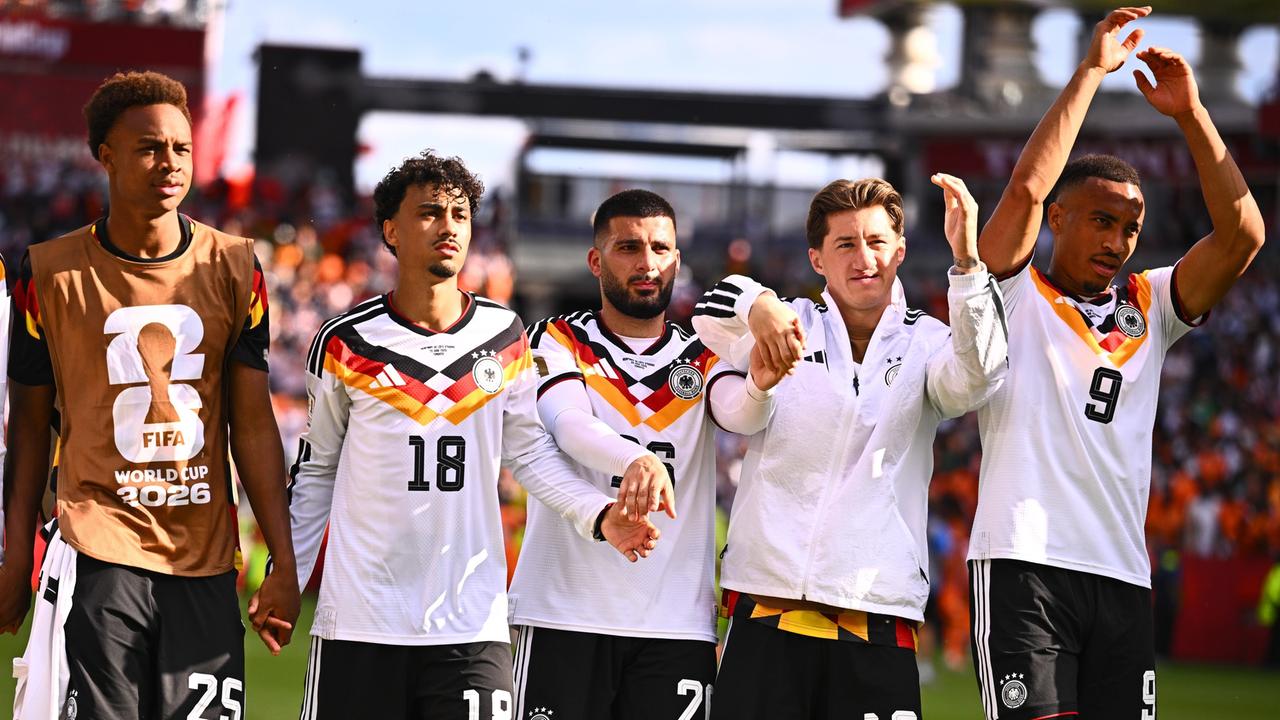
The team’s morale is reportedly high. The camaraderie displayed during the recent victory lap in the host stadium, where players like Assan Ouédraogo and Nathaniel Brown were seen interacting with the traveling supporters, suggests a cohesive unit. Despite the intense heat and the demanding travel schedule across North American time zones, the squad appears physically and mentally prepared for the rigors of the knockouts.
The Implications of the New Format
The 2026 World Cup’s expanded format has sparked significant debate regarding the integrity of the tournament. Critics argue that the reliance on third-placed teams to fill the Round of 32 creates a potential for "calculation," where teams might manipulate their final group results to secure a more favorable path.
However, for Germany, the path is dictated by a rigid FIFA mapping system that leaves little room for maneuver. The complexity of the seeding means that the team cannot afford to "pick" their opponent. Instead, they must prepare for a wide array of tactical profiles, ranging from the technical flair of South American teams to the physical, counter-attacking styles favored by emerging nations from Africa and Asia.
The Financial and Social Impact
Beyond the pitch, the German campaign is being closely watched by millions of fans back home. The logistical complexity of the 2026 tournament—spanning vast distances across the United States—has created a unique atmosphere. For the traveling German contingent, the focus has shifted from the initial group stage venues to the Northeast corridor, where the knockout matches will determine the team’s destiny.
The economic implications for the DFB are also substantial. Advancing through the knockout rounds not only boosts the team’s global ranking and prestige but also ensures continued revenue streams through broadcasting rights and sponsorship performance bonuses.
Looking Ahead: The Road to the Final
As the tournament progresses, the focus will inevitably turn toward the later stages. With the final scheduled to take place in the New York metropolitan area, the dream of hoisting the trophy on American soil is alive. However, the immediate reality remains the Boston fixture.
Germany’s ability to adapt to the specific conditions—the synthetic-hybrid pitches, the specific travel demands, and the high-pressure environment of a sudden-death match—will define their success. Whether they meet Brazil, France, or a surprise package from the group stages, the team’s technical pedigree remains their strongest asset.
Summary of Key Dates:
- Sechzehntelfinale (Round of 32): June 29, 2026, Boston, 22:30 CEST.
- Achtelfinale (Round of 16): July 4, 2026, Philadelphia, 23:00 CEST.
As the German national team prepares for the next phase of the 2026 World Cup, the footballing world watches with anticipation. The blend of a new generation of talent and the traditional German virtues of discipline and tactical awareness will be tested to their absolute limits. In a tournament where every match is a potential turning point, the DFB squad has proven they belong among the elite. Now, they must prove they can conquer them.