AMSTERDAM – ASML, the Dutch semiconductor manufacturing powerhouse and the world’s sole supplier of extreme ultraviolet (EUV) lithography systems, has issued a categorical denial following reports that one of its cutting-edge machines may have been illicitly transferred to China. The company’s rebuttal comes at a time of heightened scrutiny over the global semiconductor supply chain, as the United States intensifies its efforts to curtail Beijing’s technological advancements in artificial intelligence and high-performance computing.
The Core Controversy: Allegations of Sanction Evasion
The controversy was ignited by a report from Bloomberg, which suggested that Howard Lutnick, a prominent figure associated with U.S. trade policy discussions, had raised alarms regarding the potential unauthorized arrival of an EUV lithography system in China. Such a development would represent a seismic breach of the multi-layered export control regime established by the United States and its allies, including the Netherlands and Japan.
In a definitive statement provided to Reuters on Friday, ASML sought to put the rumors to rest. "ASML has never delivered an EUV machine to China," a company spokesperson stated. Furthermore, the company emphasized that no components, modules, or specialized equipment designed specifically for use in such highly sophisticated lithography systems have been exported to the Chinese market.
Chronology of the Export Restriction Escalation
To understand the gravity of these allegations, one must look at the timeline of the "chip war" between the West and China.
- Pre-2019: ASML enjoyed relatively unrestricted trade, providing various lithography solutions to Chinese manufacturers.
- 2019: Under pressure from the Trump administration, the Dutch government denied ASML a license to export its most advanced EUV machines to China, citing national security concerns.
- 2022-2023: The U.S. government, under the Biden administration, aggressively expanded the scope of its export controls. New regulations targeted not only EUV systems but also increasingly capable deep ultraviolet (DUV) immersion lithography tools.
- April 2024: The U.S. government proposed new legislative frameworks designed to force allies to harmonize their export controls, effectively tightening the net around China’s ability to manufacture chips below the 7-nanometer threshold.
- Present Day: Reports of potential circumvention via illicit channels or third-party transfers have prompted high-level concern from U.S. trade officials, leading to the current public discourse regarding ASML’s compliance.
Understanding the Stakes: Why EUV Matters
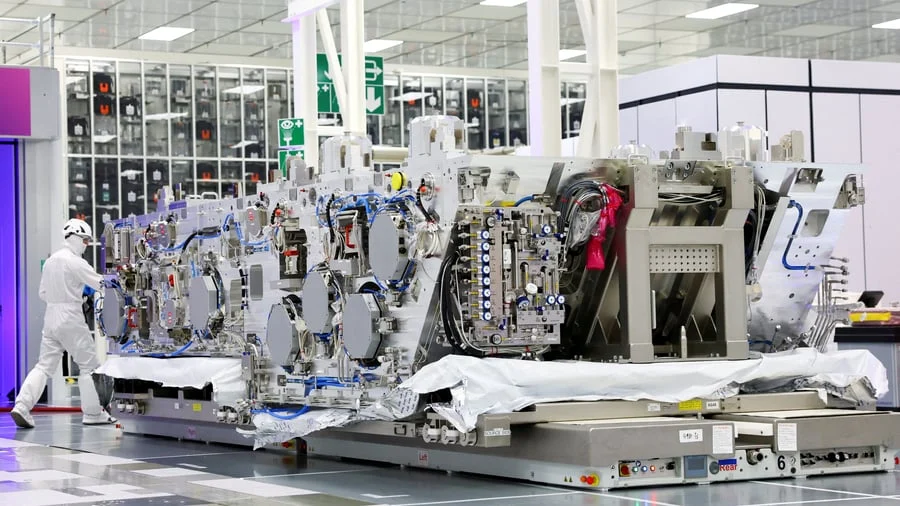
Extreme Ultraviolet (EUV) lithography is the "crown jewel" of the semiconductor industry. These machines, which cost upwards of $150 million each and are the size of a small bus, use high-frequency light to print the minute circuitry of the world’s most advanced microchips.
Without EUV technology, it is virtually impossible to manufacture the cutting-edge 3nm or 5nm processors that power modern AI, high-end smartphones, and sophisticated military guidance systems. For China, which is seeking technological self-reliance, gaining access to even one such machine would be a massive leap forward, potentially allowing them to "reverse engineer" components or at least bridge a significant manufacturing gap. ASML’s denial is therefore not just a corporate clarification; it is a vital defense of the global geopolitical order regarding high-tech dominance.
Official Responses and Regulatory Enforcement
The Dutch government has moved quickly to back the company’s stance, emphasizing that the Netherlands remains committed to international non-proliferation and export control agreements.
"For the export of equipment for semiconductor production, there are clear rules," a spokesperson for the Dutch Ministry of Foreign Affairs noted. "All equipment, components, and technologies that specifically fall under these rules require a license. This policy is enforced very strictly."
The Netherlands is in a precarious position, caught between its massive economic interest in the Chinese market—where ASML has historically done significant business—and its alliance obligations to the United States. The Dutch government’s emphasis on strict licensing serves as a message to Washington that they are taking their responsibilities under the Wassenaar Arrangement and subsequent bilateral agreements seriously.
Implications: A Fragmenting Tech Ecosystem
The implications of these allegations go far beyond a single news cycle. They highlight three critical issues in the current geopolitical landscape:
1. The Difficulty of Supply Chain Policing
Even if ASML has not shipped a machine directly to China, the complexity of the semiconductor supply chain makes tracking every spare part and module a Herculean task. Components are often shipped through multiple jurisdictions before reaching their final destination. The U.S. concern reflects a growing fear that "gray market" operators, or even state-sponsored actors, might be harvesting components from decommissioned or refurbished older systems to build a "Frankenstein" EUV capability.
2. The Weaponization of Trade Policy
The U.S. move in April to demand that allies align their export controls suggests a shift toward a more interventionist trade policy. By making the restriction of China’s chip manufacturing a condition of alliance-based economic cooperation, the U.S. is effectively forcing European and Asian firms to prioritize security over profit. This has created significant friction within the boardrooms of companies like ASML, which must now navigate a landscape where their best customers are often the primary targets of their government’s foreign policy.
3. China’s "Breakout" Potential
The persistence of these reports underscores the desperation within China to circumvent Western sanctions. The Chinese government has poured billions of dollars into domestic chip fabrication. If reports of illicit technology transfer continue to circulate, it suggests that despite massive investment, China’s domestic "Plan B" is not moving as quickly as intended. The reliance on illicit or gray-market access to Western tech remains a significant pain point for Beijing’s industrial strategy.
Conclusion: The Path Forward
ASML’s swift denial serves to calm market volatility, but it does not fully extinguish the underlying tensions. As long as the U.S.-China strategic competition remains the defining feature of the 21st-century global economy, companies at the center of this technological divide will remain under the microscope.
For ASML, the challenge is to maintain its market-leading position while proving its unwavering adherence to a shifting and complex regulatory environment. For the global community, the incident serves as a stark reminder that in the race for AI and computing dominance, the most valuable assets are not just the chips themselves, but the machines that make them—and the borders that keep them contained.
As the international community watches, the dialogue between The Hague and Washington will likely intensify. Expect further scrutiny of end-user certifications, more robust tracking of legacy components, and an ongoing diplomatic effort to ensure that the "EUV wall" remains impenetrable. Until then, the semiconductor industry remains on high alert, aware that one single errant machine could fundamentally alter the balance of global power.