LUDWIGSBURG, GERMANY – A community is in mourning today following the devastating conclusion to a large-scale search operation in Ludwigsburg. Authorities have confirmed that a three-month-old infant, who had been the subject of an urgent missing persons investigation since late Thursday night, has been found dead. The discovery has sent shockwaves through the region, leaving investigators with the grim task of unraveling the circumstances surrounding the child’s untimely death.
Main Facts: The Tragic Discovery
The search, which mobilized dozens of officers and specialized search teams, ended in tragedy when the body of the three-month-old boy was recovered. While the Ludwigsburg Police Headquarters has confirmed the discovery, they have maintained a strict veil of confidentiality regarding the specific location and the conditions in which the infant was found.
According to police spokespeople, the child had been reported missing by his parents shortly before midnight on Thursday. Despite an exhaustive overnight search, the outcome has left the community and local authorities reeling. The Kriminalpolizei (Criminal Investigation Department) of Ludwigsburg has officially taken over the case, treating the death as a high-priority investigation. At this stage, officials have declined to provide any details regarding potential suspects or whether foul play is suspected, emphasizing that the investigation is currently in a delicate and early phase.
Chronology: A Night of Desperation
The timeline of the tragedy began on Thursday night, a period that would soon escalate into one of the most significant search operations in recent local history.
The Initial Report
The parents of the three-month-old infant contacted the authorities just before midnight on Thursday to report their child missing. According to preliminary reports, the infant had last been seen in a stroller. When the parents realized the child was gone, they immediately alerted the police, sparking an emergency response.
The Search Operation
As the clock ticked past midnight, the Ludwigsburg police mobilized a substantial force. Recognizing the vulnerability of a three-month-old infant—particularly given the environmental conditions and the late hour—law enforcement escalated the search to a major operation.
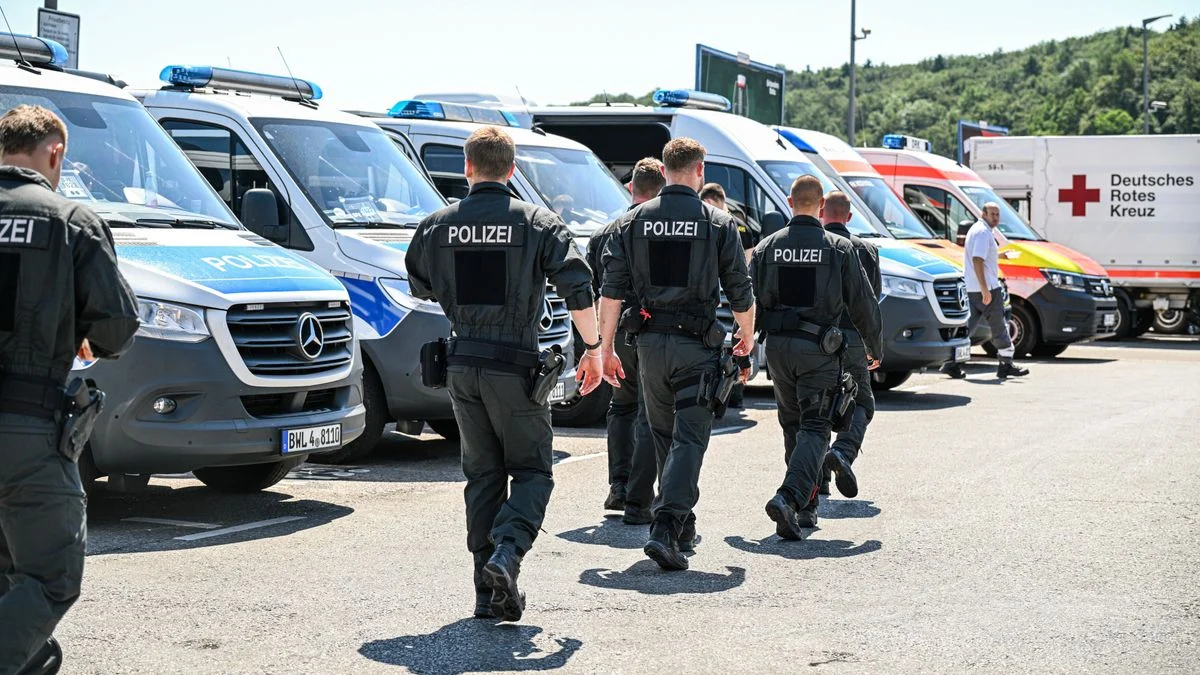
Throughout the early hours of Friday, the search area was saturated with personnel and technology. By daybreak, the operation had expanded to include 50 specialized police officers, supported by a massive contingent of 40 search dogs provided by the German Red Cross (DRK). The technical resources deployed were equally significant, including police helicopters and drones equipped with advanced thermal imaging cameras. These technologies are specifically designed to detect body heat, providing the best possible chance of locating a person in dark or dense terrain.
Additionally, the deployment of cadaver dogs during the operation signaled an grim shift in the search’s focus as the hours passed without a successful rescue.
Supporting Data: The Scope of the Search
The scale of the search operation underscores the gravity with which the Ludwigsburg police viewed the disappearance.
- Human Resources: 50 active-duty police officers were deployed on the ground to comb through the area.
- Specialized Assets: The German Red Cross contributed 40 trained search dogs, which are essential for navigating urban and semi-rural environments.
- Aerial Reconnaissance: Police helicopters and drones utilizing thermal imaging were used to survey the terrain from above, ensuring that no stone was left unturned.
- Specialized Canine Units: The use of cadaver-sniffing dogs, while often a final resort, highlights the methodical approach taken by the authorities to find the child, regardless of his physical state.
One detail that has caused significant confusion among the public is the status of the stroller. While the police confirmed that the child was last seen in a stroller, they explicitly stated that the stroller itself was not missing. This detail has become a focal point of public speculation, as investigators attempt to reconcile how a three-month-old infant could disappear from a stroller without the stroller itself being moved or missing.
Official Responses: The Investigation Continues
In a series of press briefings, the Ludwigsburg Police Headquarters has been careful to manage information as the investigation proceeds. The primary spokesperson for the department has repeatedly emphasized that the circumstances of the child’s death remain under active investigation.
"We are currently investigating all avenues," the spokesperson stated during a briefing. "The findings of the forensic examination and the ongoing work of the Kriminalpolizei will determine the next steps."
When questioned about how the child was found or why he was left unattended—a detail that has surfaced in local reports—the police remained tight-lipped. They confirmed that the infant was indeed left unattended in the stroller, but refused to comment on the location where the stroller was parked.
The silence from the authorities is standard protocol in Germany, where the integrity of an investigation—particularly one involving the death of a minor—is prioritized over public disclosure. This lack of information has, however, led to an increase in media speculation, prompting the police to urge the public to refrain from spreading rumors and to allow investigators to conduct their work without outside interference.
Implications: A Community in Shock
The death of a three-month-old is a tragedy that transcends local news. It raises profound questions about child safety, parental responsibility, and the efficacy of emergency response protocols.
The Question of Supervision
The detail that the infant was left "unattended" in a stroller has sparked a fierce debate regarding child supervision. Experts in child safety often point out that a three-month-old infant is entirely dependent on caregivers, and even brief moments of inattention can lead to catastrophic outcomes. While the police have not leveled any charges against the parents at this time, the fact that a missing persons report was filed indicates a sudden and distressing separation that will undoubtedly form the crux of the investigation.
The Role of Media and Public Safety
The incident also highlights the reliance of law enforcement on high-tech search equipment. The use of thermal imaging and cadaver dogs is standard in modern missing-person cases, but their deployment on such a large scale serves as a reminder of how difficult it is to locate a non-mobile infant in a crisis situation.
For the residents of Ludwigsburg, the tragedy has left a lingering sense of unease. The city, which is generally known for its safety, is now forced to confront the reality of a crime or accident that has claimed the life of its youngest member.
What Comes Next?
The Kriminalpolizei are expected to release more information only after the results of the autopsy are finalized. Forensic pathologists will be looking for signs of foul play, environmental factors, or underlying medical issues that could have contributed to the infant’s death.
In the interim, the community is left waiting. The incident will likely have long-term implications for how the local police handle missing child reports and may trigger renewed discussions about child safety in public spaces. As the investigation progresses, the primary goal for the authorities remains clear: to establish the truth of what transpired during those dark hours on Thursday night and to ensure that justice, if warranted, is served.
Conclusion
The disappearance and subsequent death of the three-month-old in Ludwigsburg is a heartbreaking reminder of the fragility of life. As the forensic team continues its work, the entire community looks to the police for answers. While the investigation may take weeks or even months to reach a conclusion, the sorrow felt by the local population is immediate.
For now, the focus remains on the investigative process. The Ludwigsburg police have asked for privacy for the family and have reiterated their commitment to finding the truth. As this tragedy unfolds, the public is reminded of the importance of vigilance and the profound responsibility that comes with the care of the most vulnerable among us.