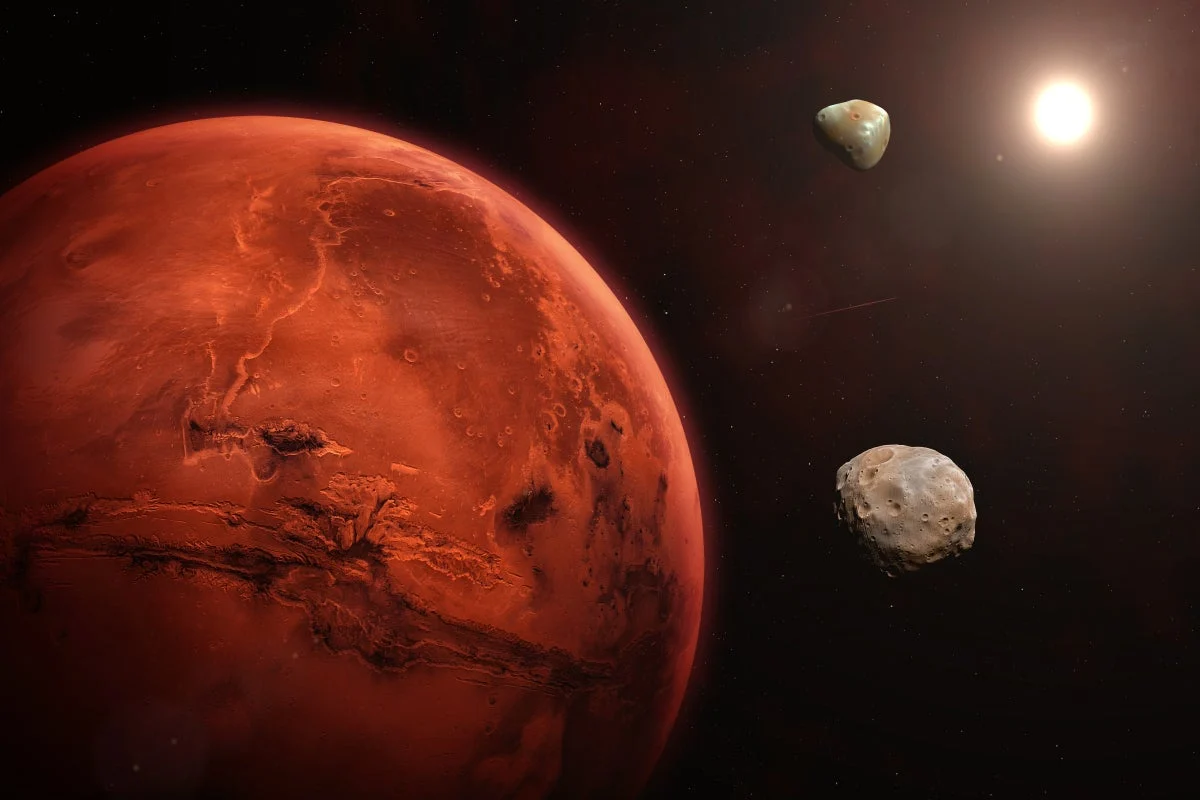
On October 19, 2026, the global space community will turn its gaze toward the Tanegashima Space Center on the southern Japanese island of Tanegashima. At precisely 21:41 CEST (October 20, 04:41 JST), the Japan Aerospace Exploration Agency (JAXA) plans to launch the Martian Moons Exploration (MMX) mission. Carried aloft by the powerful H3 launch vehicle, this three-module spacecraft is set to embark on a historic five-year journey, aiming to achieve a feat never before accomplished: the retrieval of pristine soil samples from the Martian moon, Phobos, and their safe return to Earth.
The mission, which represents a pinnacle of international cooperation and engineering ingenuity, is poised to place Japan at the forefront of planetary science, potentially eclipsing the efforts of the United States and China in the high-stakes race to analyze materials from the Martian system.
The Strategic Importance of Phobos
For decades, the scientific community has debated the origin of the Martian moons, Phobos and Deimos. Are they captured asteroids from the nearby belt, or are they the remnants of a massive, cataclysmic impact on Mars that scattered debris into orbit? MMX is designed to provide a definitive answer.
While NASA’s Perseverance rover is currently roaming the Jezero Crater on the Martian surface, collecting geological samples, the logistics of returning those samples to Earth remain daunting. The high gravity of the Red Planet requires a complex, multi-stage ascent vehicle to launch from the surface. In contrast, Japan’s approach is a tactical masterstroke. By targeting Phobos, which is only 27 kilometers across, JAXA avoids the "gravity well" problem entirely.
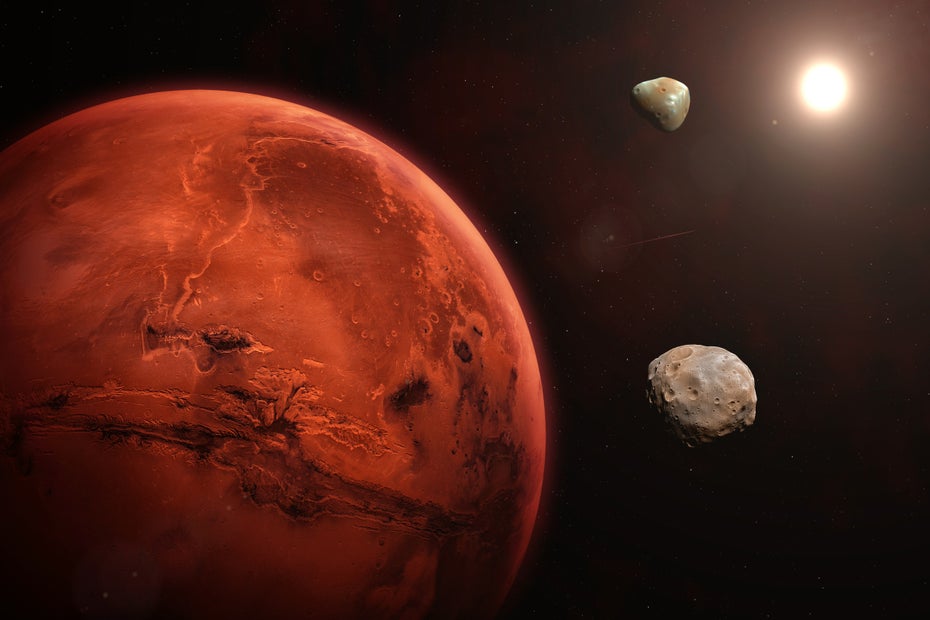
Phobos orbits Mars three times daily at a distance of just 6,000 kilometers. Because of this proximity, the moon acts as a natural "collector" for Martian debris. Scientific models suggest that approximately 0.1 percent of the top layer of regolith on Phobos consists of ejecta—material blasted off the Martian surface during asteroid impacts. By analyzing this material, scientists can gain invaluable insights into the composition of Mars without the need for a complex landing and ascent on the planet itself.
A Challenging Chronology: From Setbacks to Launch
The road to this launch has been fraught with technical and geopolitical hurdles. The MMX mission was originally slated for a 2024 launch window, but the schedule was derailed by the failure of the H3 rocket’s maiden flight in March 2023. Although the H3 has since successfully deployed several satellites into orbit, a secondary engine failure in December 2025 necessitated further rigorous safety assessments, leading to the current October 2026 launch date.
Missing the 2024 window was a significant blow, as the optimal launch window for a Mars mission only opens every 26 months. JAXA’s persistence in refining the H3 launcher underscores the agency’s commitment to independent launch capabilities. With the US government having suspended its own sample-return programs in early 2026 due to budgetary constraints, and China’s Tianwen-3 mission not expected until 2028, Japan now has a clear path to becoming the first nation to return samples from the Martian environment.
Scientific Instrumentation and Technical Hurdles
The MMX spacecraft is a marvel of modular engineering, comprised of a propulsion module, an exploration module, and a return module. Upon reaching the Martian system in August 2027, the craft will enter a "Quasi-Satellite Orbit." Because the gravity of Phobos is too weak to provide a stable orbit, the spacecraft will effectively orbit Mars while maintaining a constant, precise proximity to the moon.
The Two-Fold Sampling Approach
The mission plans for two distinct landings in 2030 to maximize scientific return:
- Surface Sampling: A pneumatic system—provided by NASA—will use pressurized gas to stir up surface dust, which will then be vacuumed into a collection container.
- Subsurface Sampling: A Japanese-engineered drill arm will penetrate the lunar surface to extract core samples from a depth of two centimeters.
These methods are intended to yield at least ten grams of material. While this may seem modest, the scientific value of even a few milligrams of Martian-derived dust—which can be dated and analyzed in high-end terrestrial laboratories—is immeasurable.
The Role of the Idefix Rover
Perhaps the most ambitious aspect of the mission is the deployment of the Idefix rover in early 2029. Developed in a collaboration between the German Aerospace Center (DLR) and the French space agency (CNES), Idefix will be dropped from a height of 40 meters. In the microgravity of Phobos—which is only 1/2000th of Earth’s gravity—the 25-kilogram rover will effectively weigh only 15 grams.
To combat the risk of bouncing into space or becoming trapped in uneven, low-gravity terrain, Idefix features four independently steerable legs. These allow the rover to "right itself" regardless of how it lands. Once upright, it will spend 100 days testing the soil’s physical properties. A key component of its instrument suite is a Raman spectrometer, which uses a laser module developed by the Fraunhofer Institute for Applied Optics and Precision Engineering (IOF) in Jena, Germany. Originally intended for the ExoMars mission, the module was repurposed after the cessation of European-Russian space cooperation in 2022, highlighting the resilience and adaptability of the international scientific community.
Implications for Human Exploration
Beyond the geological mysteries of Phobos, MMX has a direct bearing on the future of human spaceflight. An onboard radiation monitor will continuously track cosmic rays throughout the mission. The data collected will allow researchers to determine if Phobos could serve as a potential staging point or "gas station" for future human missions to Mars. If the radiation levels are manageable, the moon could become a vital, low-gravity anchor for interplanetary transport, significantly reducing the risks associated with human travel to the Martian surface.
Global Context and Official Stances
The international reaction to the upcoming launch has been one of cautious optimism. Scientific leaders, such as mission lead Kiyoshi Kuramoto of Hokkaido University, have expressed confidence that the analysis of these samples will resolve the long-standing debate over the origins of the Martian moons once and for all. "By analyzing these soil samples, we can reach a conclusion with near-certainty," Kuramoto stated.
However, the mission is not without its critics regarding the scale of the sample. Some geologists have noted that the 0.1 percent Martian content in the regolith is a "statistical needle in a haystack." Critics point out that because the sample will be a mix of material from various parts of the planet, it will be impossible to link specific dust grains to a particular region, unlike a targeted drill site on the Martian surface.
Nevertheless, the potential for discovery remains unparalleled. If successful, the return module will perform a flyby of Deimos in 2031 before jettisoning a heat-shielded capsule toward the Australian outback.
Conclusion: A New Era for JAXA
As the final countdown begins, the MMX mission stands as a testament to the endurance of space exploration. It is a mission defined by "what ifs"—what if the rocket holds, what if the landing succeeds in near-zero gravity, what if the samples reveal a secret history of our solar system?
JAXA, by choosing a path that prioritizes technical feasibility and international partnership, has positioned itself to answer questions that have lingered since the dawn of the space age. Whether the mission proves that Phobos is a captured asteroid or a relic of a violent planetary past, the data gathered by the MMX mission will undoubtedly serve as the foundation for the next several decades of Martian exploration. For now, the world waits for the H3 to ignite, signaling the start of a journey that could redefine our understanding of the Red Planet and its silent, orbiting companions.