In a harrowing incident that has sent shockwaves through the German amateur football community, veteran referee Bahar Özhan has broken his silence regarding a brutal, wrestling-style physical assault he endured during a match in Siegen. As the football world grapples with a rising tide of violence against officials, Özhan’s testimony serves as a stark reminder of the physical and psychological toll exacted on those who make the game possible.
The Incident: A Breach of the Social Contract
For 50-year-old Bahar Özhan, the match in early September was supposed to be a routine day on the job—another chapter in a distinguished 32-year career as a football official. Since 1994, Özhan has been a fixture on the local circuit, officiating everything from youth matches to high-stakes district league games. Last year alone, he oversaw 118 fixtures, priding himself on a philosophy of communication over confrontation.
"I talk to players, I try to de-escalate, and I don’t reach for the card immediately," Özhan explained in an exclusive interview. "But what happened that day was beyond anything I have experienced in my three decades on the pitch."
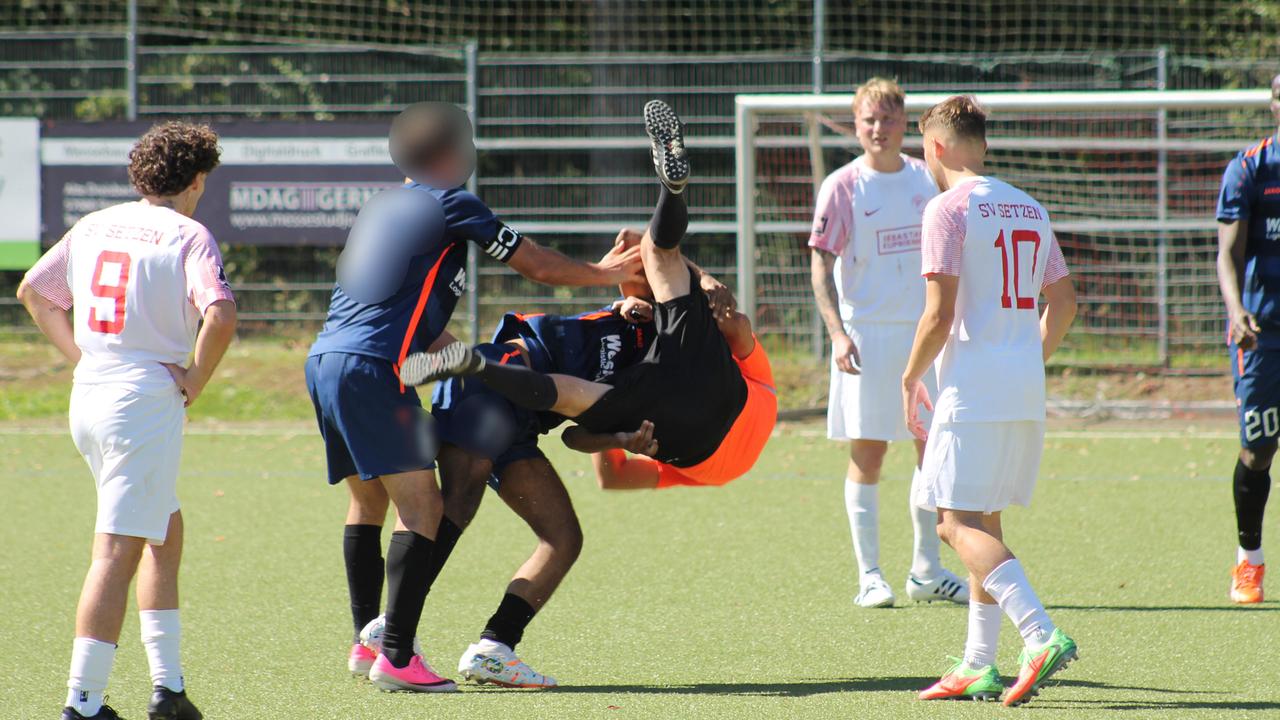
The situation began to unravel when a player from the Siegener SC, dissatisfied with an officiating decision, began directing verbal abuse toward Özhan. Maintaining his professional composure, Özhan issued a red card. The reaction was immediate and violent. The player, having completely lost his composure, did not simply argue; he lunged at the referee. Witnesses described the scene as akin to a wrestling match, with the player forcibly tackling Özhan to the ground.
"With a severe contusion, I was lucky to walk away as well as I did," Özhan recounted. "It could have been much worse."
A Chronology of the Assault
The sequence of events on that fateful day highlights the suddenness with which order can collapse in amateur sports.
- The Catalyst: A disagreement over a refereeing decision led to verbal confrontation.
- The Escalation: The player initiated a series of verbal attacks against the referee.
- The Dismissal: Özhan, following standard protocol, issued a red card to remove the disruptive player from the pitch.
- The Assault: Upon receiving the card, the player physically charged at Özhan, utilizing a grappling maneuver to bring him to the turf.
- The Aftermath: Recognizing the threat to safety, the match was immediately abandoned. Özhan retreated to the referee’s dressing room to document the incident, prioritizing his own safety and the integrity of the match report over further engagement.
"I had to remain the adult in the room," Özhan noted. "I didn’t look at him; I didn’t engage further. I walked to the cabin and ended the game. I wanted to be a role model for the other players on the pitch."
The Viral Reality: Digital Consequences
The assault was captured on a mobile phone, and the video spread through social media with startling speed. In the digital age, a local incident in a Siegen district league became a national talking point within hours.
The video serves as a sobering reminder of the scrutiny officials face today. While technology can provide evidence for disciplinary boards, it also strips away the privacy of the victims, turning a traumatic moment into public entertainment. For the SV Setzen, the club whose pitch hosted the match, the sudden influx of negative attention was unexpected and overwhelming.
"The SV Setzen was suddenly in the center of media attention," said Fabian Beitz, a member of the club’s board. "We felt we had to take this negative energy and transform it into something positive."
Community Response and Institutional Solidarity
The response from the football community has been swift and decisive. Rather than distancing themselves from the trauma, the SV Setzen has launched the initiative "Wir. Sind. Viele. Siwi" (We. Are. Many. Siegen-Wittgenstein). This grassroots movement is designed to stand in solidarity with referees and combat the escalating trend of violence.
The club recently hosted a high-level panel discussion at their sports facility to address the growing crisis. The central theme of the event—"You don’t have to like the decision, but you must respect the human being"—captures the core issue at the heart of the debate.
"The scenes shocked all of us," a spokesperson for the initiative stated. "But we want to keep the conversation going. We want to put the work of referees like Bahar Özhan in the center of the stage. They are the backbone of our sport, the people who make youth and amateur football possible."
The Psychological Toll and the Road to Recovery
While his physical injuries have begun to heal, the psychological impact of the assault remains a lingering burden. Özhan admits that while he has processed the event, the path to forgiveness is a long one.
Following the hearing at the local sports court, the assailant offered an apology. However, for Özhan, the breach of trust was too profound to be mended by a simple statement in a hearing room. "I cannot accept the apology yet," he says candidly.
Despite the trauma, Özhan remains committed to the game. He views officiating not as a job, but as a service to the community. He is determined to continue refereeing, driven by a desire to provide opportunities for young athletes. However, his experience raises critical questions about the environment in which these officials operate.
Implications for Amateur Football
The assault on Özhan is not an isolated incident; it is part of a troubling trend in amateur football across Europe. Referees are increasingly treated as targets for the frustrations of players and spectators alike.
1. The Erosion of Authority
The traditional respect for the man in the middle is eroding. When players believe that verbal and physical abuse is an acceptable response to a disagreement, the entire structure of the game is compromised.
2. The Shortage of Officials
The psychological toll of incidents like the one in Siegen is leading to a shortage of referees. As experienced officials retire early or quit due to safety concerns, the quality of amateur football declines, and the number of available matches decreases.
3. The Need for Cultural Reform
The "Wir. Sind. Viele. Siwi" initiative is a model for how clubs can take ownership of their culture. By actively promoting a culture of respect, clubs can shield their officials from the toxic environments that lead to such violence.
4. Legal and Disciplinary Measures
The use of the sports court in this instance was a necessary step, but many argue that criminal charges must be pursued more aggressively in cases of physical assault. The normalization of violence on the pitch can only be curbed when the consequences—both on and off the field—are severe enough to act as a deterrent.
Conclusion: A Call to Action
The story of Bahar Özhan is a testament to the resilience of those who serve the game of football. It is a story of a man who was attacked for doing his job, yet continues to believe in the value of that job.
As the amateur football community looks toward the future, the lessons from Siegen are clear: football is a game of passion, but passion without boundaries is destructive. It is time for clubs, leagues, and governing bodies to move beyond reactive statements and toward proactive cultural change.
If the game is to survive, the respect afforded to the referee must be absolute. The pitch must be a place where the rules are honored and the people who uphold them are protected. Anything less is a betrayal of the sport itself. For now, Bahar Özhan continues to whistle, a reminder that even in the face of violence, the commitment to fairness must prevail.