In a peculiar and ambitious administrative cleanup project, the city of Wiesbaden has launched a campaign to erase approximately 170 unauthorized road markings discovered across its urban landscape. From self-designated private parking bays and makeshift loading zones to an inexplicable zebra crossing positioned in the middle of a roundabout, the city is scrubbing away the "guerrilla" street art that has proliferated on its public thoroughfares. What began as a routine technical upgrade has transformed into a city-wide operation to restore legal order to the streets.
The Catalyst: A Digital Overhaul
The impetus for this unconventional removal project was not an initial search for illegal markings, but rather a forward-looking digital infrastructure initiative. As the Wiesbaden municipal government prepared to implement a new, state-of-the-art digital traffic management system, officials decided to create a comprehensive, high-resolution digital twin of the city’s entire road network.
"We scanned our streets to calibrate our new system," explained Marc Dahlen (CDU), the city’s Mobility Commissioner. "When we overlaid those scans with the official data from our traffic cadaster, the discrepancies were immediate and, quite frankly, surprising. There were dozens of markings—some of them quite elaborate—that simply do not exist in our official records."
The discovery phase revealed that the city’s streets had been surreptitiously modified by residents, business owners, and local stakeholders over the course of several years. These rogue markings range from minor paint-based attempts to discourage parking in front of private driveways to more hazardous additions that could potentially mislead traffic.
A Six-Month Erasure Campaign
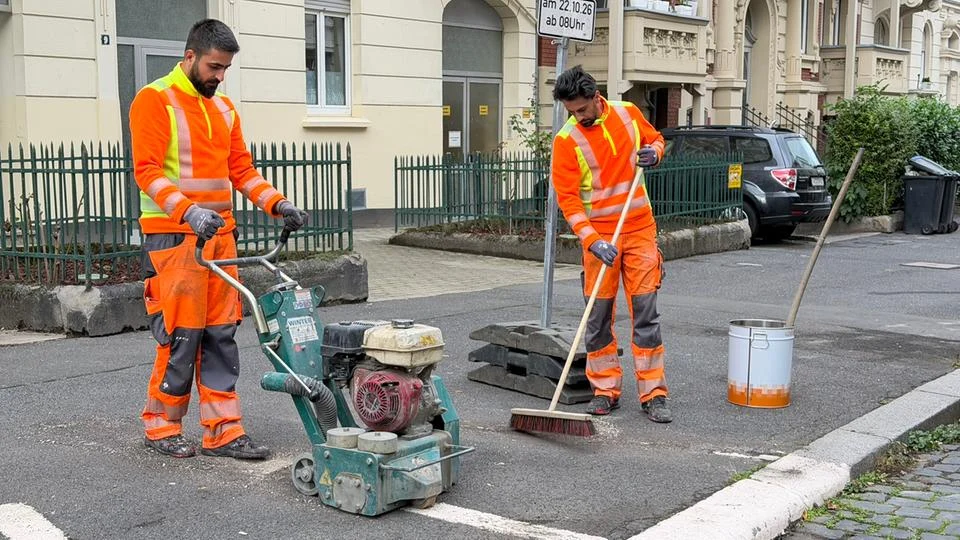
The physical task of undoing these modifications has fallen to municipal crews, who face a grueling schedule. Over the next six months, teams will travel from neighborhood to neighborhood, systematically identifying and removing each of the 170 cataloged discrepancies.

For municipal workers like Hassam Aldim, the job is labor-intensive and technically challenging. Armed with industrial-grade flex grinders, crews must painstakingly remove layers of hardened paint from asphalt and concrete. "At some locations, a quick coat of over-painting suffices," Aldim noted while working on an unauthorized driveway marker in the Rheingauviertel district. "But at others, especially where paint has been applied to curb edges, it’s a battle. The material is often thick and incredibly resistant to standard removal methods. It takes minutes of constant grinding just to clear a single meter."
This work is not merely aesthetic; it is a structural necessity. According to city engineers, some of the paint used by private individuals is of poor quality or contains chemical compounds that degrade the surface of the road or sidewalk over time, potentially leading to faster erosion of the public infrastructure.
Supporting Data: The Anatomy of Unauthorized Markings
The 170 identified markings reveal a pattern of "neighborhood vigilantism." The data collected by the city shows that the majority of these illegal modifications are concentrated in dense residential areas where parking space is at a premium.
Types of Unauthorized Interventions:
- Private Parking Designations: Painted lines, often accompanied by "X" markers or "No Parking" warnings, intended to reserve public street space for private residents or business clients.
- Extended Driveway Markers: White lines painted on sidewalks or streets that artificially expand the visual boundary of a private entrance to discourage others from parking too close.
- Safety Hazards: The most alarming finding was a zebra crossing painted by an unknown party in the middle of a roundabout. While likely intended to assist pedestrians, such unauthorized crossings can cause confusion for motorists, leading to erratic braking and a significantly increased risk of rear-end collisions.
The sheer scale of the project highlights a breakdown in communication between the city’s planning department and the expectations of its residents. For many, painting a line on the street is a simple, low-cost solution to a daily frustration: the inability to find a parking spot near their home.
Official Responses and the "No-Fine" Policy
The city’s response to these illegal modifications has been firm but pragmatic. Despite the costs associated with labor, equipment, and the potential for road repair, the municipal government has opted for a "soft-start" policy regarding enforcement.

Commissioner Marc Dahlen emphasized that the primary goal is public safety and the integrity of the digital traffic system, not the punitive pursuit of individual citizens. "We aren’t looking to launch a massive criminal investigation into every household with a painted curb," Dahlen said. "Our priority is to clear the slate. However, let me be clear: this is a warning. Spanning a few hundred euros for the cleanup is not something the city wishes to repeat. If we find individuals repeatedly painting, or if they persist after we have removed their markings, we will reserve the right to charge them for the full costs of the removal and the repair of the surface."
When questioned about the potential for backlash, Dahlen was blunt: "Sparen Sie sich die Farbe, sparen Sie sich den Weg in den Baumarkt (Save yourself the paint, save yourself the trip to the hardware store). We will keep removing them. It is a futile effort for the perpetrators."
The Perspective of the Residents
Despite the city’s official stance, the sentiment on the ground is nuanced. In the Rheingauviertel, where the removal campaign began, the reaction from local residents was mixed. A local building superintendent, when questioned about the white lines near his property, expressed frustration at the city’s intervention.
"People here don’t paint these lines because they are bored," the superintendent argued. "They paint them because without these markers, the area is constantly blocked. When the entrance is blocked, residents can’t get to work, and deliveries can’t be made. The city is removing the markings, but they aren’t providing a solution to the parking shortage."
This perspective highlights the core tension in the conflict: the city views the streets as a standardized public space governed by traffic laws, while the residents view them as a functional space that must be defended against overcrowding.

Implications for Urban Management
The Wiesbaden incident serves as a case study for the challenges of modern urban management. As cities move toward "smart" infrastructure and digital integration, the "analog" reality of the street—what is actually on the ground versus what is in the database—becomes a critical issue.
1. Safety and Liability
The primary concern for the city is liability. If an accident occurs at an unauthorized zebra crossing or because a driver was confused by a rogue parking line, the city could theoretically be held accountable if it is found that they were aware of the marking and failed to remove it. By cleaning the streets, the city is mitigating legal risk.
2. The Limits of "DIY" Urbanism
While some urban theorists advocate for "tactical urbanism"—small-scale, temporary interventions by citizens to improve their environment—the Wiesbaden case demonstrates where the line must be drawn. When citizen-led interventions interfere with established traffic flow or safety standards, the municipal authority must reassert control to maintain a cohesive and safe transit network.
3. Future Enforcement and Public Engagement
Looking ahead, the city of Wiesbaden plans to use this cleanup as a springboard for a broader public information campaign. By highlighting the risks associated with unauthorized markings, the city hopes to discourage the practice before it starts. The "six-month project" is not just about the removal of paint; it is about establishing a clear boundary between public responsibility and private initiative.
As the crews continue their work, the city remains focused on the bigger picture. The new digital traffic management system, once fully operational, will rely on accurate data to optimize traffic lights, manage flow, and improve safety. In this context, a single unauthorized line of paint on a curb is more than a nuisance—it is a data error that could have cascading effects on the city’s efficiency.

For the citizens of Wiesbaden, the next six months will be a transition period. As the white lines vanish, the city is signaling that the era of "do-it-yourself" traffic regulation is coming to a close, replaced by a more rigid, but hopefully safer, digital order. Whether this will lead to a decrease in the frustrations that caused the markings in the first place, however, remains to be seen.