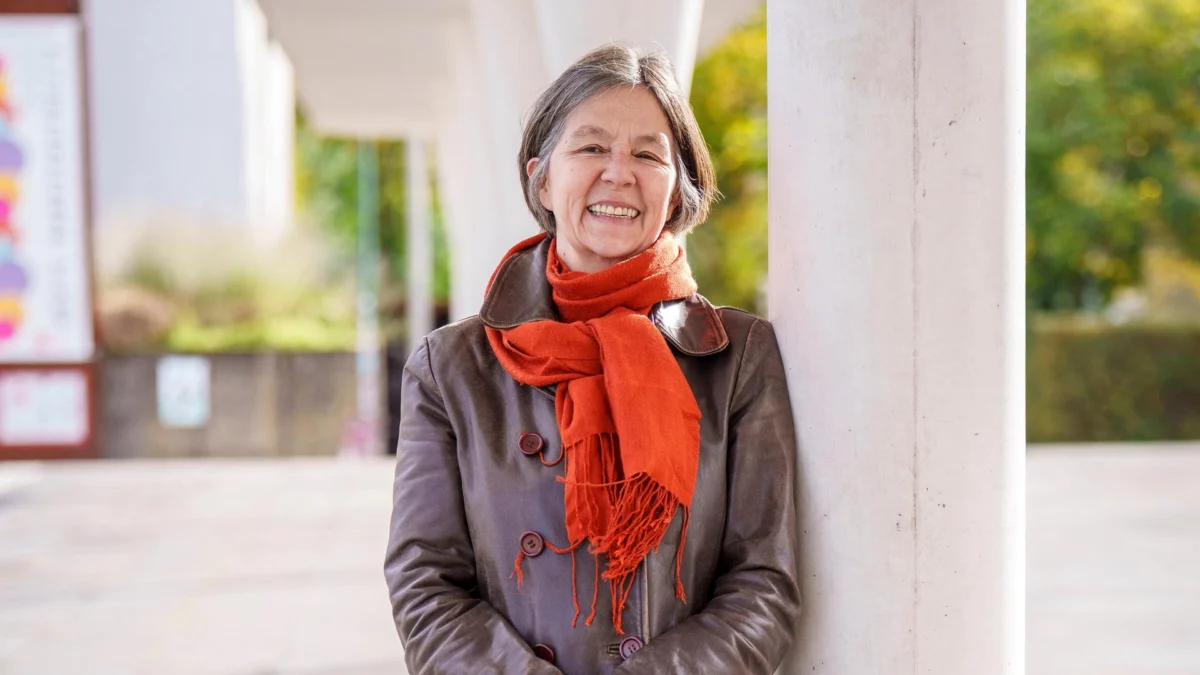
DARMSTADT, Germany – In a ceremony defined by intellectual rigor and a touch of idiosyncratic wit, the acclaimed German author and translator Christine Wunnicke was officially presented with the Georg Büchner Prize this Saturday. Held at the historic Staatstheater in Darmstadt, the event celebrated Wunnicke’s quarter-century of "brilliant art" and her unique ability to bridge the gap between historical fact and fictional narrative.
The prize, endowed with €50,000, is widely considered the most significant literary award in the German-speaking world. In honoring Wunnicke, the German Academy for Language and Literature praised her "constantly surprising and sovereignly conceived narrative work," cementing her status as a singular voice in contemporary literature.
Main Facts: A Career of Precision
Christine Wunnicke, 59, has long been recognized by critics for her meticulous craftsmanship. Her bibliography, which includes notable works such as The Lady with the Painted Hand (2020) and The Fox and Dr. Shimamura (2015), is characterized by a distinctive stylistic economy.
During her acceptance speech, Wunnicke offered a candid glimpse into her creative process—a process she describes as the art of subtraction. "What I can do best when writing, and what I enjoy doing most, is deleting," she told the audience. She explained that she systematically removes anything she deems non-essential, a habit that has caused her books to become increasingly concise over the years.
This philosophy of brevity extended to the speech itself. Wunnicke revealed that she had drafted a lengthy address, only to prune it repeatedly until, she quipped, only two sentences remained. Deciding that even one of those was superfluous, she opted for the most radical form of literary appreciation: she decided to read Georg Büchner instead of delivering a traditional lecture.
Chronology of a Literary Journey
The announcement of Wunnicke as the 2025 laureate came this past July, triggering a wave of acclaim across the European literary landscape. The jury’s selection was unanimous, highlighting her "unwavering work over a quarter-century" as a defining contribution to modern German letters.

- July 2025: The German Academy for Language and Literature announces Christine Wunnicke as the recipient of the Georg Büchner Prize.
- Early Autumn 2025: Wunnicke’s latest work, Wachs, is selected for the shortlist of the German Book Prize, further solidifying her critical momentum leading up to the Darmstadt ceremony.
- Saturday, October 2025: The formal award ceremony takes place at the Staatstheater in Darmstadt, attended by cultural dignitaries and members of the literary establishment.
The event reached a poignant moment when Wunnicke recounted a recent afternoon in Berlin. Seeking inspiration, she boarded a train on the city’s Ringbahn during a sweltering August day, clutching a copy of Büchner’s comedy Leonce and Lena. As she observed the mundane, everyday lives of fellow passengers, she began to interweave their movements with the linguistic rhythms of Büchner’s 19th-century prose. For Wunnicke, this exercise in "alien observation"—viewing the world with the unvarnished curiosity of a visitor from another planet—represents the ideal posture for an author.
Supporting Data: The Weight of the Büchner Legacy
The Georg Büchner Prize is more than a monetary award; it is a cultural institution. Established in 1951, it serves as a barometer for the state of German literature. The selection criteria are stringent: winners must be authors who have "contributed in a special way to the shaping of contemporary German cultural life."
The prize is financed by a tripartite partnership between the German federal government, the state of Hesse, and the city of Darmstadt. The list of previous recipients is a "who’s who" of 20th and 21st-century intellectual history, including:
- Max Frisch (1958)
- Günter Grass (1965)
- Heinrich Böll (1967)
- Ursula Krechel (2024)
Wunnicke’s inclusion in this lineage underscores the shift in contemporary literature toward nuanced, historically informed fiction that refuses to be categorized by genre. Her work often occupies a space between biography and invention, a technique the academy described as making "the fictional visible within the supposedly historical."
Official Responses and Jury Commentary
The German Academy for Language and Literature’s citation emphasized that Wunnicke’s work possesses a "sovereign" quality. In the lead-up to the ceremony, academy officials noted that her ability to remain "unbeirrt" (unswerving) in her artistic vision for 25 years has garnered her a devoted, if intellectually demanding, readership.
"She does not chase trends," one academic spokesperson remarked during the festivities. "She invites the reader into a dialogue with history, not by recounting it, but by inhabiting the silences between the facts."

Wunnicke’s peers and fellow writers have echoed this sentiment. Her consistent presence on major award shortlists—including the German Book Prize—has solidified her reputation as an author’s author, someone whose prose is studied for its rhythm as much as its content.
Implications: The Future of the "Shortened" Narrative
The implications of Wunnicke’s win are twofold. First, it validates the trend toward shorter, more distilled literary forms. In an era often dominated by "maximalist" novels, Wunnicke’s success provides a compelling argument for the power of the edit. Her speech, which prioritized the act of reading over the act of self-promotion, serves as a challenge to the traditional expectations of the "literary celebrity."
Second, the choice of Wunnicke signals the Academy’s continued interest in the intersection of translation and original composition. Wunnicke is an accomplished translator of Italian and English, and her stylistic dexterity is frequently attributed to her constant navigation between languages. Her win is likely to encourage a new generation of writers to view translation not merely as a secondary craft, but as a fundamental tool for expanding one’s native literary vocabulary.
As she moves forward, Wunnicke’s work remains a cornerstone of the German literary canon. Her desire to look at the world "like an alien who has lost their way" suggests that her future projects will continue to strip away the familiar to reveal the strange, the historical, and the profoundly human.
For those unable to attend, the ceremony was broadcast via a digital livestream, ensuring that the dialogue between Wunnicke’s work and the legacy of Georg Büchner—the 19th-century dramatist and revolutionary—reached a wide audience. In the final analysis, the 2025 prize was not just an award for a single writer; it was a celebration of the enduring, radical act of paying close attention to the world and, when necessary, deleting the rest.
Christine Wunnicke currently divides her time between Munich and Berlin, where she continues to work on her next projects. Her works are published by leading German houses, and her latest recognition adds to a decorated career that includes the Wilhelm Raabe Literature Prize and the Jean Paul Prize.