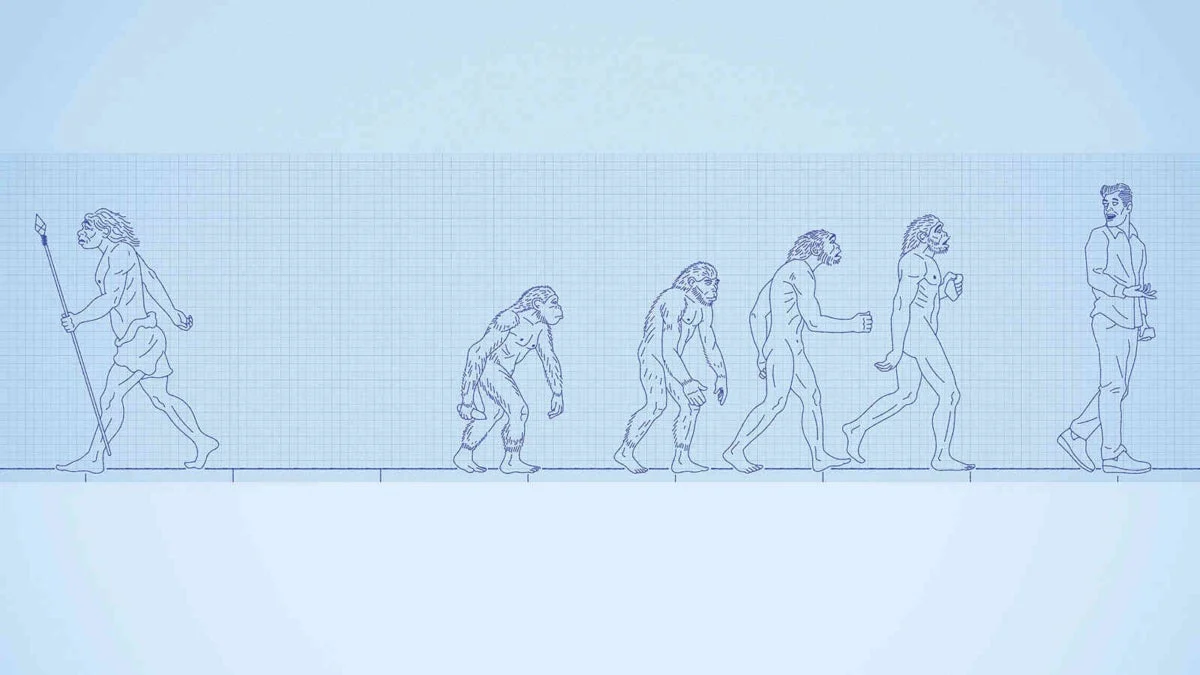
For over a decade, the narrative has been as compelling as it is pervasive: when the Homo sapiens of Africa first migrated into the colder, rugged landscapes of Europe approximately 45,000 years ago, they did not arrive in an empty wilderness. Instead, they encountered the Neanderthals—a robust, heavy-browed cousin species that had already adapted to the ice-age climate. According to the prevailing scientific consensus, these two groups interbred, leaving a permanent biological footprint in the modern human genome. Today, many people of non-African descent carry between 1% and 2% Neanderthal DNA, a legacy that has been linked to everything from immune system responses to skin pigmentation and even susceptibility to certain diseases.
This discovery, which garnered the Swedish geneticist Svante Pääbo the Nobel Prize in Physiology or Medicine in 2022, is widely considered the most significant breakthrough in evolutionary biology of the 21st century. Yet, like all great scientific milestones, it is now being subjected to intense scrutiny. Is our "inner Neanderthal" truly the result of direct mating, or have we misinterpreted the genetic data provided by our ancient ancestors?
The Accepted Chronology: A Story of Encounter and Integration
To understand the current controversy, one must first grasp the "Out of Africa" model that dominated paleogenetics for years.
- 400,000+ Years Ago: The lineage leading to modern humans and the lineage leading to Neanderthals split from a common ancestor, likely Homo heidelbergensis.
- 45,000 Years Ago: A significant wave of Homo sapiens disperses from Africa into Eurasia.
- 40,000–30,000 Years Ago: The period of direct "archaic admixture." Archaeological evidence suggests a period of coexistence, while genomic evidence shows the presence of Neanderthal alleles in early Homo sapiens fossils.
- 2010: The publication of the first draft of the Neanderthal genome by Pääbo’s team at the Max Planck Institute. This confirmed that non-African modern humans share more DNA with Neanderthals than do those from sub-Saharan Africa.
- 2022: Svante Pääbo is awarded the Nobel Prize, cementing the theory of interbreeding as the foundational explanation for these shared genetic markers.
Challenging the Foundation: The Toulouse Perspective
While the interbreeding theory remains the bedrock of modern anthropology, a seismic shift in perspective emerged two years ago. Lounès Chikhi and Rémi Tournebize, then researchers at the Université de Toulouse, published work that challenged the statistical foundations upon which the "interbreeding" narrative is built.
The core of their argument is not that interbreeding didn’t happen—it is that the models we use to prove it might be fundamentally flawed. According to Chikhi and Tournebize, the existing genetic evidence relies on a set of demographic assumptions that are likely too simplistic.
The Problem of "Structured Populations"
Most genetic models assume that humans, Neanderthals, and their common ancestors lived in massive, panmictic populations—meaning everyone in the group had an equal chance of mating with anyone else within that group.
However, Chikhi and Tournebize argue that early humans and Neanderthals were not living in these hypothetical, massive, homogeneous groups. Instead, they lived in small, highly structured, and fragmented populations. If our ancestors existed in these isolated pockets for hundreds of thousands of years, the genetic similarities we see today might not be the result of interbreeding during a migration event 45,000 years ago. Instead, they could be the result of "ancestral structure"—the retention of ancient genetic markers that were already present in the common ancestor of both species and never truly disappeared.
Supporting Data: Why Statistics Matter
To understand the critique, one must look at the math. When scientists compare the DNA of a modern human to that of a Neanderthal, they look for "derived alleles"—genetic variants that differ from the original ancestral state. If we see a high frequency of these shared derived alleles, the easiest conclusion is that the two groups must have mated.
However, the Toulouse researchers argue that if the ancestral population (the group from which both humans and Neanderthals descended) was itself structured—meaning it had regional variations—then those variations would be passed down to both species independently.
Imagine two distinct groups of common ancestors living in different parts of Africa. One group migrates and eventually becomes the Neanderthal line, while another stays and eventually becomes the Homo sapiens line. If both lines independently retained the same genetic variants from the original, divided common ancestor, they would appear genetically "related" without ever having met. This is known as "incomplete lineage sorting." Chikhi and Tournebize argue that our current models underestimate the role of this phenomenon.
Official Responses and the Scientific Community
The response from the broader scientific community has been one of cautious engagement. The "Out of Africa" interbreeding model is supported by a vast amount of physical evidence, including fossils that display hybrid characteristics and genomic "blocks" in human DNA that are clearly Neanderthal in origin.
Many experts argue that while Chikhi and Tournebize’s work on population structure is technically sound and highly important, it does not necessarily disprove the interbreeding theory in its entirety. Instead, it suggests that the extent of that interbreeding might have been overestimated, or that the "purity" of the ancestral populations was lower than previously thought.
Dr. Svante Pääbo and his colleagues have maintained that while the demographic history of hominids is undoubtedly complex, the signal of Neanderthal DNA in the human genome is too distinct and geographically distributed to be explained solely by ancestral structure. They point to the "introgression" patterns—the way these genes are integrated into our chromosomes—as evidence of a specific, relatively recent event rather than a long-term inheritance from a common ancestor.
Implications: Rewriting the Human Story
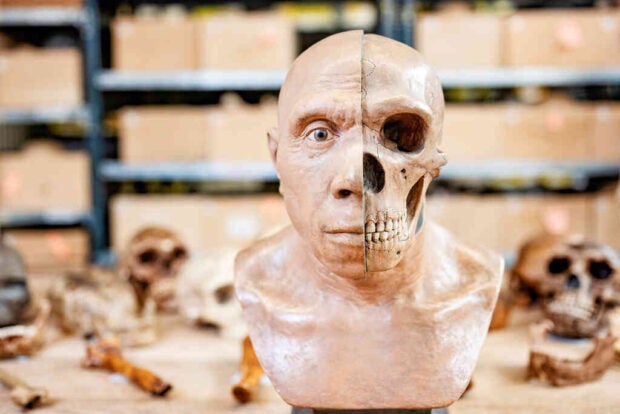
The debate surrounding the "Neandertal-Gene" theory carries profound implications for how we view our identity as a species.
1. Re-evaluating Human Uniqueness
If it turns out that some of our "Neanderthal" traits were actually inherited from a common ancestor—rather than acquired through interbreeding—it forces us to rethink what makes us "human." It suggests that the boundary between Homo sapiens and our archaic cousins was perhaps more porous and less defined than we once thought.
2. The Future of Ancient DNA Research
This debate highlights the limitations of current computing power and statistical models in archaeology. As we gain the ability to sequence more ancient genomes from a wider variety of locations, the "story" will likely shift again. We are moving from a phase of "discovery" (finding the DNA) to a phase of "refinement" (understanding the demographic history).
3. Medical and Evolutionary Insights
Much of the current research into Neanderthal DNA is focused on medicine. For example, some Neanderthal alleles are linked to how our bodies handle COVID-19 or autoimmune diseases. If the origin of these genes is contested, it could change how we interpret their function and how we develop therapies based on that genetic history.
Conclusion: A Work in Progress
We are currently in a golden age of paleogenetics. Just a few decades ago, the idea of sequencing the genome of a creature that died out 40,000 years ago was considered science fiction. Today, we are not only sequencing that DNA but actively debating the nuances of its origin.
Whether we are part-Neanderthal through interbreeding, or whether we simply share a deep, fragmented heritage from a common ancestor, the truth is likely a combination of both. The work of Lounès Chikhi and Rémi Tournebize serves as a vital reminder that in science, the most popular theory is not always the final one. As we continue to refine our tools and expand our data, we inch closer to an accurate portrait of our ancestors—a portrait that is likely far more messy, fragmented, and fascinating than we ever dared to imagine.
The story of human evolution is no longer a simple straight line from Africa to the rest of the world. It is a tangled web, and we are only just beginning to untie the knots.