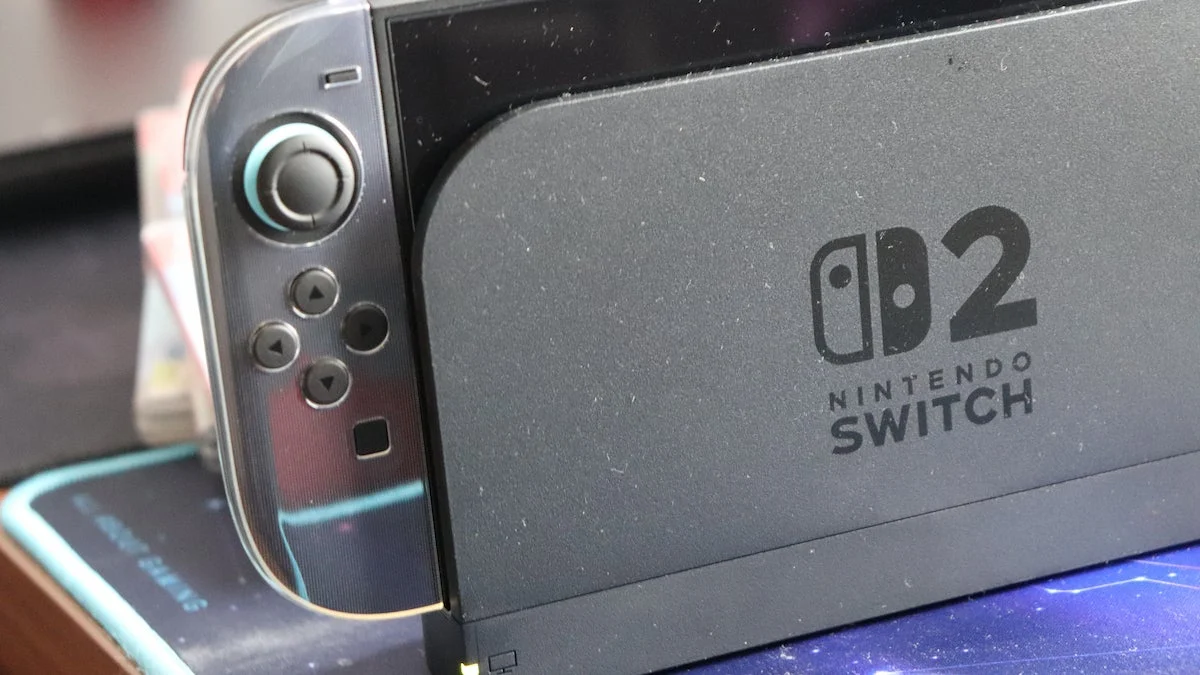
In a remarkable convergence of console modding culture and generative artificial intelligence, a developer known by the handle "pepsipu" has achieved what many thought would be impossible in the early life cycle of a new console: a successful jailbreak for the Nintendo Switch 2. By leveraging OpenAI’s Codex, a model designed to translate natural language into code, the developer bypassed the security architecture of Nintendo’s latest hardware. This event not only marks a significant milestone in the history of console hacking but also underscores a paradigm shift in how vulnerabilities are discovered and exploited in an age of automated, AI-assisted cybersecurity research.
Main Facts: Breaking the "Closed System" Barrier
The Nintendo Switch 2, like its predecessor and most modern gaming consoles, is a "walled garden." Nintendo designs these systems with high-security barriers intended to prevent unauthorized software, piracy, and system-level modifications. Historically, finding a way into these systems required months, if not years, of manual reverse engineering by teams of expert security researchers.
The breakthrough by pepsipu challenges this conventional timeline. By utilizing a sophisticated "KI-Harness" (AI harness), the developer automated the process of probing the Switch 2 for weaknesses. The hack specifically targeted a vulnerability within Smile Basic 4, a legitimate programming application available via the Nintendo eShop. By exploiting this software entry point, the developer was able to gain arbitrary code execution (ACE) rights, effectively allowing them to override the system’s primary restrictions.
The core of this exploit is not just the vulnerability itself, but the method of discovery. Instead of spending thousands of hours manually hunting for buffer overflows or memory leaks, the developer offloaded the heavy lifting to OpenAI’s Codex. This allowed for rapid iterations, testing, and debugging, compressing a process that usually takes months into just a few weeks of intensive work.
Chronology: From Concept to Execution
The journey to the Switch 2 jailbreak is a story of experimental engineering. Here is the timeline of the development:
- Infrastructure Setup (The Harness): Recognizing that the Switch 2 would not "cooperate" with an AI agent naturally, pepsipu constructed a physical bridge. Using Jet-KVMs—hardware normally reserved for data center remote management—the developer created a loop where the AI could send controller inputs and receive real-time video feedback via HDMI.
- The "Lighthouse" Automation: A critical hurdle was the console’s tendency to crash during the testing phase. To solve this, the developer attached a physical, remote-controlled light switch pusher to the console’s power button. If the console crashed during an exploit attempt, the AI would detect the signal, initiate a reboot, and resume its work without human intervention.
- Exploitation Phase (Weeks 1-2): With the harness in place, the developer deployed OpenAI’s Codex. The AI was tasked with analyzing the memory heap and searching for predictable behaviors within Smile Basic 4. After several cycles of trial and error, the AI identified a path to memory corruption that allowed it to inject custom code.
- Proof of Concept: By the end of the second week, the developer successfully executed a "Vibe-Coding" session. In a single day, they modified the internal assets of Mario Kart World, injecting unauthorized characters like Peter Griffin and the Red Angry Bird into the game engine, proving that they had full read/write access to the console’s operational memory.
Supporting Data and Methodology
The technical architecture used by pepsipu represents a new frontier in the "Cat-and-Mouse" game between console manufacturers and the homebrew community.
- The Role of Codex: OpenAI’s Codex served as the "brains" of the operation. It analyzed the assembly code and memory dumps provided by the KVM output. Its ability to write C++ and Python scripts on the fly allowed for the rapid deployment of payloads that would have taken a human developer hours to draft and debug.
- The Hardware Constraint: The use of Jet-KVMs was essential. By digitizing the physical interaction, the developer effectively treated the Switch 2 as a remote server, allowing the AI to "see" the screen and "press" the buttons. This removed the human element, allowing the exploitation process to run 24/7.
- The "Tethered" Reality: It is important to note the limitations. Currently, this is a "tethered" jailbreak. This means that the exploit is volatile; if the console is fully powered down or restarted, the injected code is cleared from the volatile memory (RAM), and the user must re-run the exploit process. While not yet a permanent, "untethered" modification, it provides a stable environment for modding while the console is active.
Implications: The New Era of AI-Assisted Security
The success of this jailbreak has profound implications for the gaming industry.
1. The Death of "Security by Obscurity"
For years, console manufacturers relied on the fact that finding a zero-day exploit was a tedious, high-skill endeavor. With AI tools like Codex, the "barrier to entry" for hackers has been lowered significantly. If an AI can discover and weaponize an exploit in weeks, the window of time that a company has to patch a vulnerability before it becomes public knowledge has shrunk drastically.

2. The Vulnerability of "App-Based" Entry Points
Nintendo’s decision to include Smile Basic 4 provided the exact foothold the attacker needed. This highlights a recurring problem: the more feature-rich a console becomes (with built-in browsers, programming apps, and social features), the larger the "attack surface" becomes. Every application is a potential gateway, and as this case proves, those gateways are now susceptible to automated AI discovery.
3. The Legal and Corporate Response
Nintendo has already begun its defensive counter-measures. Following the report of the jailbreak, Nintendo promptly removed Smile Basic 4 from the eShop, rendering the specific exploit vector unavailable to new users. This reflects the standard "Whack-a-Mole" strategy that Nintendo has perfected over the years. However, the legal implications are murkier. While the developer is currently showcasing the work as a research project, Nintendo’s history of aggressive litigation against modders and hackers suggests that they may soon target the developer directly, or at least attempt to build more robust, AI-resistant hardware protections into future firmware updates.
Official Responses and Future Outlook
As of the time of writing, Nintendo has not issued a formal statement regarding the specific jailbreak, adhering to their long-standing policy of not commenting on security research. However, the industry is watching closely.
Security experts suggest that the next generation of gaming hardware will likely need to integrate AI-based intrusion detection systems. If hackers are using AI to attack, manufacturers will soon be forced to use AI to defend. This could manifest as firmware that monitors for anomalous memory access patterns and triggers an immediate system lockdown if it detects the kind of rapid-fire, automated probing that characterized pepsipu’s approach.
For the community, the future remains uncertain. While the prospect of custom mods and homebrew software on the Switch 2 is exciting for power users, the risk of a "console war" between automated exploiters and automated security patches is likely to result in a more locked-down, restricted experience for the average consumer.
As pepsipu continues their work to find a permanent (untethered) method, the gaming world is witnessing a historic moment. The barrier between hardware and software, once protected by the sheer intellectual labor required to bridge them, has been breached by an algorithm. The Nintendo Switch 2 jailbreak is not just about playing custom content; it is a signal that the landscape of cybersecurity has been permanently altered by the capabilities of generative AI.