As the German energy sector navigates the complex transition toward a carbon-neutral economy, a quiet but significant financial development is set to hit households across the country. According to recent analyses by the consumer portal Verivox, millions of electricity and gas consumers should prepare for rising costs as we approach the new year. While net grid fees represent only a portion of the final utility bill, their steady climb—driven by infrastructure modernization, shifting federal subsidies, and geopolitical volatility—is becoming a point of contention for households and policymakers alike.
The Anatomy of the Energy Bill
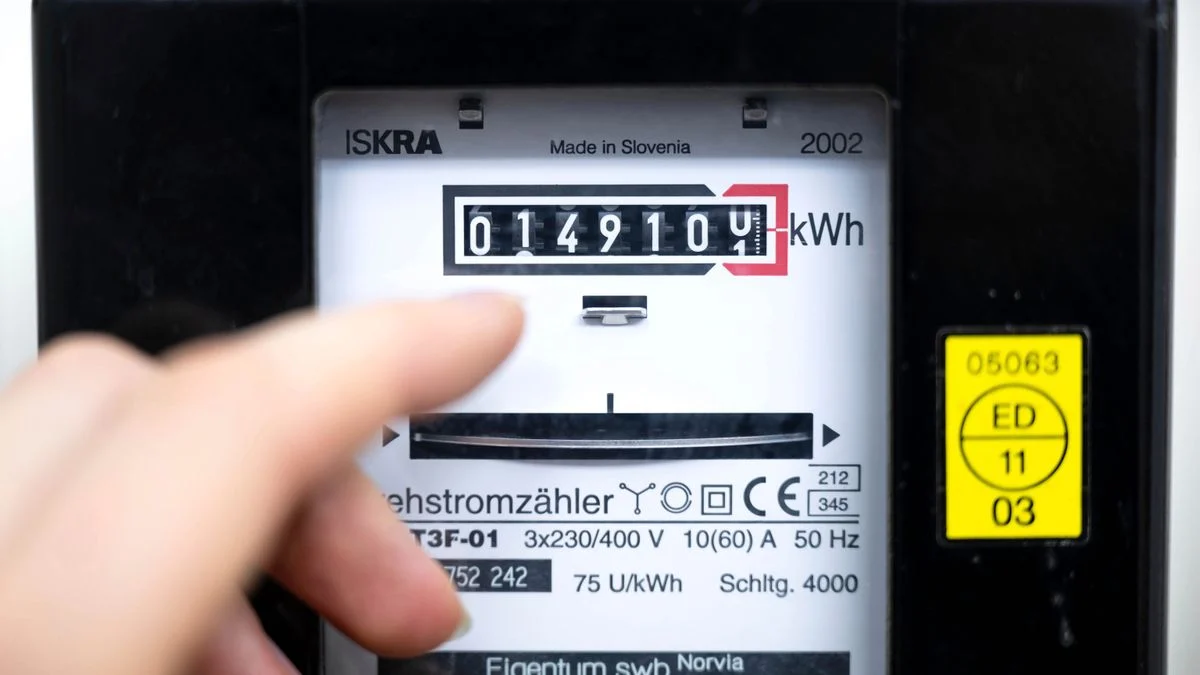
To understand the impending price hikes, one must first deconstruct the German energy bill. For the average electricity consumer, net grid fees—the costs associated with transporting electricity from power plants to the socket—typically account for roughly one-quarter of the total price. These fees are not merely arbitrary charges; they are the financial engine behind the massive, ongoing expansion of Germany’s power infrastructure. This includes the integration of renewable energy sources, the modernization of aging cables, and the implementation of smart grid technologies.
For natural gas, the landscape is similar but distinct. According to the Federal Association of Energy and Water Management (BDEW), grid fees constitute approximately one-fifth of the total cost for residential gas customers. Unlike electricity, where the focus is on grid capacity for massive renewable influx, gas infrastructure costs are increasingly tied to the maintenance of existing networks and the uncertainties of global supply chains.
Chronology of Cost Drivers: From Subsidies to Geopolitical Risks
The trajectory of energy prices over the past several years has been marked by a transition from crisis-driven volatility to structural transformation costs.
The Subsidy Squeeze
A primary driver for the 2027 increase in electricity grid fees is a deliberate policy shift at the federal level. The government has opted to curtail the annual federal subsidy for transmission network costs by nearly one billion euros, reducing the total support to approximately 5.5 billion euros for 2027.
In the German energy market, transmission grid operators (the high-voltage "motorways" of electricity) pass their costs down to the operators of the distribution networks (the "local streets"). These, in turn, pass the cumulative burden onto the consumer via the grid fee line item on the electricity bill. When federal support diminishes, the gap must be filled by end-users, leading to the projected average nationwide increase of 1.9 percent.
Global Instability and Gas Prices
While electricity grid fees are largely structural, gas prices are being pressured by external geopolitical factors. The ongoing instability in the Middle East and the resulting impact on wholesale energy markets have created a "perfect storm" for gas consumers. Verivox analysts warn that even if grid fees represent a fixed percentage of the bill, the total cost of gas is expected to rise as suppliers struggle to mitigate higher procurement costs in a volatile global market.
Supporting Data: Regional Disparities and Economic Impact
The economic impact of these hikes is far from uniform. The geography of Germany’s energy infrastructure plays a decisive role in what a household pays.
Electricity: The North-South Divide
Nationally, an average three-person household consuming 4,000 kilowatt-hours (kWh) of electricity annually will face an estimated increase of eight euros gross. However, this average masks extreme regional variations.
- Old vs. New Federal States: In the western federal states, grid fees are projected to rise by an average of ten euros. Conversely, in the eastern states, consumers may see a modest decrease of approximately three euros.
- The Hamburg Spike: Hamburg currently stands out as the region with the most significant anticipated surge in grid fees. This is attributed to the intense costs associated with both the expansion and the operational maintenance of the city’s regional grid.
- The "Renewable Bonus": A mitigating factor in some areas is the policy adjustment introduced in 2025, which aims to provide financial relief to regions that host high concentrations of wind and solar power generation. This is intended to reward areas that facilitate the Energiewende (energy transition), though the impact is not yet enough to offset the broader rise in costs.
Gas: The Cost of Consumption
For gas, the national average increase in grid fees for 2027 is projected at three percent. A family living in a detached house with an annual consumption of 20,000 kWh faces an additional burden of approximately 19 euros per year.
The regional divergence here is also stark:
- High-Cost Areas: Consumers in Berlin, Hamburg, Rhineland-Palatinate, and Brandenburg face above-average increases.
- Low-Cost Areas: Residents in Saxony and Thuringia are experiencing a rare trend of slight decreases in gas grid fees, providing a degree of relief compared to the national trend.
Official Perspectives and Expert Analysis
Thorsten Storck, an energy expert at Verivox, emphasizes that the grid fee is not a static figure but a reflection of the physical state of the network. "How high the grid fees end up being depends heavily on the costs for the expansion and operation of regional electricity networks," Storck noted.
The industry perspective often highlights the necessity of these costs. Utility companies argue that without these investments, the stability of the German power supply would be at risk. They point to the "bottleneck" problem, where the grid cannot currently handle the massive power flows from northern wind farms to southern industrial hubs. The costs for "redispatch" measures—where grid operators pay power plants to adjust production to prevent overloading—have historically been factored into these fees, though the federal government is attempting to decouple some of these expenses.
Implications for the Future
The implications of these price hikes are threefold: economic, political, and social.
1. The Industrial Competitiveness Gap
For the German economy, particularly energy-intensive industries, the rise in grid fees is a significant concern. As the country aims to become a hydrogen-based industrial powerhouse, the cost of electricity remains a decisive factor for international competitiveness. If grid fees continue to climb as the infrastructure is built out, Germany risks "energy poverty" for both households and small-to-medium enterprises (the Mittelstand).
2. The Political Tightrope
The government faces a difficult balancing act. Reducing subsidies for grid costs helps balance the federal budget, but it effectively acts as a tax increase on every household. With elections on the horizon and inflation still a concern for many, policymakers are under pressure to find ways to socialize these costs more effectively or to accelerate the integration of the grid to reduce operational inefficiencies.
3. The Consumer Response
For the average household, the takeaway is clear: the era of cheap, stable grid access is undergoing a fundamental shift. Consumers are increasingly being encouraged to optimize their usage patterns—shifting high-consumption activities like charging electric vehicles or running heat pumps to off-peak hours—to mitigate the impact of rising network costs.
Conclusion
The projected rise in electricity and gas grid fees in 2027 is a symptom of a country undergoing a massive technical and economic transformation. While the average increase—eight euros for electricity and 19 euros for gas—may appear manageable for some, the cumulative effect of these rising costs, combined with fluctuating wholesale prices, creates a challenging environment for millions.
As Germany continues to dismantle its reliance on traditional energy sources and pivots toward a decentralized, renewable-heavy infrastructure, the debate over who pays for this transition will only intensify. The regional disparities in these costs suggest that the Energiewende is not just a technological challenge, but a distributive one. For now, consumers in hotspots like Hamburg and Berlin must brace for the highest increases, while the rest of the nation watches to see if efficiency gains and better regional planning can eventually bring these costs under control.
The path to 2027 will be defined by the tension between the physical necessity of grid expansion and the financial reality of the citizens who foot the bill. As the energy transition accelerates, the grid fee will remain the most transparent, albeit painful, indicator of the price of progress.