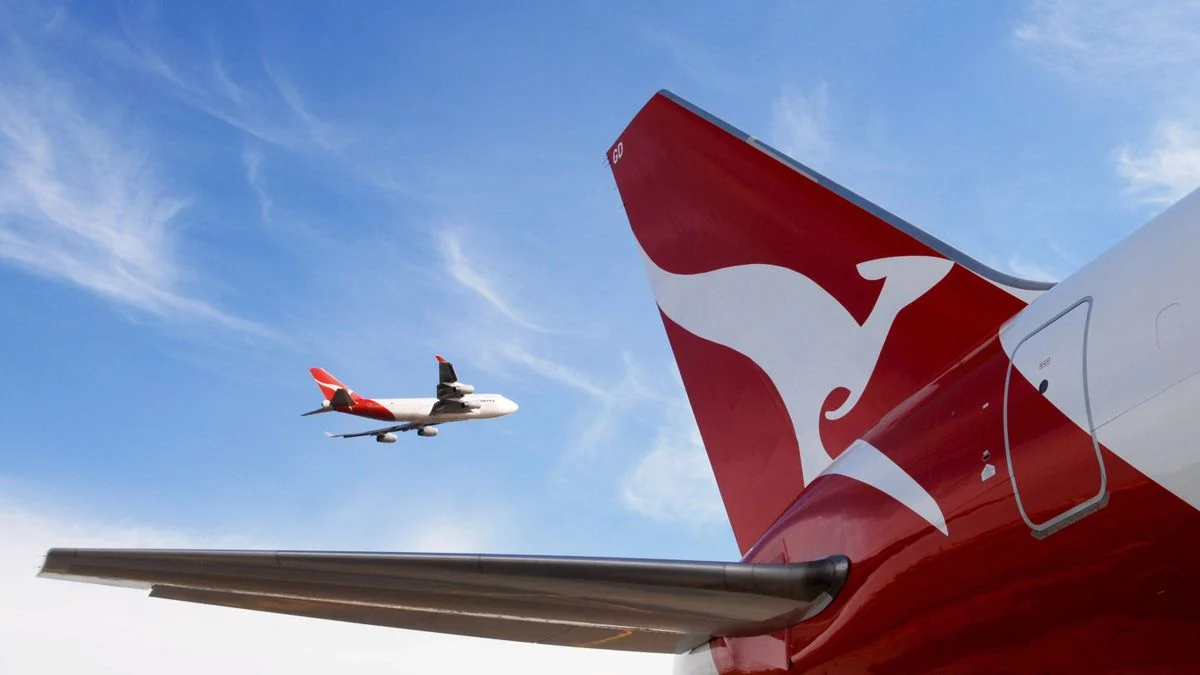
The global aviation industry prides itself on precision, luxury, and the seamless transit of passengers across continents. However, a recent incident involving Australia’s flag carrier, Qantas, serves as a jarring reminder that even the most sophisticated modern machinery is not immune to the age-old scourge of pests. A Boeing 787 Dreamliner, one of the crown jewels of the Qantas fleet, was forced to remain grounded this past weekend after reports emerged of a bed bug infestation, turning a routine long-haul operation into a logistical nightmare.
The Incident: A Flight Interrupted
The disruption centered on a planned service from Rome to Perth, a flagship route for the airline connecting Europe to Western Australia. According to consistent reports from major international media outlets, including the BBC and The Canberra Times, the aircraft was pulled from service after passengers on a preceding flight expressed significant distress regarding the presence of parasites.
The reports indicate that the infestation was not a widespread systemic failure, but rather localized to a specific section of the cabin. Nevertheless, the nature of the pest—notorious for its ability to hide in upholstery and migrate through luggage—necessitated an immediate and aggressive response from the airline’s ground operations team. The flight, which was scheduled to depart Rome on Saturday, was canceled, leaving scores of passengers stranded and requiring the airline to facilitate alternative travel arrangements amidst a high-demand travel season.
Chronology of the Disruption
The timeline of the infestation reveals the speed at which such biological incidents can derail airline operations:
- Friday: During a long-haul flight operated by the Boeing 787, passengers began reporting physical discomfort. Several travelers alerted cabin crew, claiming they had been bitten while seated in the Economy class cabin. The crew conducted initial inspections, but the elusive nature of bed bugs meant the extent of the problem was not immediately clear until the flight concluded.
- Saturday Morning: Upon arrival at the terminal, ground staff and professional pest control specialists were alerted to the complaints. Following a thorough inspection of the seats identified by the passengers, the presence of the insects was confirmed.
- Saturday Afternoon: Qantas made the decision to ground the aircraft. The scheduled return flight from Rome to Perth was officially canceled.
- Sunday and Beyond: The aircraft was placed under an intensive decontamination protocol. This involved not only the removal of affected seat covers and soft furnishings but also a deep-cleaning process that mandates the use of specialized chemicals and heat treatments to ensure no eggs or larvae remained in the cracks of the cabin interior.
Official Responses and Remediation
Qantas has moved quickly to manage the reputational fallout of the incident. A spokesperson for the airline confirmed the grounding, stating that a "small number of seats in the Economy class" had been identified as the source of the issue. The airline emphasized that the safety and comfort of its passengers remain its "highest priority."
"We understand that this is an incredibly frustrating experience for our customers, and we sincerely apologize for the disruption to their travel plans," the spokesperson stated. "The aircraft was removed from service immediately to undergo a thorough cleaning and sanitization process by specialists to ensure the issue was fully resolved before returning to the fleet."
The airline has not provided a specific timeframe for how long the aircraft will remain out of rotation, but industry standards for such infestations typically require multiple rounds of inspection by specialized entomological cleaners to ensure the environment is fully purged of the pests.
The Science of Aviation Infestations
While the news of bed bugs on a state-of-the-art Boeing 787 may strike many as a sign of poor maintenance, experts in the field of medical entomology argue that the reality is far more nuanced.
Stephen Doggett, a leading authority in the field and the head of the Department of Medical Entomology at the New South Wales Health Pathology service, provided context to The Canberra Times. According to Doggett, while a bed bug outbreak in a commercial airliner is undeniably unpleasant, it is not an unprecedented event.
"It is not an uncommon occurrence," Doggett noted, sharing a personal anecdote about having been bitten himself on a flight between Hong Kong and Seoul. He explained that because bed bugs are "hitchhikers," they often arrive on the clothes or within the luggage of passengers. "They don’t care about the prestige of the airline or the age of the plane. They follow the food source—the passengers."
The nature of the modern economy-class cabin, with its dense seating arrangements, shared armrests, and fabric upholstery, creates a micro-environment that can sustain a small population of bugs if they are introduced by a traveler. Once on board, they can easily transfer from a passenger’s belongings to the seat fabric, creating a recurring cycle of bites for subsequent travelers.
Implications for the Aviation Industry
The Qantas incident raises significant questions regarding airline hygiene protocols and the challenges of maintaining sanitary conditions in high-turnover environments.
The Challenge of Rapid Turnarounds
Modern aviation relies on rapid turnaround times to remain profitable. Aircraft often land, deplane, are cleaned by third-party contractors, and board new passengers within a window of less than two hours. This "fast-turn" model leaves little room for the deep, microscopic inspections required to detect early-stage bed bug infestations. While cleaning crews are trained to remove refuse and vacuum floors, they are rarely equipped to perform the deep-tissue inspections of seat seams that would be necessary to catch a few hiding bugs.
Passenger Rights and Compensation
The incident also highlights the complexities of passenger rights under international aviation law. Under the Montreal Convention, airlines are generally responsible for the "comfort and safety" of passengers, but bed bugs often fall into a legal gray area. While the airline is responsible for the mechanical airworthiness of the plane, biological hazards are often categorized as "extraordinary circumstances" or maintenance issues. Passengers affected by such delays are usually entitled to hotel accommodation, meals, and rebooking, but obtaining further compensation for the physical and psychological distress of being bitten is a much more difficult legal hurdle.
Future Prevention Strategies
Moving forward, the industry may see a shift in how cabins are designed and cleaned. Some airlines have experimented with non-porous materials and hard-shell seat designs that minimize the areas where pests can hide. Additionally, the integration of regular, proactive pest-detection audits—conducted by specialized entomological firms rather than general cleaning contractors—could become a more standard procedure for long-haul carriers operating routes with higher risks of infestation.
Conclusion: A Reminder of Human Fragility
As global travel continues to rebound to pre-pandemic levels, the interaction between humans and the environments they inhabit is under renewed scrutiny. The Qantas incident is a stark reminder that despite the technological marvels of the Boeing 787—with its advanced air filtration systems, pressure control, and noise-reduction technology—the cabin remains a shared space.
While the airline’s swift response was necessary to mitigate the spread and restore public confidence, the incident serves as a call for both airlines and travelers to remain vigilant. For the airline, it is a lesson in the necessity of rigorous, specialized maintenance. For the passenger, it is a reminder that in an interconnected world, the smallest of stowaways can disrupt the most complex of systems.
As the affected Dreamliner undergoes its rigorous decontamination, Qantas faces the challenge of reassuring its loyal customer base that the skies remain a safe and clean environment. For now, the focus remains on the "thorough cleaning" promised by the airline, a process that reflects the aviation industry’s commitment to safety—even when the threats are smaller than a fingernail.