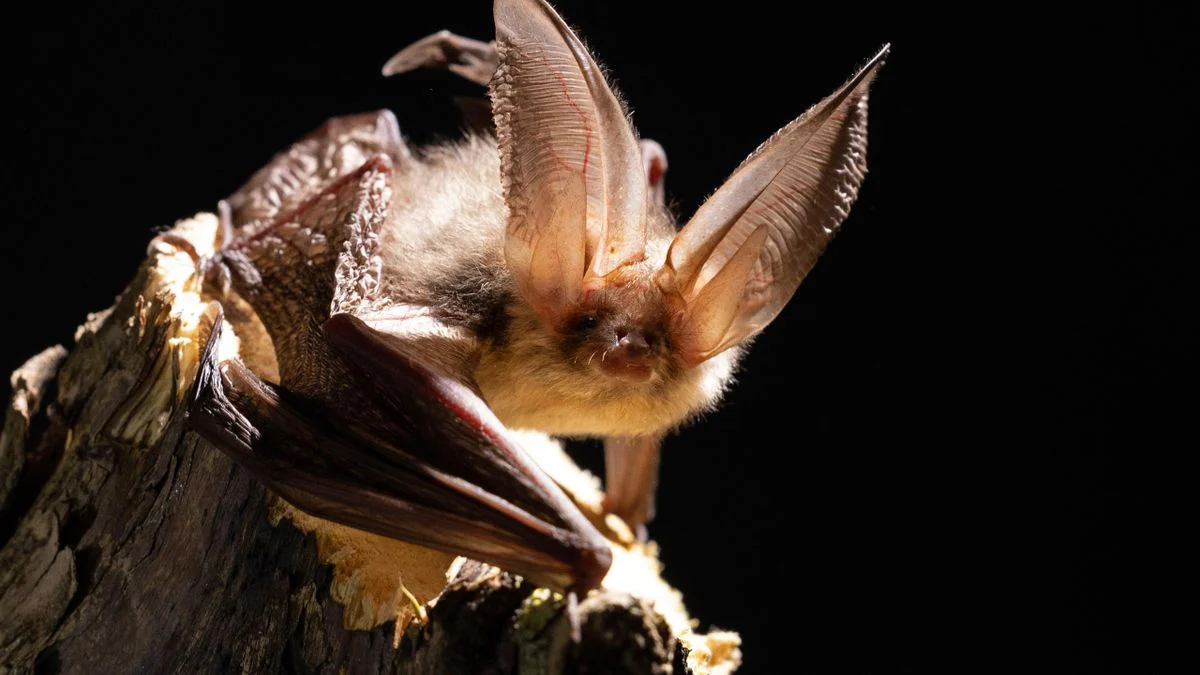
For centuries, the origins of Chiroptera—the order encompassing bats and flying foxes—have remained shrouded in mystery. As the only mammals capable of sustained, powered flight, their presence in the fossil record has long puzzled paleontologists. Now, a groundbreaking study published in the prestigious journal Nature has upended conventional wisdom. An international research team has provided compelling evidence that the evolutionary cradle of these remarkable creatures was not, as previously hypothesized, in Africa, Asia, or North America, but in Europe.
This discovery suggests that bats emerged approximately 65 million years ago, a critical juncture in Earth’s history that occurred immediately following the Cretaceous-Paleogene (K-Pg) mass extinction event—the cataclysm that wiped out the non-avian dinosaurs. This realignment of the evolutionary timeline offers fresh insights into how these masters of the night sky conquered the globe.
1. Main Facts: A Paradigm Shift in Evolutionary Biology
The study, led by an interdisciplinary team of geneticists and paleontologists, utilized a sophisticated synthesis of genomic analysis, morphological examination of existing and extinct species, and habitat mapping. By decoding the evolutionary lineage of bats, researchers have constructed a definitive phylogenetic tree that traces the origin of the order back to a European ancestor.
"For years, the scientific community operated under the assumption that bats likely diversified in tropical regions of the Southern Hemisphere or Asia," says one of the lead researchers. "However, the genomic data points unequivocally to an origin point in Europe. This rewrite of their history provides a missing link in our understanding of how mammals successfully occupied the ecological niches left vacant by the dinosaurs."
The researchers highlighted that bats represent a disproportionate success story in the animal kingdom. With roughly 1,500 extant species, they constitute more than one-fifth of all mammalian diversity, ranking as the second-largest order of mammals, surpassed only by rodents. Their ability to occupy almost every corner of the globe—save for the frigid expanse of Antarctica—is a testament to their rapid evolutionary radiation following their emergence.
2. Chronology: From European Origins to Global Colonization
The journey of the bat is one of rapid adaptation and expansion. The research team’s findings suggest a specific timeline:
- 65 Million Years Ago (The Post-Dinosaur Dawn): The earliest ancestors of bats emerged in Europe. This was a time of ecological upheaval, as the disappearance of the dinosaurs created a vacuum in the nighttime aerial insectivore niche.
- 50 Million Years Ago (The Rise of Vielasia): A pivotal piece of evidence comes from the discovery of a fossil group known as Vielasia. Found in cave systems in what is now southwest France, this collection of at least 23 individuals reveals that by 50 million years ago, early bats were already highly specialized. These creatures possessed the physiological structures required for flight and the sophisticated anatomical features necessary for echolocation.
- The Great Expansion: Following their development in Europe, bats began a multi-continental migration. Using the refined genomic tree, researchers demonstrated how these early populations branched out, crossing land bridges and navigating changing climates to reach Asia, Africa, and eventually the Americas.
This chronology challenges the notion that flight was a slow, gradual development over millions of years. Instead, it appears that the core biological "innovations" of the bat—flight and echolocation—were refined rapidly in the wake of the K-Pg extinction.
3. Supporting Data: The Secrets of the Bat Genome
Beyond their flight capabilities, bats are biological marvels. The study delved into the genetic makeup of these animals, revealing findings that are as surprising as their origins.
The Smallest Genome
One of the most striking revelations is that bats possess the smallest genomes of all mammals, with an average of only two billion base pairs. In contrast, the human genome comprises more than three billion base pairs. Scientists believe this streamlined genetic structure may be an evolutionary trade-off, allowing for the metabolic efficiency required to support the extreme energy demands of powered flight.
Longevity and Biological Resilience
The report also highlights the extraordinary lifespan of certain bat species. Despite their small body size—a factor that usually correlates with a shorter life expectancy in the mammalian world—some bats can live for 20 to 30 years. This is eight to ten times longer than would be predicted by standard allometric scaling. This longevity is attributed to unique DNA repair mechanisms and robust immune systems that have evolved to handle the oxidative stress associated with their high-energy lifestyle.
The Case of the Kitti’s Hog-nosed Bat
To build their comprehensive model, researchers included extreme examples like the Kitti’s hog-nosed bat (Craseonycteris thonglongyai). Native to Thailand and Myanmar, this tiny creature is the sole representative of its family, Craseonycteridae. By analyzing its unique physiology and comparing it to broader genomic data, the team was able to calibrate their phylogenetic tree, ensuring that even the most specialized outliers were accurately accounted for in the broader evolutionary story.
4. Official Responses and Scholarly Context
The publication of these findings in Nature has been met with significant enthusiasm from the biological community. Independent experts note that while the "out of Europe" theory is a bold departure from previous literature, the integration of multiple data streams—genomics, fossil records, and geography—provides a robust foundation for the claim.
"This is a major step forward," says Dr. Elena Rossi, an evolutionary biologist not involved in the study. "We have struggled for decades with the ‘ghost lineage’ of bats—the period where we knew they existed but lacked the fossils to prove it. By identifying Europe as the origin point, we now have a geographic target for future paleontological digs that could yield even older fossils."
However, the team acknowledges that the fossil record is inherently incomplete. They emphasize that while their model is the most accurate to date, ongoing discoveries in cave systems and sedimentary layers across Europe may continue to refine the exact timing of the first "flight-capable" ancestor.
5. Implications: Why the Origin of Bats Matters
Understanding the origin of bats is not merely an academic exercise; it is crucial for understanding the stability of modern ecosystems.
Ecological Services
Bats serve as the primary predators of night-flying insects, providing billions of dollars in agricultural pest control services annually. They are also vital pollinators and seed dispersers, particularly in tropical rainforests. By tracing their evolutionary history, scientists can better understand the environmental pressures that shaped these essential ecological roles.
Evolutionary Resilience
The fact that bats survived the K-Pg mass extinction while so many other lineages perished suggests that their unique physiological traits—specifically their nocturnal nature and high mobility—offered a distinct survival advantage. As the planet faces new climate challenges, the genetic secrets of the bat—specifically their longevity and disease resistance—are being studied for potential applications in human medicine, including oncology and gerontology.
A New Direction for Paleontology
The shift in focus to Europe serves as a call to action for European paleontologists. With the knowledge that the continent was the evolutionary "nursery" for such a dominant order of mammals, institutional funding and research efforts are likely to pivot toward identifying more Paleocene-era fossil sites in France, Germany, and the surrounding regions.
Conclusion
The story of the bat is one of the most compelling narratives in evolutionary biology. From their humble beginnings in the aftermath of the dinosaur extinction to their current status as a cornerstone of global biodiversity, bats have continuously defied expectations. By establishing that these creatures likely originated in Europe 65 million years ago, this new research provides a foundational roadmap for future exploration.
As we continue to decode the "streamlined" genome of the bat and search the caves of Europe for the remains of their earliest ancestors, we gain more than just knowledge of the past. We gain a better understanding of how life persists, adapts, and thrives in the face of catastrophic global change. The bat is not just a master of the night; it is a master of survival—a living legacy of a world reborn.