October 1, 2026 | Financial Report
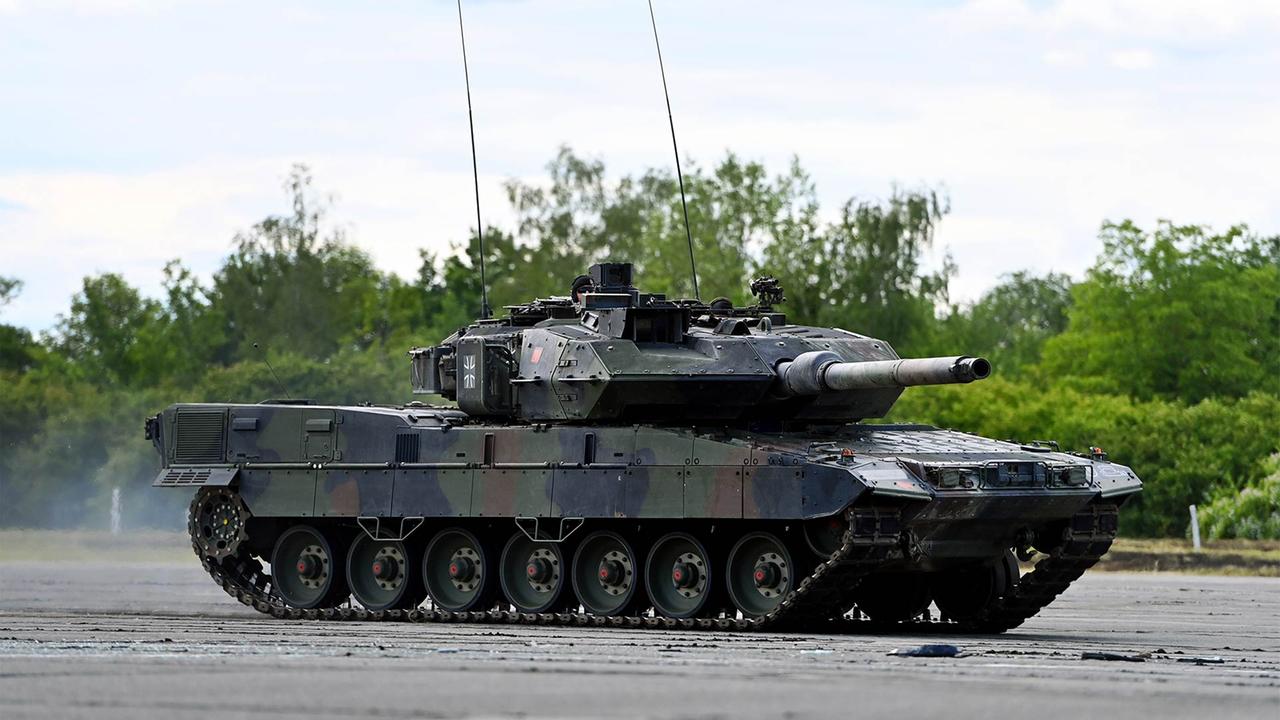
The European defense landscape, long defined by a period of relative dormancy, has been galvanized by a geopolitical climate that shows few signs of de-escalation. At the heart of this transformation is KNDS, the powerful Franco-German defense consortium and manufacturer of the world-renowned Leopard 2A7V main battle tank. Following the abrupt cancellation of its highly anticipated initial public offering (IPO) scheduled for July, the company is once again signaling its intent to enter the public markets. Jean-Paul Alary, the CEO of KNDS, has confirmed in a recent interview that an IPO remains firmly on the table—potentially before the end of 2026.
The Strategic Pivot: Reasserting Market Intent
For investors and industry analysts alike, the decision to postpone the July listing came as a significant disappointment. However, the leadership at KNDS, backed by its shareholders—the French state and the German Wegmann family—views the setback as a temporary tactical realignment rather than a strategic retreat.
"An IPO in 2026 remains a viable path forward, provided that market conditions align with the expectations of our shareholders," Alary noted in a recent interview with Handelsblatt. The core issue, he clarified, is not the company’s internal performance or its order book, but rather the broader macroeconomic environment and the specific sensitivities of the current capital markets.
Chronology of a Disrupted Launch
To understand the current hesitation, one must look at the timeline of the defense sector’s recent performance. The year began with immense optimism for defense contractors. As European nations scrambled to bolster their military capabilities in response to regional instability, KNDS and its peers experienced a period of "specialized prosperity." Defense budgets across the European Union surged, and investors flocked to the sector, viewing companies like Rheinmetall and KNDS as stable, long-term plays in a dangerous world.
However, the tide began to turn in late spring. Despite record-breaking order backlogs and robust financial results, defense stocks faced significant downward pressure. This was driven by a combination of factors: institutional profit-taking after a rapid run-up, broader market anxieties regarding interest rate policies, and specific policy shocks—such as the German government’s decision to pause the F126 frigate procurement program—which rattled investor confidence in the reliability of state-funded contracts.
Supporting Data: The Defense Sector Under Pressure
The volatility has been widespread. Rheinmetall, the titan of the German defense industry, saw its market valuation suffer a dramatic correction, with its share price halving from its 2,000-euro peak over the past year. This phenomenon is not isolated to Germany; it reflects a global re-evaluation of defense stocks, where the "wartime premium" is being weighed against the realities of fiscal austerity and supply chain constraints.
While KNDS prepares for a potential listing, it continues to focus on operational expansion. The company expects a 30 percent revenue growth for the 2026 fiscal year, a testament to the surging global demand for armored platforms.
The proposed structure for the potential IPO remains ambitious. Current plans involve a 20 percent free float of shares. The remaining 80 percent would be split evenly between the existing owners, with 40 percent remaining under the control of the Wegmann family and the final 40 percent potentially being acquired by the German government, further cementing the strategic state-industry partnership.
A Global IPO Landscape: The German Context
The hesitation surrounding the KNDS IPO must be viewed against the backdrop of a broader, lackluster performance for the German IPO market. According to recent data from the consulting firm EY, the German market has been significantly outpaced by its international counterparts. In the first nine months of 2026, only eight companies successfully completed a listing in Germany. By comparison, the broader European market saw 99 IPOs, the United States recorded 96, and China dominated the landscape with 242.
Globally, the IPO market has shown signs of a complex recovery. While the total number of companies going public has dipped by four percent compared to the previous year (totaling 888), the capital raised has more than doubled, reaching $288 billion. This surge is largely attributed to "mega-listings" that have redefined the landscape.
The June listing of SpaceX in the United States, which raised a staggering $86 billion, stands as the largest IPO in history, effectively shifting the gravity of global capital markets. Similarly, the $26.5 billion secondary listing of South Korean chipmaker SK-Hynix in the U.S. underscored a trend where major industrial players are utilizing public markets to fuel massive technological expansion.
Future Outlook: The Pipeline and Market Risks
Despite current uncertainties, the pipeline for potential public listings remains robust. Major technology players, including the AI giant Anthropic, are signaling intentions for multi-billion dollar market entries. Conversely, others like OpenAI have opted to delay, citing concerns over market stability and internal risk assessment.
Martin Steinbach, a senior analyst at EY, remains cautiously optimistic for the final quarter of 2026. "The IPO pipeline is well-filled, both internationally and in Germany," Steinbach notes. However, he warns that timing is paramount. "Investors are hyper-focused on valuations that reflect the current reality rather than past hype. Risks such as a cooling U.S. economy, the outcome of upcoming U.S. midterm elections, and the persistent upward pressure on bond yields continue to weigh on the IPO sentiment."
Implications for KNDS and the Defense Sector
For KNDS, the path to the stock exchange is more than a financial exercise; it is a signal of the company’s maturity and its role as a cornerstone of European defense integration. The German DAX index, currently grappling with the uncertainty of central bank interest rate policies and the escalating regional conflicts, serves as a barometer for the climate in which KNDS must operate.
The index has recently struggled to maintain its footing, sliding below the 25,000-point threshold before stabilizing. For the management at KNDS, this volatility necessitates a delicate balancing act. They must prove to potential shareholders that the company is insulated from the immediate political whims that caused the F126 project cancellation, while demonstrating that the structural demand for land-based defense systems is a multi-decade reality rather than a temporary trend.
As the year draws to a close, the industry is watching closely. Should KNDS pull the trigger on its IPO in the coming months, it will serve as a bellwether for the European defense sector’s ability to transition from state-led manufacturing to market-validated industrial power. For now, the "wait-and-see" approach remains the dominant strategy, with all eyes on the shifting indicators of the broader financial markets.