By Editorial Staff
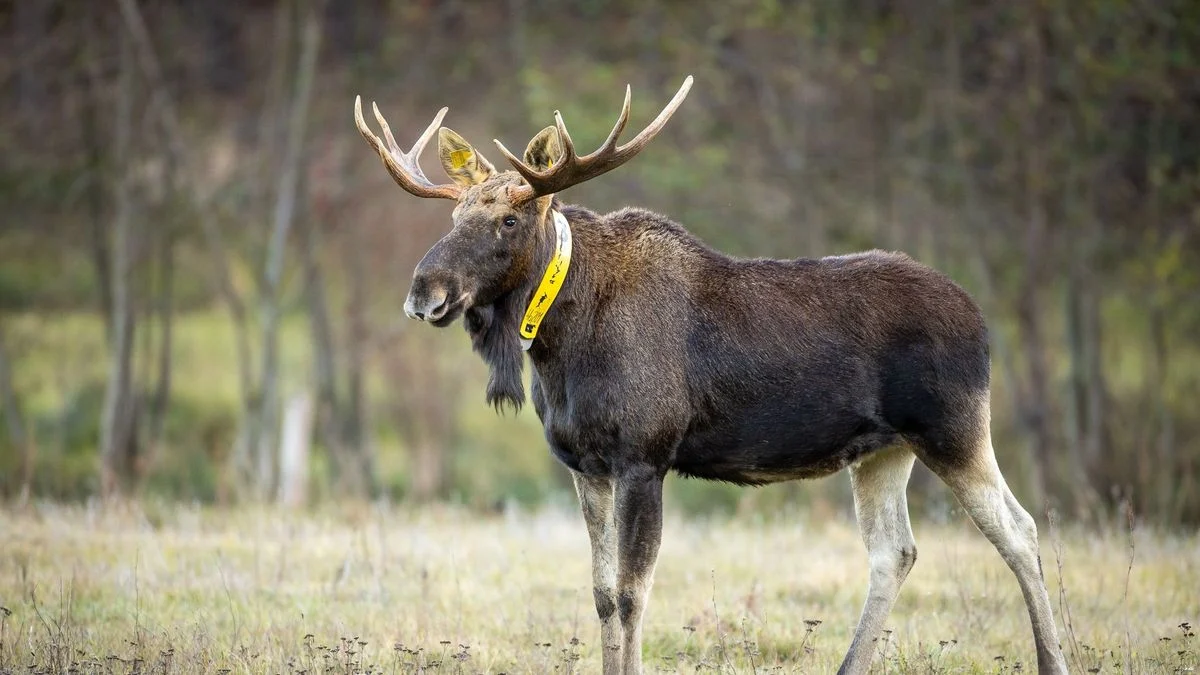
Germany has lost its most famous wild resident. Bert, the charismatic and scientifically invaluable bull elk who became a symbol of rewilding efforts in the heart of Europe, died this past weekend at the age of ten. His passing, confirmed on Thursday by researchers at the Eberswalde University for Sustainable Development, marks the end of a remarkable era of wildlife observation and leaves a quiet void in the forests of Brandenburg.
While his life was a testament to the resilience of nature in a modern, fragmented landscape, his death remains shrouded in the mystery that often characterizes the lives of the world’s largest deer species. For years, Bert was more than just an animal; he was a pioneer, a data point, and a beloved local icon.
The Sudden End of an Iconic Life
The notification of Bert’s death came not from a dramatic public encounter, but from the silent, rhythmic pulse of a GPS collar. On Saturday morning, researchers at the Eberswalde University noticed that the elk’s transmitter had stopped reporting movement. By Sunday, the device triggered a mortality signal, indicating that the animal had remained stationary for an extended period.
A recovery team was quickly dispatched to the site in the Naturpark Nuthe-Nieplitz, southwest of Berlin, where the elk had resided for years. Upon performing a necropsy at the Leibniz Institute for Zoo and Wildlife Research (IZW) in Berlin, scientists discovered that Bert had succumbed to severe internal injuries. Specifically, he had suffered from a massive, football-sized hematoma caused by blunt force trauma to his flank.
Despite the thorough examination, the exact cause of the injury remains a subject of intense scientific debate. While the physical evidence points to a high-impact event, there were no clear signs of a collision with a motor vehicle, which is the most common cause of death for large cervids in Germany. Instead, researchers are looking toward the complex social dynamics of the rutting season—the elk’s mating period—as a primary suspect.
A Life Defined by Migration and Discovery
To understand the significance of Bert’s life, one must look at his origins. Born in the wild expanses of northeastern Poland in 2016, Bert was part of a broader trend of elk wandering westward, searching for suitable habitats in a landscape increasingly bisected by highways and urban sprawl.
His arrival in Germany was officially documented in February 2018 in southern Brandenburg. For the scientific community, this was a watershed moment. It was rare enough to have an elk in Germany, but it was unprecedented to have one stay. Under the watchful eye of Frank-Uwe Michler and his team at the Eberswalde University, Bert became the subject of an intensive tracking project.
For nine years, researchers effectively lived vicariously through Bert’s movements. His GPS data provided a nearly minute-by-minute account of his life. He was not merely a wandering nomad; he was a settler. After years of traversing vast distances, he discovered the Naturpark Nuthe-Nieplitz in 2019, where he eventually established a permanent home. He became the only known elk to maintain a stable, long-term territory in Germany, effectively bridging the gap between the wild populations of the East and the fragmented, human-dominated landscapes of Central Europe.
The Mystery of the Rut: A Possible Cause?
The timing of Bert’s death provides a crucial clue. At the time of his passing, the elk was in the middle of the rutting season. Historically, this time of year was when Bert’s behavior became most predictable; he consistently frequented a specific cattle pasture where he had established a habit of interacting with domestic livestock.
However, the 2024 rut was different. In the days leading up to his death, a second, younger bull elk had entered Bert’s territory. The presence of a rival in the immediate vicinity of his preferred grazing grounds creates a volatile environment. According to wildlife experts, encounters between bull elk during the rut are rarely peaceful. They are characterized by displays of dominance, which can escalate into violent physical clashes.
"It is a possibility that a fight with another bull resulted in the trauma we observed," says Michler. "While we cannot confirm this with absolute certainty, the nature of the internal injuries is consistent with the immense force generated by two massive animals colliding during a territorial dispute."
The presence of domestic cattle in the same pasture also introduces another variable. While Bert had been accustomed to their presence, the heightened agitation of the rut, combined with the presence of another bull, could have led to a chaotic, high-energy environment where an injury was inevitable.
Scientific Implications: A Legacy in Data
While the loss of Bert is a emotional blow to those who followed his story, his scientific legacy is only just beginning. The data collected from his GPS collar represents a "gold standard" in European wildlife research. It is arguably the most comprehensive record of a wild elk’s life in a dense cultural landscape ever compiled.
"We knew where he was almost every day for nine years," says Michler. "This data doesn’t just tell us about Bert; it tells us about how the largest deer species in the world navigates the challenges of human infrastructure, agriculture, and climate change."
Researchers plan to use the dataset to refine models regarding wildlife corridors and human-wildlife conflict mitigation. By understanding exactly how Bert traversed roads, where he chose to feed, and how he interacted with human-modified environments, conservationists hope to create safer passages for other elk that may eventually follow his path from the East.
The study of his movements also highlights the precarious nature of the species in Germany. With Bert gone, the estimated population of wild elk in Brandenburg has dropped from five to four. His life served as a living experiment: can a large, free-roaming herbivore survive in the heart of a developed, industrial nation? For ten years, Bert proved that it was possible.
The "Maskotchen" of Brandenburg
Beyond the spreadsheets and the GPS coordinates, Bert was a cultural figure. He became a "regrettable loss of a mascot," according to his handlers at the university. He was the face of German rewilding, a creature that brought a sense of wild majesty to the quiet, rolling plains of Brandenburg.
For the people living in the Nuthe-Nieplitz region, the sight of the massive bull—often silhouetted against the morning mist of the cattle pastures—was a reminder of the wild roots of their landscape. He was a creature that demanded respect, a symbol of a time when the great forests of Europe were home to giants.
The university’s statement reflected the deep professional and personal bond formed over the decade: "His death makes us very sad. He was a constant in our research and, in many ways, a constant in our lives."
Looking Toward the Future
The death of Bert forces a conversation about the future of biodiversity in Germany. Can the country support a viable population of elk, or will these animals continue to be solitary, tragic wanderers?
As climate change shifts habitats and migration patterns, more elk are expected to push westward. The lessons learned from Bert’s life—his preferences for specific types of vegetation, his avoidance or acceptance of human infrastructure, and his eventual territoriality—will be the foundation for future management strategies.
The researchers at Eberswalde University have indicated that they will continue their monitoring efforts, even without their star pupil. The four remaining elk in the region are now the new focus of the study. But for those who spent years analyzing his data and tracking his footsteps through the dark woods of Brandenburg, there will never be another quite like Bert.
He arrived as a pioneer, lived as a subject of profound scientific inquiry, and died as a legend of the German wilderness. His life was short by human standards, but in the context of the wild, he lived a full and storied existence. As the sun sets over the pastures of the Nuthe-Nieplitz, the researchers and the public alike are left with the silence of the woods—a silence that, for the first time in nearly a decade, no longer carries the phantom presence of the wanderer from Poland.