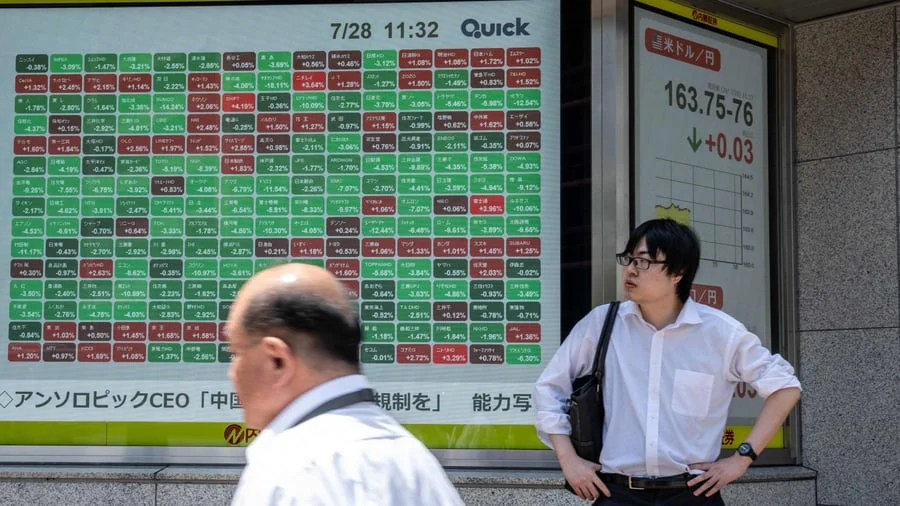
The global financial landscape stands at a precarious juncture as we enter a week defined by heightened volatility and critical data releases. Following a turbulent period that saw major indices struggle under the weight of macroeconomic uncertainty, investors are bracing for a high-stakes stretch. From the shifting tides of the bond markets to the pivotal kickoff of the U.S. corporate earnings season, the coming days will likely determine whether the markets can regain their footing or if the recent retreat marks the beginning of a deeper, more structural correction.
Main Facts: The Market Context
The recent market performance has been underscored by a pervasive sense of anxiety. Just last Thursday, the DAX index experienced a notable decline, slipping below the 25,000-point threshold. This drop brought the index to its lowest level since July 23, reflecting a growing unease among market participants regarding the sustainability of current valuations.

This downturn is not an isolated event but rather a symptom of broader, interconnected pressures. The bond market, currently characterized by climbing yields, is exerting significant pressure on equity valuations, while the volatility in the oil market continues to complicate the inflation outlook. As the new trading week begins, these factors are expected to remain the primary drivers of sentiment, casting a long shadow over the German stock market and global trading floors alike.
Chronology of the Week Ahead: Key Events
The week is structured around a sequence of events that will act as "litmus tests" for market resilience.

Tuesday: The Banking Sector Under the Spotlight
The narrative for the week will be heavily influenced by the U.S. banking sector. On Tuesday, four of the six largest U.S. financial institutions—JPMorgan Chase, Goldman Sachs, Citigroup, and Wells Fargo—are scheduled to report their third-quarter earnings. These reports are more than just balance sheets; they serve as a diagnostic tool for the broader economy. Analysts are particularly focused on how the recent surge in bond yields has impacted these giants. Specifically, the market is looking for evidence regarding how higher interest rates are influencing M&A activity, credit issuance, and, crucially, the cost of refinancing.
Wednesday: Further Financial Sector Insight
The momentum from Tuesday’s bank reports will carry over into Wednesday, when Morgan Stanley and Bank of America are slated to release their quarterly figures. These results will provide the final pieces of the puzzle for investors attempting to gauge the health of the financial sector in a "higher-for-longer" interest rate environment.

The Ongoing Week: The Paris Motor Show
In Europe, attention shifts toward the automotive sector. The Paris Motor Show, one of the industry’s most significant events, serves as the stage for a critical battle between established European manufacturers and an aggressive influx of Chinese competition. With a record 20 brands from China—including BYD and Chery—present, the pressure on European automakers to pivot toward affordable, high-quality electric vehicles has never been higher.
IWF and World Bank Annual Meetings
Running in parallel, the week will be dominated by the seven-day joint annual meeting of the International Monetary Fund (IMF) and the World Bank in Bangkok. This high-level gathering brings together finance ministers and central bank governors from across the globe. The agenda is packed with urgent, systemic concerns: the economic fallout of the conflict in the Middle East, the global energy price shock, and the implications of persistent, high-interest-rate policies on global growth.

Supporting Data and Economic Analysis
The current market sentiment is being shaped by several quantitative and qualitative factors.
The Bond Market Connection: The relationship between rising sovereign bond yields and stock market weakness is direct. When bond yields rise, the "risk-free" rate of return increases, forcing investors to demand a higher risk premium for equities. This, in turn, compresses the valuation multiples that investors are willing to pay for growth stocks.

The Automotive Crisis: Volkswagen’s situation is a microcosm of the challenges facing legacy automakers. As the company prepares its third-quarter delivery figures, the dual pressure of a collapsing Chinese market—historically a primary driver of its profitability—and the intensifying rivalry with low-cost, tech-forward Chinese EV manufacturers in Europe, has created a significant hurdle for the company’s transition strategy.
Artificial Intelligence and Market Sentiment: While concerns regarding the "AI bubble" have caused jitters, recent market sessions in New York—notably the performance of the Dow Jones, S&P 500, and Nasdaq—suggest a degree of resilience. The recovery in tech stocks toward the end of last week, driven by a slight cooling of inflation-related fears and stabilizing oil prices, indicates that investors remain opportunistic, provided the geopolitical landscape does not deteriorate further.

Official Responses and Expert Outlook
While individual company executives remain tight-lipped ahead of earnings calls, institutional voices at the IMF/World Bank meetings have begun to sound a note of cautious concern. The prevailing sentiment among global policymakers is one of "cautious vigilance."
The focus of the IMF meetings has shifted toward the sustainability of sovereign debt. As interest rates remain elevated, the cost of servicing public debt has become a significant constraint for many nations, limiting their ability to invest in growth-enhancing infrastructure or transition technologies. Furthermore, the rapid integration of Artificial Intelligence into the workforce is expected to be a major topic of debate, with experts warning that while AI offers immense productivity gains, it also risks exacerbating economic inequality if not managed through proactive regulatory and educational frameworks.

Implications for Investors
For the average investor, the coming week requires a "wait-and-see" approach. The combination of U.S. bank earnings and the macro-level discussions in Bangkok means that volatility is likely to remain elevated.
- Strategic Allocation: The shift in the automotive industry toward Chinese dominance in the EV space suggests that investors should look beyond historical brand loyalty and focus on companies that have successfully managed their supply chains and localized their production strategies.
- Interest Rate Sensitivity: Investors should be wary of companies with high debt loads. In an environment where the cost of capital is elevated, firms with strong balance sheets and consistent cash flows will likely outperform those reliant on constant refinancing.
- Macro-Awareness: The discussions at the IWF are not merely academic. They will provide the clearest signal yet regarding how central banks view the trajectory of inflation for the remainder of the year. If the consensus shifts toward a more prolonged period of restrictive monetary policy, we may see further downward pressure on equity markets.
In summary, the market is currently in a state of re-evaluation. The "easy" growth of the post-pandemic era has been replaced by a period of fundamental testing. Whether it is the banking sector’s ability to navigate high yields, the automotive industry’s fight for survival, or the global economy’s attempt to reconcile growth with geopolitical instability, the developments of this week will provide the roadmap for the final quarter of the year. Investors are advised to remain disciplined, focus on the quality of corporate earnings, and maintain a watchful eye on the signals emanating from Washington, Frankfurt, and the international forums in Bangkok.