For modern students, the autumn break is a welcomed respite—a week or two of relaxation nestled between the start of the school year and the approach of winter. Yet, for older generations, the term "Kartoffelferien" (Potato Holidays) evokes a vastly different set of memories. It is a term steeped in the scent of damp earth, the ache of manual labor, and a rigid, state-coordinated rhythm of life that once defined the educational landscape of Germany. What began as a pragmatic necessity for agricultural survival evolved into a deeply entrenched social institution, particularly in the former German Democratic Republic (GDR).
This is the history of how the school calendar was once written by the harvest, and how a vital survival task transformed into a nostalgic, if complex, cultural legacy.

The Genesis of the "Potato Holidays"
The origin of the "Potato Holidays" dates back to the 19th and early 20th centuries, a time when Germany was transforming into an industrial power but remained fundamentally tethered to the soil. During this era, the potato was the cornerstone of the German diet—a critical, high-calorie staple that stood between the population and famine during the long, harsh winters.
However, the rapid implementation of universal compulsory education in the 18th and 19th centuries created a direct conflict with the agricultural cycle. The peak harvest time for potatoes—typically October—required an immense, sustained labor force. With mechanized farming still in its infancy, the task was entirely dependent on manual labor. Faced with classrooms emptied by children sent by their parents to work the fields, school authorities and regional governments took a pragmatic approach: they synchronized the school calendar with the demands of the harvest.
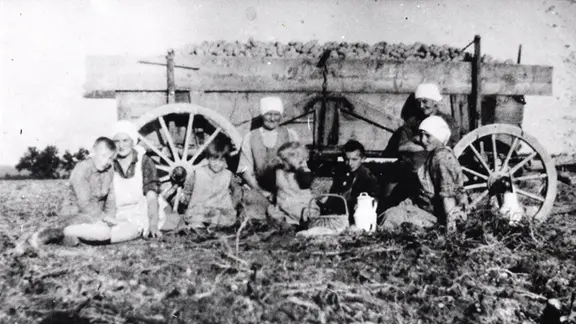
This led to the institutionalization of "Ernteferien" (Harvest Holidays). While the term "Potato Holidays" is the most iconic, regional variations existed, including "Hay Holidays" during the summer or other breaks tailored to specific regional crops. Even today, the notoriously late summer breaks in federal states like Bavaria and Baden-Württemberg are historical relics of this agricultural necessity, a tradition maintained long after the original economic motivation vanished.
A Chronology of Labor and Schooling
To understand the "Potato Holidays," one must look at the transition from agrarian necessity to state-controlled labor.
- 19th Century: Localized, informal school absences due to the harvest lead to the formalization of "harvest breaks" in rural school districts to maintain attendance compliance.
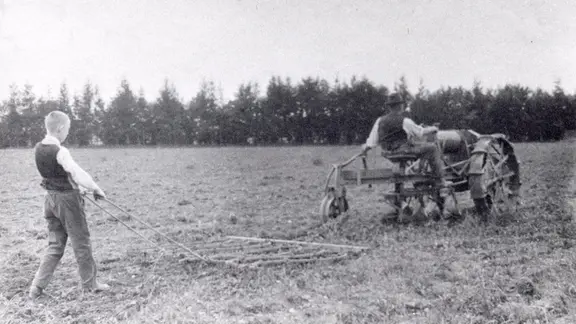
- Early 20th Century: The industrialization of agriculture begins, but manual labor remains central. School children are officially mobilized to support the harvest.
- 1933–1945: The National Socialist regime intensifies the use of youth labor under the banner of national service, setting the stage for the highly organized "harvest assignments" of the post-war era.
- 1949–1989 (GDR Era): The "Ernteeinsatz" (harvest assignment) becomes a cornerstone of socialist education. It is no longer just about survival; it is about "productive labor" and "socialist morality."
- Post-1990: With the collapse of the GDR and the modernization of German agriculture, the need for student labor vanishes. The term "Potato Holidays" fades into a colloquialism for the autumn break.
Supporting Data: The Reality of the "Ernteeinsatz"
While the official state narrative in the GDR framed these assignments as "voluntary" and educational, the reality for students was often a mix of drudgery, camaraderie, and, at times, coercion.
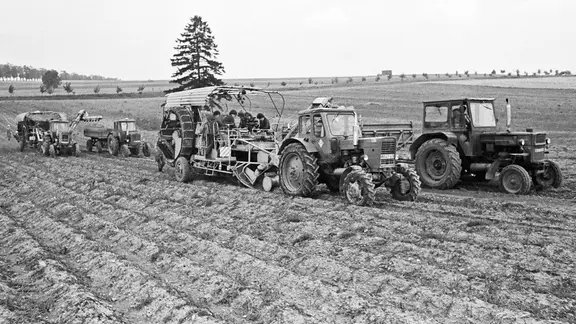
For students in the 6th to 8th grades, a typical day during the autumn break meant arriving at the fields of the local Agricultural Production Cooperative (LPG) by 8:00 AM. Work usually lasted until early afternoon. The physical exertion was significant: picking potatoes by hand, moving heavy baskets, and clearing fields.

In the GDR, the "Ernteeinsatz" was not merely a local phenomenon; it was a nationwide logistical operation. Students, apprentices, and even soldiers were mobilized. The legal basis for this was the "Law on the Integrated Socialist Education System" of 1965, which ideologically bound school learning to "productive work." This served two purposes: it solved the chronic labor shortage in the state-run agricultural sector and sought to "educate" youth in the value of physical work and collectivism.
However, the experience was not universally hated. Many former students, such as Heinz Poller, an local historian from Aue, recall the breaks with a degree of nostalgia. "We didn’t feel the pressure as much as some accounts suggest," Poller notes. "For us, it was a chance to be out in the fresh air, away from the classroom." Remuneration was standard—often 30 to 50 Pfennigs per basket—and the communal meals, such as Milch mit Speckfettschnitten (milk and bread with bacon fat), created bonds that lasted long after the fields were empty.

Official Responses and Ideological Framing
The state-run media and the FDJ (Free German Youth) played a vital role in framing these holidays. The "Ernteeinsatz" was consistently portrayed as a heroic contribution to the state. It was an exercise in "socialist patriotism."
The "Lager für Arbeit und Erholung" (Camps for Work and Recreation, or LAE) represented the extreme end of this spectrum. In these camps, usually organized during summer or autumn, teenagers would live away from home for two weeks, working in the fields by day and engaging in state-sanctioned recreation—such as hiking, sports, or campfires—by night.
While the state claimed these were voluntary, the social pressure was immense. A student who refused to participate faced questioning from teachers and FDJ officials. A medical certificate was often the only acceptable "out." This created a bifurcated reality: for the state, it was an economic and ideological triumph; for the students, it was a mandatory obligation that they learned to navigate with as much efficiency and humor as possible.
Implications: The "Stoppelferien" and Cultural Legacy
A fascinating subset of this history is the concept of "Stoppelferien" (Stubble Holidays). After the official harvest was complete, children were allowed to "stoppeln"—to scavenge the fields for overlooked potatoes. This was a vital lifeline for many families, providing extra winter rations and pocket money. It was a practice that persisted even into the later years of the GDR, representing the deep-seated reliance on the land that defined the German rural experience for centuries.

Today, the "Potato Holidays" are largely a relic of the past. Modern combine harvesters and agricultural automation have rendered the physical labor of children obsolete. Even the act of "stoppeln" has vanished, as modern harvesting equipment is far more efficient, leaving little behind.
However, the cultural impact remains. In regions like Bavaria, Austria, and even Denmark (where the term kartoffelferie is still widely used), the terminology survives. For those who grew up in the GDR, the term is a poignant marker of a time when the individual was explicitly subordinated to the economic needs of the collective.

The transition from the "Potato Holidays" to the modern, purely recreational autumn break is a reflection of Germany’s broader economic and social evolution. It marks the shift from a society fighting to feed itself to one where the primary goal of the school break is the restoration of the student’s mental and physical health. While the fields are no longer dotted with school children, the legacy of the "Potato Holidays" serves as a reminder of how deeply the rhythm of the harvest once dictated the life of the nation.