
As the Strait of Hormuz remains a focal point of geopolitical tension, the global energy market is grappling with a baffling reality: despite a return to pre-war export volumes, crude oil prices refuse to retreat. What is driving this persistent premium, and why does the market remain so sensitive to the shadow of the Iran conflict?
The Current Landscape: A Rebound in Logistics
In the weeks following the initial escalation of the Iran-led regional conflict, global energy markets braced for a catastrophe. Analysts predicted a total blockade of the Strait of Hormuz—the world’s most critical maritime chokepoint for oil transport. Yet, the reality on the water tells a different story.
Recent satellite imagery and maritime tracking data from early October 2026 reveal a steady, rhythmic procession of supertankers navigating the narrow waters of the Persian Gulf. Far from being paralyzed by conflict, the logistics chains that feed the global energy appetite have proven remarkably resilient. Exports from major Gulf producers, including Saudi Arabia, have surged back to pre-war levels, exceeding 18 million barrels per day. The "bottleneck" that analysts feared would choke the global economy has effectively been bypassed through tactical maneuvering and enhanced security cooperation.
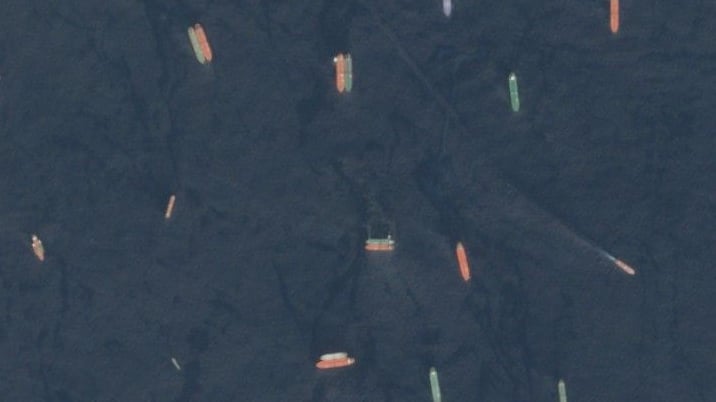
However, this restoration of supply has not been met with a corresponding decline in prices. On the contrary, the benchmark Brent crude continues to trade at a significant premium—hovering around $103 per barrel compared to the $73 price tag seen before the conflict. This decoupling of supply availability from price stability is the central puzzle facing economists and energy traders today.
Chronology of the Crisis: From Panic to Persistence
To understand why prices remain elevated, one must look at the timeline of the escalation:
- Pre-Conflict Baseline: In the period leading up to the current hostilities, the market was characterized by moderate stability, with Brent crude trading near $73 per barrel. Global demand was balanced by predictable, high-volume exports through the Persian Gulf.
- The Initial Shock: Upon the outbreak of the Iran-linked hostilities, the immediate market reaction was reflexive. Insurance premiums for tankers surged by over 400%, and shipping firms temporarily halted operations, leading to an immediate spike in futures prices.
- The "New Normal" Phase: Within weeks, the military presence in the region increased significantly. International naval task forces established "safe corridors," and major oil producers began utilizing ship-to-ship transfer hubs in safer zones to mitigate the risk of direct attacks on deep-sea vessels.
- Current State: Today, the flow of oil is largely normalized in terms of volume, but the "War Risk Premium" has become institutionalized. Markets are no longer reacting to the inability to move oil, but to the cost and uncertainty of doing so.
Supporting Data: Analyzing the Price Gap
The $30-per-barrel gap between the pre-war price and the current market rate is not a result of physical scarcity. Instead, it is a reflection of the "geopolitical risk premium."

1. Increased Operational Costs
While oil is moving, it is not moving cheaply. Shipping companies are passing on the increased costs of war-risk insurance, specialized security escorts, and diverted routes to the end consumer. These costs are baked into the price of every barrel of oil that leaves the Gulf.
2. The Fear of Tail-End Risks
Energy traders are notoriously risk-averse. The market is currently pricing in a "worst-case scenario" probability. Even though the Strait is open today, the market is betting on the possibility that a single rogue incident—a drone strike or a targeted sabotage—could trigger an immediate, total closure. This "fear factor" creates a floor for prices that simple supply-and-demand charts cannot fully explain.
3. Inventory Hedging
Major importers, fearing a long-term supply disruption, are continuing to aggressively build up strategic reserves. This increased demand for stockpiling ensures that even when supply is stable, the market remains "tight," preventing the natural price correction that would usually occur when supply catches up with demand.
Official Responses: Navigating the Diplomatic Minefield
The response from the international community and regional powers has been a delicate balancing act.
The View from Riyadh and Abu Dhabi:
Leading producers in the Gulf have maintained a stance of "business as usual." Their official communications emphasize that their infrastructure remains secure and their commitment to global energy security is unwavering. However, in private diplomatic channels, these nations are understood to be pushing for a rapid de-escalation of the conflict, as they are acutely aware that sustained high oil prices may accelerate the global transition away from fossil fuels.
The International Energy Agency (IEA):
The IEA has urged caution, emphasizing that while the physical supply is currently sufficient, the "fragility of the infrastructure" remains a significant threat to global growth. Their reports highlight that the market is essentially being held hostage by the potential for escalation, rather than the reality of the current situation.

The Western Stance:
Western governments have focused on the maintenance of maritime security. The deployment of naval assets to the region is framed as a defense of the "freedom of navigation." There is little appetite for direct intervention, as policymakers are wary of the economic fallout that a wider conflict would cause in the energy sector.
Implications: The Long-Term Economic Fallout
The persistence of high oil prices despite restored supply chains has profound implications for the global economy.
Inflationary Pressures
Energy prices are the bedrock of the global cost structure. When oil remains at $100+ per barrel, it acts as a tax on every sector of the economy—from transportation and logistics to manufacturing and retail. This creates a persistent inflationary pressure that central banks find difficult to combat through interest rate hikes alone.

The Acceleration of Energy Transition
Perhaps the most ironic outcome of the current crisis is the boost it gives to renewable energy initiatives. Faced with the volatility and high cost of oil, corporations and nations are increasingly viewing the energy transition not just as an environmental imperative, but as a matter of national security and economic stability. Investment in hydrogen, wind, and solar, as well as nuclear energy, is seeing a renewed surge as nations seek to decouple their economies from the volatility of the Strait of Hormuz.
Shifts in Trade Alliances
The current crisis has pushed some nations to seek more reliable, if more expensive, sources of energy outside of the Middle East. Increased reliance on North American shale, Norwegian gas, and long-term contracts with stable regions is shifting the traditional map of energy dependency. The "Gulf-centric" world of the 20th century is showing visible signs of fragmentation as importers prioritize security of supply over lowest-cost procurement.
Conclusion: The New Definition of "Supply"
The current situation serves as a stark reminder that in the modern global economy, "supply" is no longer just a metric of barrels per day. It is a complex function of logistics, insurance, military security, and psychological perception.

The market has learned to live with the risk of conflict, but it is not yet willing to pay the price for peace. Until the geopolitical climate in the Middle East undergoes a fundamental change—or until the global economy successfully transitions to alternative energy sources—the "Gulf Oil Paradox" will likely persist. We are in an era where the flow of oil is secure, but the stability of the price is a relic of a more predictable, less volatile past.
For the average consumer and the global manufacturer, the message is clear: the era of "cheap energy" is under permanent, structural threat. Whether through the direct costs of high crude prices or the indirect costs of inflation, the world is paying a heavy toll for the unresolved tensions of the region. As we look toward the end of 2026, the question is not whether the tankers will continue to sail, but rather how much longer the global economy can sustain the price of that passage.