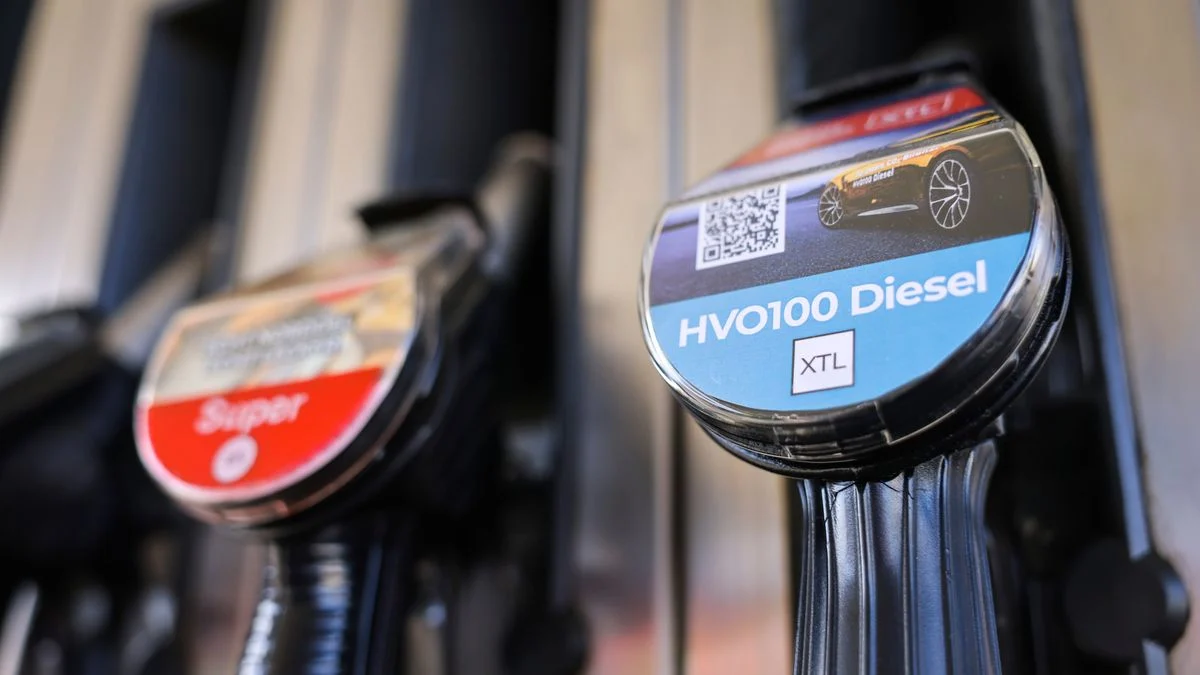
In a significant shift for the European energy landscape, the renewable diesel alternative known as HVO (Hydrotreated Vegetable Oil) has reached a critical economic milestone. According to recent calculations by the commodity price reporting agency Argus Media, the wholesale price of HVO has, for the first time, fallen below that of conventional fossil-based diesel. This development signals a potential turning point in the decarbonization of the heavy-duty transport and logistics sectors, as the price gap that once relegated the sustainable fuel to a premium niche begins to evaporate.
The convergence of these prices is not merely a quirk of market volatility; it is the result of shifting geopolitical pressures and a maturing supply chain for advanced biofuels. As European markets grapple with the inflationary pressures of a turbulent energy landscape—exacerbated by ongoing conflicts in the Middle East—the relative stability of HVO production costs is offering a compelling, albeit complex, alternative to traditional fuel models.
The Mechanics of the Market Shift
The recent price inversion in the wholesale market, which became apparent in mid-August, marks a departure from the historical trend where renewable alternatives carried a significant "green premium."
Marcel Pott, an expert on the German oil products market at Argus Media, notes that the shift is largely driven by the differential impact of geopolitical instability. While the conflicts in the Middle East have caused widespread spikes in the price of crude oil and its derivatives, including conventional diesel, HVO has demonstrated a higher degree of price resilience. "While HVO has certainly become more expensive over the past few months, the rate of increase has been significantly lower than that of conventional diesel," Pott explains.
This divergence is rooted in the production process. HVO is produced through the hydrotreatment of vegetable oils, waste fats, and used cooking oils. Because this feedstock supply chain is increasingly distinct from the crude oil markets—which are highly sensitive to geopolitical shocks in oil-producing regions—HVO has become a hedge against the volatility inherent in fossil fuels.
Chronology of a Biofuel Breakthrough
To understand how HVO moved from a specialty product to a potential mass-market competitor, one must look at its rapid evolution in Germany over the past year.
- Pre-2024: HVO existed largely as a component blended into conventional diesel or as a specialty fuel for corporate fleets with specific sustainability targets. The price gap between HVO and standard diesel was prohibitive for the average consumer.
- May 2024: The official rollout of HVO100 (pure renewable diesel) at German service stations began. At the time, early adopters faced a substantial price penalty. Initial data showed surcharges of over 20 cents per liter compared to standard diesel, limiting uptake to luxury vehicles and specialized logistics operations.
- Summer 2024: As supply chains matured and wholesale costs stabilized, the surcharge began to shrink rapidly. By July, the price difference had narrowed to approximately 10 cents.
- August 2024: Argus Media reports that wholesale parity has been achieved. At the retail level, the price gap has narrowed to between four and eight cents, with some stations beginning to offer HVO100 at near-parity or even lower prices than conventional diesel.
Understanding HVO: From Waste to Fuel
HVO stands for Hydrotreated Vegetable Oil. Unlike first-generation biofuels (like biodiesel/FAME), which can sometimes interfere with engine performance or cold-start capabilities in older vehicles, HVO is chemically almost identical to fossil diesel. It is a "drop-in" fuel, meaning it can be used in existing diesel engines without requiring any technical modifications.
The versatility of the feedstock is key to its scalability. Manufacturers can utilize:
- Vegetable oils: Such as rapeseed, sunflower, or soy oil.
- Waste fats: Including animal fats derived from the food industry.
- Residual materials: Such as used cooking oils (UCO) collected from restaurants and industrial kitchens.
This "circular" approach is what makes HVO a cornerstone of the European Green Deal’s strategy for the transport sector. By diverting waste products into the energy loop, the carbon footprint of the fuel is reduced by up to 90% compared to fossil diesel, depending on the feedstock used.
Supporting Data and Economic Realities
While the wholesale price inversion is a landmark event, the transition to the consumer pump is rarely instantaneous. Experts like Pott point to the "lag effect" inherent in the fuel industry. Retail prices at gas stations are subject to a complex mix of logistical costs, local competition, tax structures, and marketing strategies.

The Price Gap Trend (Retail Level)
| Period | Average Surcharge vs. Diesel |
|---|---|
| May 2024 | > 20 Cents/Liter |
| July 2024 | ~ 10 Cents/Liter |
| August 2024 | 4 – 8 Cents/Liter |
| Future Outlook | Potential for Parity |
However, market analysts warn that the journey toward universal price parity is fraught with variables. A permanent, lower price level for HVO could trigger a surge in demand that outpaces current production capacity. If demand for HVO100 rises significantly, the market will face a "supply squeeze." Currently, the availability of high-quality waste feedstocks is limited. If demand exceeds the supply of these sustainable fats, producers may be forced to switch to less efficient or more expensive alternatives, potentially driving the price back up.
Official Responses and Policy Implications
The German government and European regulatory bodies have been carefully balancing the promotion of biofuels with the need to ensure that the transition does not lead to "food-vs-fuel" conflicts or undue inflationary pressure on the logistics sector.
In recent years, federal and state authorities in Germany have explored various interventions to support consumers during periods of fuel price volatility. Proposals have ranged from direct fuel rebates—often criticized as "watering can" subsidies that fail to address systemic issues—to more complex, technology-driven price caps.
However, the reality of implementing a "smart" price cap remains a significant hurdle. Technical limitations in the current retail infrastructure prevent a dynamic, real-time response to price fluctuations that would be equitable for both small independent gas stations and large multinational energy conglomerates. As the government continues to weigh its options, the market success of HVO100 serves as a potential "third way"—a market-driven solution that provides a green alternative without requiring massive, ongoing state subsidies.
Future Implications: The Road Ahead
The prospect of HVO100 becoming a standard, competitively priced fuel option has profound implications for the automotive industry, which is currently undergoing a painful transition toward electrification.
1. The Survival of the Diesel Engine
For years, the diesel engine has been viewed as a dying technology. However, HVO offers a lifeline for existing fleets. Because it is a drop-in fuel, it allows companies with massive investments in diesel-powered trucks and machinery to hit their net-zero targets today, rather than waiting for the total replacement of their fleets with electric or hydrogen-powered vehicles.
2. Geopolitical Security
The move toward biofuels is also a move toward energy autonomy. By relying on waste fats and oils processed within Europe or sourced from diversified markets, the continent can reduce its dependence on the volatile crude oil markets dominated by OPEC+ and other major oil-producing powers.
3. Sustainability and "Greenwashing" Risks
As demand for HVO grows, the industry will face increased scrutiny regarding the provenance of its raw materials. The European Union has already implemented strict sustainability criteria to ensure that the biofuels used are not contributing to deforestation or the diversion of food supplies. Maintaining the integrity of the HVO supply chain will be essential for the fuel to maintain its "green" status in the eyes of regulators and the public.
Conclusion
The fact that HVO has reached wholesale price parity with diesel is a watershed moment that few analysts predicted would happen so quickly. While consumers should not expect immediate, widespread price drops at every pump—due to the complexities of the downstream supply chain and the potential for supply-side constraints—the trend is undeniably positive.
As HVO moves from the fringes of the energy market to a mainstream contender, it provides a crucial bridge for the decarbonization of transport. Whether it can maintain this price advantage depends on the industry’s ability to scale production sustainably and the government’s commitment to facilitating a competitive market. For now, however, the "green shift" in the fuel sector has moved from a vision of the future to a tangible, competitive reality.