In the grand tapestry of the universe, there is a fundamental imbalance that has baffled physicists for decades. According to the standard model of cosmology, the Big Bang should have created equal amounts of matter and antimatter. If that were true, these two opposites would have annihilated each other instantly upon contact, leaving behind nothing but a sea of pure energy and a silent, empty cosmos. Yet, we are here. The stars, the galaxies, the Earth, and human life exist, suggesting that our universe is composed almost entirely of matter.
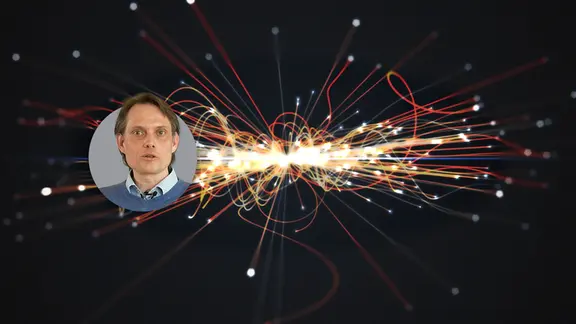
This profound asymmetry—the preference for matter over its mirror-image counterpart—remains one of the most significant open questions in modern science. In a recent episode of the MDR podcast “Die Großen Fragen in 10 Minuten” (The Big Questions in 10 Minutes), Professor Stefan Ulmer, Chair of Quantum Technologies and Fundamental Symmetries at Heinrich Heine University Düsseldorf, delves into the elusive nature of antimatter and the high-stakes quest to determine why the universe tilted in favor of our existence.
The Core Facts: What is Antimatter?
At its simplest level, antimatter is the "evil twin" of ordinary matter. Every particle of matter has an antiparticle with the same mass but the opposite electrical charge. An electron, which carries a negative charge, has a corresponding positron with a positive charge. A proton, which is positive, is paired with a negatively charged antiproton.
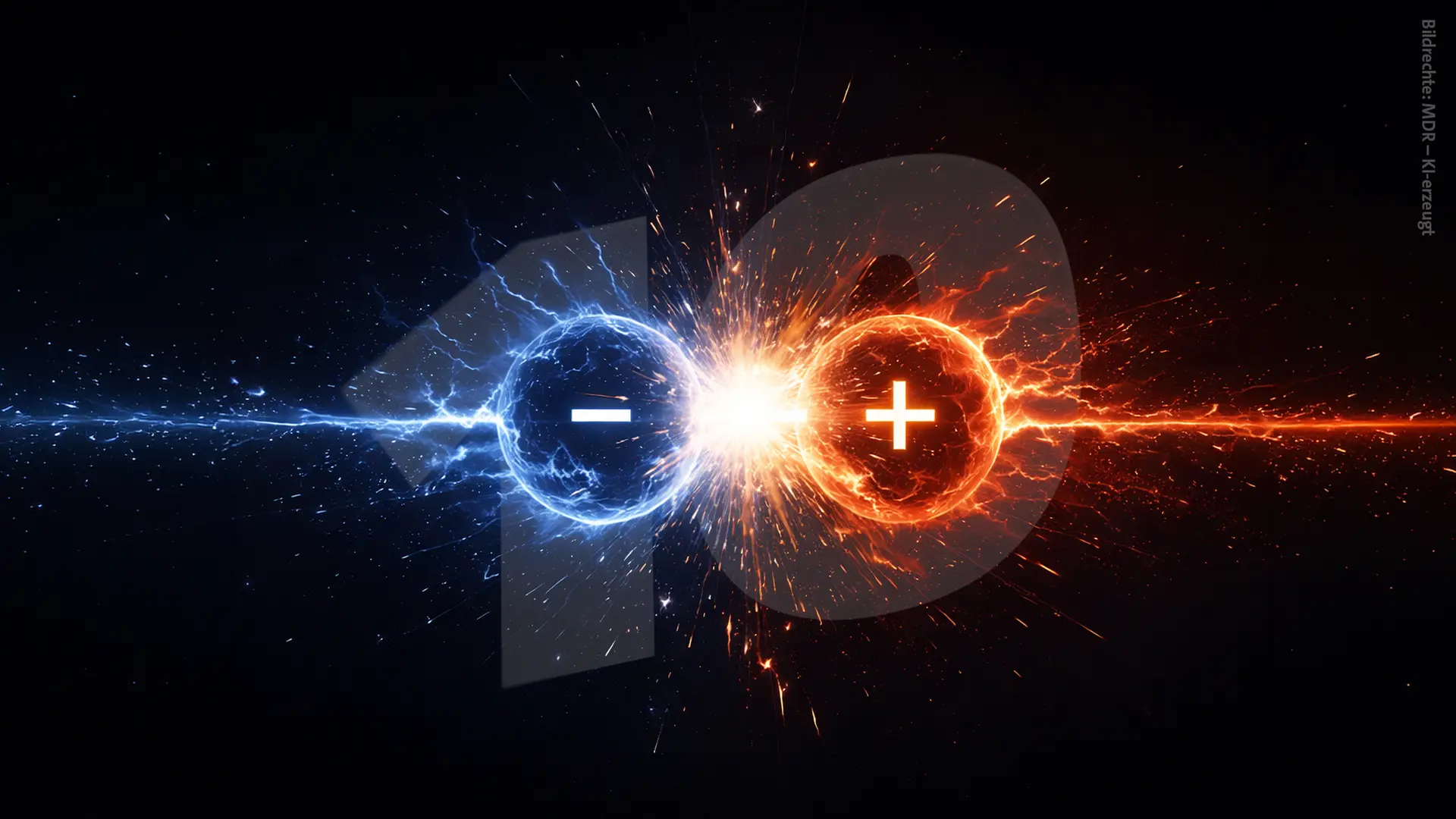
The problem arises when they meet. Matter and antimatter are mutually destructive. When a particle collides with its antiparticle, they undergo annihilation, converting their combined mass entirely into energy, typically in the form of gamma rays. Because this process is so efficient, it has become a staple of science fiction—the legendary fuel source for starships or the core of doomsday weapons.
However, Professor Ulmer is quick to dispel the Hollywood myths. "We will never have an antimatter bomb, and we will certainly never have an antimatter rocket engine," he explains. The production of antimatter is an agonizingly slow and resource-intensive process. To date, the total amount of antimatter created by all the particle accelerators in human history is so minuscule that if you were to annihilate it all at once, it would barely succeed in warming a lukewarm cup of coffee by a few degrees.
Chronology of the Asymmetry: A Cosmic Mismatch
To understand why the universe is not a void of radiation, we must look back to the first fractions of a second after the Big Bang.

The Era of Symmetry (t < 10⁻¹² seconds)
In the extreme temperatures of the nascent universe, energy was so dense that it continuously fluctuated into pairs of matter and antimatter. At this stage, the universe was a perfect, symmetrical "soup" of particles.
The Great Tilt
Somewhere between the initial expansion and the cooling of the universe, a mechanism—referred to by physicists as "CP violation"—must have favored matter. As the universe expanded and cooled, the matter-antimatter pairs annihilated, leaving behind the small surplus of matter that now forms the visible universe.
The Modern Quest
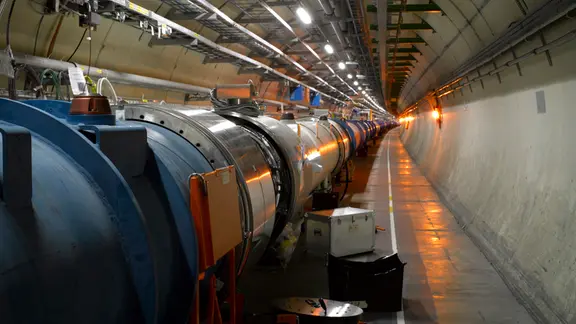
Today, scientists like Professor Ulmer use sophisticated facilities, such as the CERN complex in Switzerland, to recreate these conditions on a microscopic scale. By trapping antiprotons and comparing them with protons, researchers look for the slightest deviation in their properties—magnetic moments, gravity response, or decay rates. If even a microscopic difference is found, it could provide the "smoking gun" to explain why the symmetry broke.

Supporting Data: Searching for the "Why"
The pursuit of this answer involves some of the most precise measurements in human history. Professor Ulmer’s work focuses on the fundamental symmetries of nature. If the Standard Model is correct, the laws of physics should treat matter and antimatter with near-perfect equivalence.
The Precision Barrier
To find the difference, scientists must measure particles with extreme accuracy. If a proton and an antiproton show even a ten-billionth of a difference in their magnetic properties, it would signal new physics beyond our current understanding.
The Cold Trap
Because antimatter is so reactive, it must be studied in a vacuum and held in electromagnetic "bottles" (Penning traps) at temperatures near absolute zero. This prevents the particles from touching the walls of the container, which would result in immediate annihilation. The technology required to stabilize these particles for weeks at a time is a triumph of modern engineering, yet even after years of data, the result remains the same: the particles are identical, save for their charge.
Official Responses and Scientific Perspectives
The consensus among the global physics community is that we are missing a piece of the puzzle. Professor Ulmer’s research is supported by a global network of institutions, including the DLR (German Aerospace Center) and the Welt der Physik, which emphasize that understanding antimatter is not just an academic exercise—it is a quest to understand our own origins.
Is the "Nothing" truly nothing?
A recurring theme in recent research is the nature of the vacuum. If the universe started from "nothing," we must ask what that "nothing" actually was. Was it a state of pure symmetry? Or did the vacuum itself possess properties that forced the universe to choose matter?
The Limits of Current Theory
Theoretical physicists argue that the Standard Model, while successful at predicting most phenomena, does not contain enough "asymmetry" to account for the amount of matter we observe today. This implies that there are unknown particles or forces, perhaps linked to Dark Matter, that played a role in the seconds after the Big Bang.
Implications: Why Does This Matter?
The search for the answer to the antimatter mystery has profound implications for our worldview and our technological future.
Redefining Fundamental Physics
If we discover that matter and antimatter do not interact with gravity in the exact same way—a theory known as "antigravity"—it would force a complete rewrite of Einstein’s General Theory of Relativity. Such a discovery would be the most significant breakthrough in physics since the turn of the 20th century.
The Existential Perspective
Ultimately, the study of antimatter is a deeply philosophical endeavor. By attempting to measure the exact difference between matter and antimatter, we are searching for the structural flaw in the universe that allowed for the existence of complexity. Without that tiny, unexplained asymmetry, the chemical elements that form our DNA, the water in our oceans, and the light from our sun would never have coalesced.

Looking Ahead
The work being done at facilities like CERN and the Heinrich Heine University is a marathon, not a sprint. As Professor Ulmer notes, the search continues. Every antiproton caught in a trap is a data point in the history of the cosmos. While we are still waiting for that one deviation that will explain the "Big Tilt," the journey itself is pushing the boundaries of what is possible in quantum technology and particle sensing.
Conclusion
The mystery of antimatter is the ultimate "cold case" of the universe. It is a puzzle that stretches from the infinitesimal scale of a single subatomic particle to the colossal scale of the entire cosmos. While the dreams of antimatter-powered engines remain firmly in the realm of fiction, the reality of the research is far more captivating. We are essentially staring into a mirror, trying to figure out why our reflection—the antimatter world—is so desperately shy.
As we continue to refine our tools and our theories, we edge closer to an answer. Perhaps the symmetry of the universe wasn’t broken by a mistake, but by a fundamental property of nature that we are only just beginning to perceive. Until then, we are left with the beauty of our own existence: a universe made of matter, born from a cosmic event that, by all rights, should have left nothing behind at all.

Resources for Further Learning
For those interested in exploring this topic further, the following resources provide deep dives into the world of particle physics:
- Ready for Liftoff! The Space Podcast: A deep dive into the practical applications of physics in space.
- DLR (German Aerospace Center): "Antimatter – or: The Rest of Everything"
- Welt der Physik: Comprehensive educational articles on particle physics and antimatter.
The podcast "Die Großen Fragen in 10 Minuten" is available via the ARD Sounds app and offers a concise, insightful look into the most pressing questions of our time. For feedback or to suggest future topics, the editorial team can be reached at [email protected].