Date: October 5, 2026
Location: Frankfurt Stock Exchange
Executive Summary: A Cautious Start to the Week
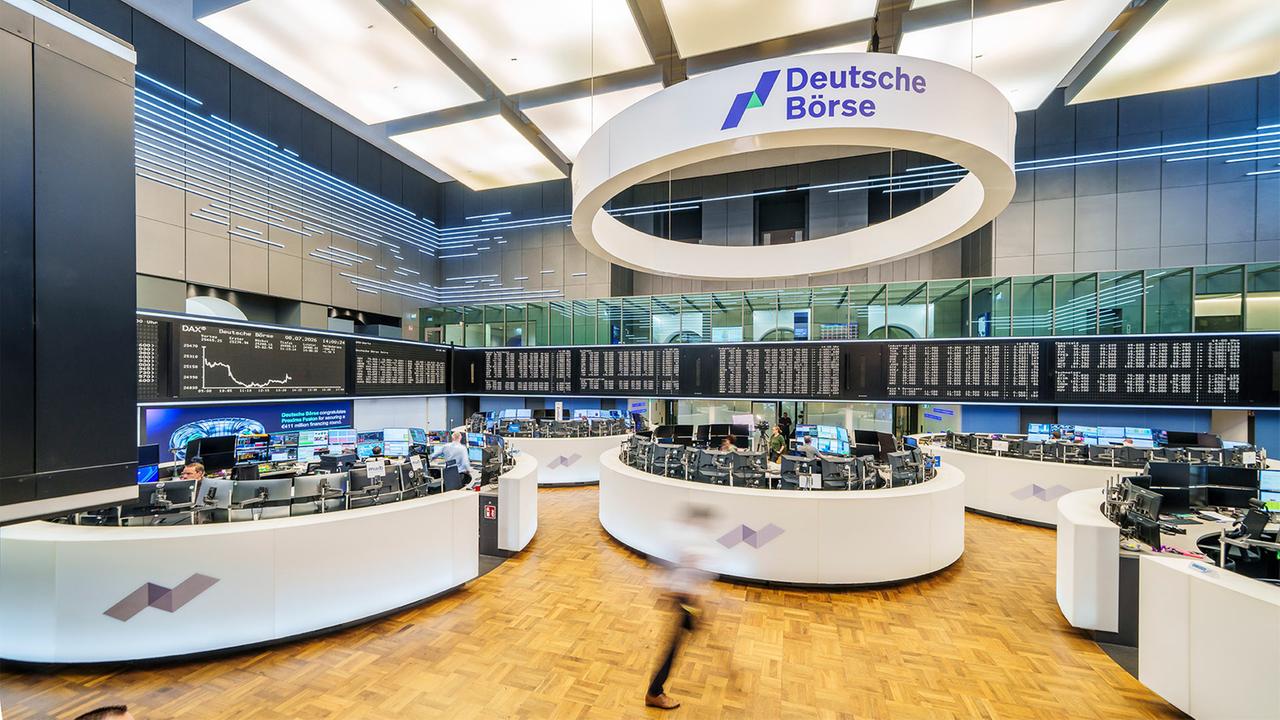
The German equity market commenced the new trading week with a notable lack of momentum. Despite holding above the psychological threshold of 25,000 points, the DAX index exhibited signs of exhaustion, reflecting a broader climate of investor uncertainty. After a modest opening gain of 0.2% to 25,280 points, the index quickly surrendered those gains, slipping into negative territory. This tepid performance follows a recovery late last week, where the DAX managed a 1.2% gain, yet the prevailing narrative remains one of structural anxiety driven by currency volatility, persistent energy costs, and a cooling domestic industrial engine.
1. The Macro-Landscape: Why the DAX is Under Pressure
The primary catalyst for the morning’s stagnation is the continued depreciation of the Euro, which has fallen below the critical $1.12 threshold. While a weaker currency typically serves as a tailwind for German export-heavy conglomerates, the current decline is viewed by analysts as a signal of institutional distrust in the Eurozone’s fiscal stability.
"Anleger entziehen dem Euro das Vertrauen," notes Thomas Altmann, a market expert at QC Partners. This sentiment is compounded by rising bond yields, particularly in France, where the spread between French sovereign debt and the German Bund has widened. This divergence in European credit markets is creating a "headache" for equity investors, who fear that rising borrowing costs will choke off corporate capital expenditure at a time when the broader economy is already showing signs of fatigue.
2. Sectoral Analysis: From AI Optimism to Industrial Gloom
Deutsche Telekom: Betting on the AI Revolution
Amid the generally bearish atmosphere, Deutsche Telekom emerged as a focal point for investors following an ambitious announcement at the company’s inaugural "AI Investor Day." The telecommunications giant revealed a strategic roadmap centered on massive cost optimization through Artificial Intelligence.
The company projects that by 2027, operational costs will be reduced by €1.1 billion compared to 2023 levels, with savings expected to balloon to €2.5 billion by 2030. These figures, which exclude implementation expenditures, highlight the company’s intent to pivot from a traditional infrastructure provider to an AI-driven service powerhouse. Market participants are closely watching whether the practical applications presented by the firm can convince shareholders that these efficiency gains will translate directly to the bottom line without compromising service quality.
The Automotive Crisis: A "New Low" in Sentiment
In stark contrast to the technological optimism of the telecom sector, the German automotive industry is facing a reality check. Data released by the Munich-based ifo Institute reveals a collapse in sentiment, with the business climate index for the auto sector plunging to minus 35.0 points.
This represents the worst outlook for the sector in the current calendar year. The automotive industry, which serves as the backbone of the German economy, is currently grappling with a "perfect storm": high energy costs, supply chain bottlenecks, and a shift in consumer demand that is proving difficult to navigate. Analysts suggest that the combination of lower margins and increased regulatory pressure is leading to a fundamental reassessment of the sector’s valuation.
3. Consumer Sentiment and the Retail Outlook
The macroeconomic gloom is filtering down to the household level. The Handelsverband Deutschland (HDE) reported a decline in the consumer climate index, which dropped to 93.51 points in October. With the crucial Christmas shopping season approaching, this downward trend is particularly concerning for the retail sector.
"Eine Belebung des privaten Konsums zeigt sich aktuell nicht," stated an HDE representative, emphasizing that the lack of consumer confidence is dampening expectations for the year-end surge. Given that many retailers derive a significant portion of their annual revenue during the fourth quarter, this decline suggests that domestic demand—a traditional pillar of the German economy—will provide little support to GDP growth in the coming months.
4. The Energy Conundrum: Oil Prices Remain Elevated
The energy market continues to exert significant pressure on inflation and production costs. Despite a temporary reprieve caused by the release of 100 million barrels of crude from G7 strategic reserves, prices remain stubbornly high. Brent crude from the North Sea recently traded at $101.68 per barrel, while US WTI crude stood at $90.18.
Geopolitical tensions continue to dominate the supply side. Concerns over Houthi rebel attacks on Saudi Aramco facilities, combined with increased aggression toward oil tankers in the Strait of Hormuz, are offsetting the bearish impact of increased exports from the Middle East. Furthermore, the OPEC+ alliance has signaled that it will maintain its current production limits through November, confirming that there is no imminent intention to increase global supply. This supply-side rigidity suggests that energy costs will remain a persistent headwind for the manufacturing sector.
5. Global Context: Asian Markets and the "Fed Pivot"
While the German market struggles, there is a glimmer of hope originating from the United States. Recent, weaker-than-expected US labor market data has sparked optimism that the Federal Reserve may soon pause its aggressive interest rate hike cycle.
Analysts suggest that the risk of rising unemployment will force the Fed to temper its hawkish stance, with market participants currently pricing in only a 22% probability of a rate hike this month. This "Fed pivot" sentiment has provided a significant boost to Asian markets. The Japanese Nikkei 225, for instance, rallied by 2.4% to 69,946 points. While this international optimism is a positive signal for global liquidity, it has yet to fully transmit to the German market, which remains preoccupied with its own localized structural challenges.
6. Implications for Investors
As we look toward the remainder of the week, the primary themes for investors are clear:
- Bond Market Volatility: The interaction between sovereign debt yields and equity valuations remains the most critical factor. Investors should monitor the spread between European sovereign bonds as a proxy for systemic risk.
- Energy Resilience: Companies with high exposure to energy-intensive production processes will continue to face margin compression. Conversely, firms like Deutsche Telekom that are aggressively pursuing structural efficiency through technology may offer a defensive hedge against inflation.
- Consumer Spending: The upcoming holiday season will be a litmus test for the German economy. If the HDE’s pessimistic outlook for the Christmas season holds, it will likely lead to downward revisions in earnings guidance for the consumer discretionary sector.
- Currency Watch: The Euro’s path will remain volatile. While a weaker Euro assists exporters, the underlying cause—a loss of confidence—is a negative signal for the long-term health of the European Union’s financial architecture.
In conclusion, the DAX is currently navigating a transition phase defined by high energy costs, weakening consumer demand, and a fragile currency. While isolated pockets of growth exist—particularly within companies adopting AI-driven cost-cutting measures—the overall market direction remains constrained by external pressures and a lack of clear domestic growth catalysts. Investors are advised to remain cautious, focusing on companies with strong balance sheets and the ability to navigate a high-cost environment, while keeping a close eye on the shifting rhetoric from central banks regarding interest rate policy.