

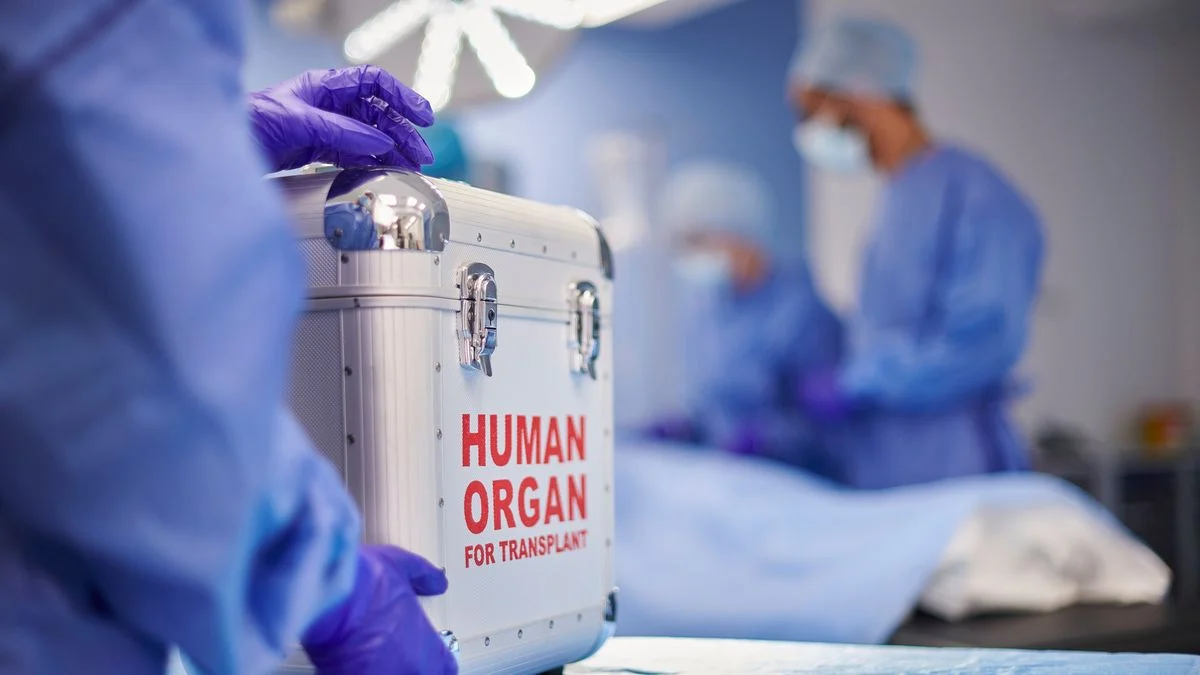
For thousands of critically ill patients across Germany, the daily reality is a race against time. Every hour, a phone call is awaited that could mean the difference between life and death—a call notifying them that a donor organ has become available. Yet, for many, that call never comes. Despite high public support for the principle of organ donation, the actual number of donors remains chronically insufficient to meet the staggering demand.
As the German Bundestag prepares to debate a landmark legislative proposal this Thursday, the nation finds itself once again at the center of a profound ethical and political debate: Should the state adopt a "widerspruchslösung," or opt-out system, to address the persistent shortage of life-saving organs?
The Core of the Debate: Consent vs. Presumed Willingness
Currently, Germany operates under a strict "opt-in" model. For an organ to be harvested after death, the individual must have explicitly consented to the procedure during their lifetime, or their next of kin must authorize it. While surveys consistently show that a majority of the German public supports organ donation in principle, the actual documentation of this willingness—via donor cards or the national registry—remains dismally low.
The proposed "opt-out" legislation seeks to flip this paradigm. Under the new model, every adult would be considered a potential organ donor by default. If an individual does not wish to donate their organs, they would be required to explicitly record their refusal. Proponents of this shift argue that it respects the sanctity of life by removing administrative hurdles, while simultaneously relieving grieving families of the immense burden of making a life-or-death decision in their most vulnerable moments.
A History of Legislative Stagnation
This week’s debate marks the third major attempt to overhaul Germany’s transplant laws. The first attempt in 2020 ended in legislative failure, as the Bundestag rejected a proposal to implement the opt-out system. A second attempt, which gained momentum in subsequent years, was effectively derailed by the political turbulence surrounding the early federal elections of 2025.
The current cross-party coalition pushing for this change is arguably the most robust to date, drawing support from the CDU, CSU, SPD, the Greens, and the Left party. Notably, the initiative is spearheaded by political heavyweights, including former Health Ministers Jens Spahn (CDU) and Karl Lauterbach (SPD). For these advocates, the current system is not merely inefficient; it is a failure of public policy that costs lives every single day.
Supporting Data: The Disconnect Between Intent and Action
The statistical reality of organ donation in Germany paints a sobering picture. According to the German Foundation for Organ Transplantation (DSO), 2025 saw 985 individuals donate one or more organs—the highest figure recorded since 2012. While this represents a positive trend, it is vastly overshadowed by the human cost of the current shortage. As of the end of 2025, approximately 8,200 people were registered on waiting lists for organs such as kidneys, livers, and hearts.
The launch of the national digital Organ Donation Register in March 2024 was intended to simplify the process. To date, approximately 633,000 declarations have been documented. Of these, 82 percent represent unconditional consent for organ removal, while only 8.7 percent have explicitly recorded a refusal. These figures suggest that the "problem" is not a lack of public will, but a lack of public engagement. As Green Party politician Ricarda Lang noted in a recent interview with the ARD "Morgenmagazin," "Nobody can be expected to become an organ donor against their will, but it is reasonable to expect every one of us to engage with this topic at least once in our lives."
The Counter-Movement: Autonomy and Ethical Concerns
Not everyone in the Bundestag is convinced that an opt-out system is the solution. A second group of cross-party legislators is promoting a "Counter-Proposal," which focuses on mandatory education and active solicitation rather than presumed consent.
This group argues that the state should not interpret silence as a "yes." CDU politician Michael Brand has been one of the most vocal critics of the opt-out model. "It is about the integrity of one’s own body and one’s own life," Brand stated, emphasizing that organ donation is a deeply personal, individual choice. He warns that an opt-out system risks generating public distrust and skepticism, potentially causing more people to register an explicit "no" simply out of a sense of being coerced.
The alternative proposal suggests a more proactive approach: requiring every citizen, shortly after their 18th birthday, to formally declare their stance. Crucially, this system would include a third option: "Undecided." Proponents believe that by forcing an active decision without the threat of automatic inclusion, the state can respect bodily autonomy while still increasing the number of registered donors.
Implications for the Future of Healthcare
The outcome of the upcoming debates and the final vote—scheduled for the end of the year—will have profound implications for German society. The choice is not merely between two administrative systems, but between two different visions of the relationship between the citizen and the state.
If the opt-out system is adopted, it would bring Germany in line with several other European neighbors, such as Spain, which has long been a global leader in donation rates due to its presumed-consent laws. However, the path to implementation is fraught with ethical hurdles. Critics argue that the "presumed consent" model is a slippery slope that diminishes the importance of informed, voluntary choice.
On the other hand, the status quo is increasingly untenable. For the thousands of patients waiting for a transplant, every month of legislative debate is another month of uncertainty. The medical community has largely leaned toward the opt-out model, arguing that the moral imperative to save lives through transplantation should take precedence over the administrative convenience of maintaining the status quo.
A Moment of Reckoning
As the Bundestag convenes this Thursday, the chamber will be divided between two distinct moral frameworks. One side views the opt-out model as a necessary, life-saving correction to a broken system that places the burden of choice on the wrong people at the wrong time. The other side views the preservation of absolute, active consent as a fundamental human right that the state has no authority to override.
The final decision, expected at the end of the year, will be the result of months of negotiation, public hearings, and intense ethical soul-searching. Regardless of the outcome, the debate has already succeeded in one regard: it has forced a national conversation on a topic that most people would rather avoid until it is too late. Whether or not Germany moves toward a system of presumed consent, the legislative process has highlighted the critical need for a more robust, informed, and proactive engagement with the gift of life.
For the 8,200 individuals currently waiting, the political maneuvering is secondary to the outcome. They remain in a state of suspended animation, waiting to see if their lawmakers will prioritize the potential of their survival through a fundamental change in the social contract, or if the current system will prevail, leaving their futures in the hands of a public that—while generally supportive—has yet to fully commit to the process of donation. As the Bundestag debates, the clock continues to tick.

























