
The newly appointed Federal Minister of Transport, Steffen Bilger (CDU), has hit the ground running, signaling a departure from recent departmental inertia. In a series of interviews with the Funke Mediengruppe, Bilger has laid out a clear agenda that balances the consumer-facing pressures of the Deutsche Bahn (DB) with a firm ideological stance on the long-standing debate surrounding German motorway regulations. As the ministry navigates the complexities of modern mobility, Bilger’s initial focus on the restoration of family-friendly rail travel and his continued rejection of a general speed limit on the Autobahn suggest a tenure defined by pragmatic, albeit contentious, policy-making.
The Rail Dilemma: Restoring the Family Fare
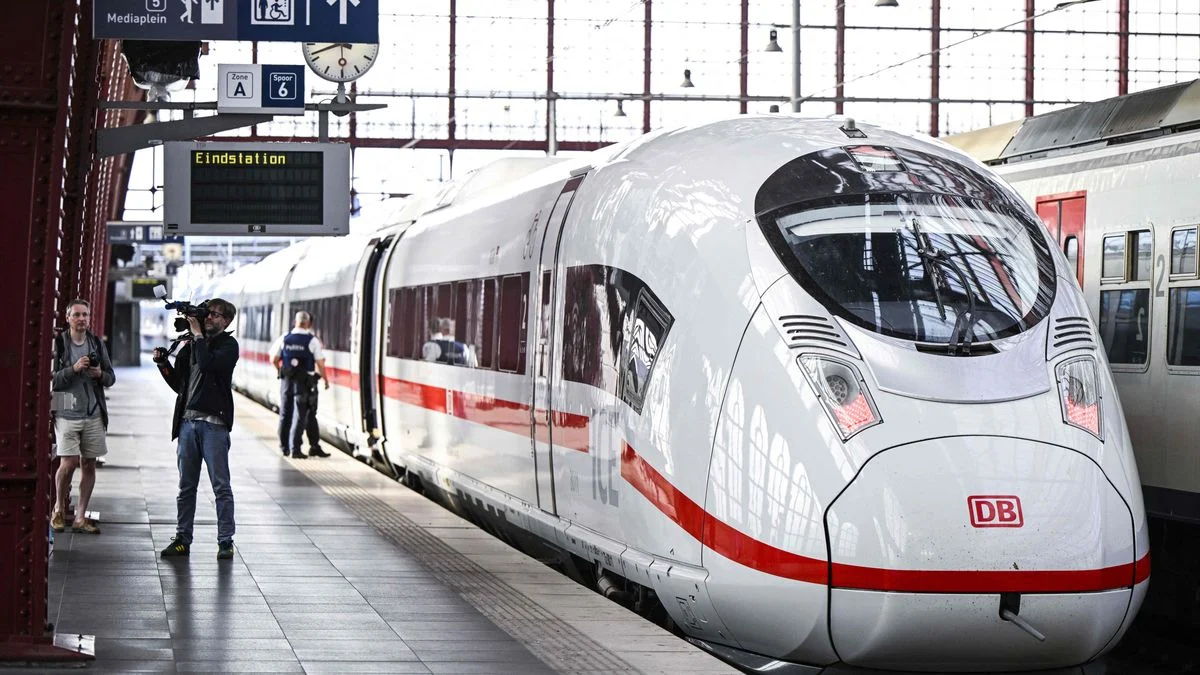
At the heart of the minister’s immediate agenda is a push to rectify what he deems a significant misstep in customer service: the abolition of the "Familienreservierung" (family seat reservation) in long-distance rail travel.
A Controversial Cut
In June of the previous year, the Deutsche Bahn discontinued its flat-rate family reservation system. Previously, families could secure seats for all members on long-distance trains for a fixed fee of just 10.40 euros. The move to a per-seat pricing model was ostensibly part of a broader revenue optimization strategy, but the backlash was immediate and severe.
For many families, the change translated into a substantial increase in travel costs, effectively discouraging rail usage for those already navigating the high cost of living. Minister Bilger has been vocal in his disapproval, stating that the decision has caused "rightful dissatisfaction" among the traveling public. He is currently in active negotiations with the Deutsche Bahn board to restore a more affordable reservation structure, viewing it as a prerequisite for making rail travel the backbone of sustainable family mobility.
Public Outcry and Civic Pressure
The government’s shift in tone follows a massive public outcry. The Verkehrsclub Deutschland (VCD) launched a petition demanding the reinstatement of the flat-rate family reservation, which quickly gathered over 128,000 signatures. This level of engagement indicates that for the German public, the accessibility of the national rail network is not merely a logistical matter but a social contract. Bilger’s intervention reflects a recognition that if the state expects citizens to prioritize rail over cars for vacations and long-distance travel, the financial barriers must be lowered, not raised.
Chronology: The Evolution of the Conflict
- Pre-June 2023: A flat-rate family reservation system (10.40 EUR) is the industry standard for DB Fernverkehr, successfully incentivizing families to choose trains.
- June 2023: Deutsche Bahn eliminates the flat-rate model, requiring individual seat reservations for every passenger.
- Q3 2023: Immediate negative feedback from consumer protection agencies and rail advocacy groups.
- Late 2023: The VCD initiates a national petition, garnering over 128,000 signatures.
- Present: Minister Steffen Bilger identifies the issue as a priority, opening formal negotiations with DB management to revert to a family-friendly pricing structure.
The Autobahn Standoff: Why Tempo 130 Remains a Non-Starter
While Bilger’s rail policies lean toward consumer support, his stance on the environment and road safety remains deeply rooted in traditional conservative values. He has doubled down on his firm opposition to a general speed limit (Tempo 130) on German motorways, framing the issue as one of individual liberty and social cohesion.
The Argument for Social Cohesion
"A speed limit would further strengthen the division in the country," Bilger remarked, arguing that many citizens perceive the imposition of a mandatory limit as a direct infringement on their personal freedom. In the current polarized political climate, the minister views the Autobahn as a symbolic battleground. For Bilger, preserving the status quo—where speed is regulated based on traffic flow and safety rather than a blanket cap—is a way of maintaining trust with a segment of the population that feels increasingly alienated by prescriptive climate policies.
Challenging the Climate Efficacy
Bilger also directly disputes the environmental narrative surrounding speed limits. He posits that a significant portion of the driving population is already reducing their speed voluntarily, driven by two primary factors: the rising cost of fuel and the widespread use of cruise control systems in modern vehicles.
"I doubt that there would be any significant potential for CO2 savings through a speed limit," he stated. By emphasizing voluntary behavioral shifts over legislative mandates, Bilger aligns himself with a market-led approach to decarbonization. He argues that the focus should remain on technological innovation rather than restrictive measures that, in his view, yield negligible ecological returns.
The Safety Record
Regarding traffic safety, Bilger is equally dismissive of the proponents of a speed limit. He contends that German Autobahns are statistically among the safest in Europe, outperforming many neighboring countries that already enforce strict speed caps. His argument suggests that the German model of "Richtgeschwindigkeit" (recommended speed) is sufficiently effective when combined with advanced driver-assistance systems and infrastructure management.
Supporting Data: The Path to Climate Neutrality
Bilger’s strategy for the transport sector is not one of inaction, but rather a pivot toward electrification and technological transition. He aspires to transform the transport sector from the "problem child" of German climate policy into a success story.
The Electromobility Surge
The Ministry of Transport is pinning its hopes on the rapid scaling of electric vehicle (EV) adoption. According to current figures, there are more than 3.6 million electric vehicles on German roads, a number that continues to climb. Furthermore, Bilger highlighted that the transition is not limited to passenger cars; electrification is gaining significant traction in the public transport sector, including buses and heavy-duty trucks.
Sectoral Objectives
For Bilger, the goal is to ensure the transport sector meets its climate targets by accelerating this "ramp-up phase." By focusing on the expansion of charging infrastructure and supporting the commercial vehicle sector in transitioning to alternative drives, he believes the ministry can achieve deep decarbonization without resorting to the "punitive" measures of speed limits.
Implications: A New Era for the Ministry
The dual-track approach adopted by Minister Bilger—combining consumer-centric rail reform with a staunch defense of individual driving freedoms—is a calculated political maneuver.
Implications for Deutsche Bahn
The outcome of the negotiations over the family reservation will serve as a bellwether for Bilger’s influence over the state-owned rail operator. If he succeeds in forcing a rollback of the current pricing structure, it will signal a shift toward a more politically directed management style for the Bahn, where public service obligations carry more weight than pure fiscal balancing.
The Political Landscape
In the broader context of the federal government, Bilger’s rejection of the speed limit sets a firm boundary. It placates the pro-driver constituency within the CDU/CSU and among voters who view the "Green" climate agenda with skepticism. However, it also guarantees ongoing friction with coalition partners or opposition parties who view a speed limit as an essential, low-cost measure to meet national carbon budgets.
Long-term Outlook
As the Minister of Transport, Bilger’s success will be measured by two metrics: the tangible improvement of the customer experience for families traveling by rail and the ability to demonstrate that the transport sector can reach its emission targets through innovation rather than regulation. His tenure promises to be one of active, pragmatic interventionism. By positioning himself as a defender of both the family traveler and the individual motorist, Bilger is crafting a political identity that seeks to bridge the gap between necessary climate action and the preservation of German economic and social traditions.
Whether this balancing act can survive the scrutiny of environmental groups and the logistical realities of a strained rail network remains the primary question for the months ahead. What is certain, however, is that the Ministry of Transport has moved into a more proactive, and likely more contentious, phase of policy-making.