
Executive Summary: A Market in Transition
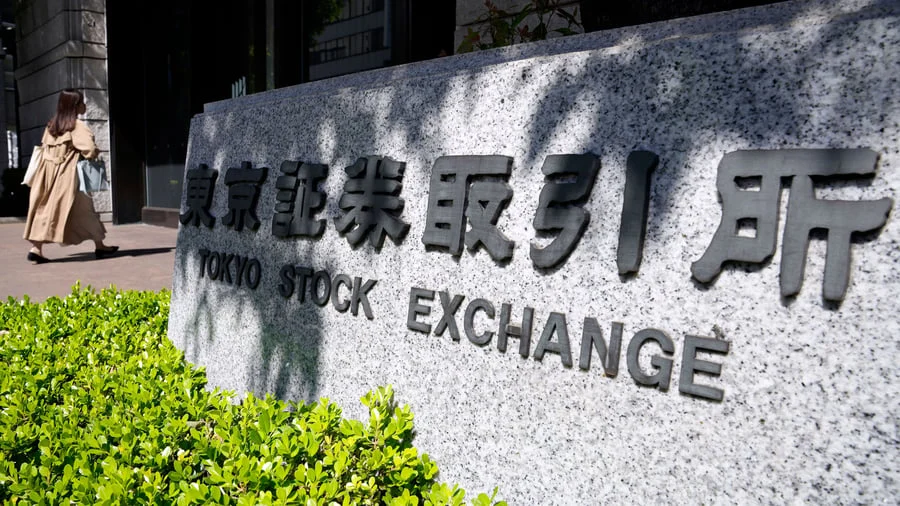
As the trading week hits its midpoint, global financial markets—particularly those across Asia—have entered a state of guarded optimism. Following a punishing four-day streak of losses that rattled investor confidence from Tokyo to Hong Kong, Asian indices managed a technical rebound on Wednesday. This recovery comes despite a backdrop of intense geopolitical uncertainty, stubborn inflationary pressures, and the looming shadow of the U.S. Federal Reserve’s upcoming interest rate announcement.
Market participants are currently walking a tightrope. On one hand, there is a palpable sense of relief as markets find a floor after recent sell-offs. On the other, the prevailing sentiment remains one of extreme caution. Traders are recalibrating their portfolios, weighing the implications of a widely anticipated monetary policy shift against the ongoing volatility in the energy and bond markets.
The Chronology of Current Market Sentiment
The current market mood is the result of a cumulative buildup of pressure over the last 96 hours.
- Monday & Tuesday: The selling pressure was relentless. Driven by rising yields on U.S. Treasury bonds and an aggressive surge in global oil prices, investors fled from risk-sensitive assets. The prevailing narrative was one of "higher for longer" interest rates, which historically dampens corporate valuations and borrowing capacity.
- Wednesday Morning (Asia Session): Early trading was characterized by hesitation. Investors initially sat on the sidelines, unwilling to commit significant capital ahead of the Fed’s signals. However, as the session progressed, bargain hunters emerged, sensing that the four-day decline had pushed asset prices into oversold territory.
- The Midday Turn: By midday, the momentum shifted. Indices that had opened in the red began to stabilize and move into positive territory, suggesting that while uncertainty remains, the market may have already "priced in" the expected hawkishness of the U.S. central bank.
Supporting Data: The Fed and the Yield Environment
The focal point of the global financial calendar is the U.S. Federal Reserve. According to the CME Group’s FedWatch tool, the consensus among market participants is remarkably firm: there is a 92.4 percent probability that the Federal Open Market Committee (FOMC) will move forward with a 25-basis-point interest rate hike.
The Bond Market Catalyst
The yield on U.S. Treasury notes has acted as a primary driver of volatility this week. When bond yields climb, they serve as a benchmark for borrowing costs globally. This creates a "gravity effect" on equity markets; as the "risk-free" return on government bonds increases, the appeal of holding volatile stocks diminishes. Traders are watching the spread between short-term and long-term yields closely, as any further inversion could signal heightened fears of an impending recession.
Currency Markets and the "Greenback"
The U.S. Dollar index (DXY), which measures the currency against a basket of six major peers, is currently hovering near a two-week high. This strength is a direct byproduct of the anticipated rate hike.
- USD/JPY: The dollar gained 0.1 percent, trading at 155.29 yen.
- USD/CNY: The dollar saw a marginal increase against the Chinese Yuan, reaching 6.7106.
- Euro Performance: The Euro remained largely stagnant at 1.1540 dollars, reflecting the wait-and-see approach being adopted by the European Central Bank (ECB) as they monitor the global fallout of the Fed’s policy.
Commodity Volatility: Oil and the Energy Squeeze
The energy sector remains a primary source of anxiety for global policymakers. After a sharp three-percent rally on Tuesday, oil prices faced a moderate cooling effect on Wednesday.
Brent crude, the international benchmark, dipped 0.6 percent to $108.14 per barrel, while U.S. West Texas Intermediate (WTI) fell 0.9 percent to $104.85 per barrel. Despite this minor retracement, the structural risks remain high. Market participants cited reports concerning the disruption of operations at the Saudi Arabian export terminal of Yanbu. Any supply chain bottleneck in the Middle East acts as a force multiplier for inflation, further complicating the Federal Reserve’s task of taming prices without stifling economic growth.
The Crypto Conundrum: Regulatory Hurdles
The digital asset space is currently grappling with a dual-threat: macro-economic tightening and legislative friction. The crypto markets continued their downward trend on Wednesday following a significant political setback in Washington.
The U.S. Senate voted against a piece of cryptocurrency-focused legislation that had previously enjoyed the vocal support of former President Donald Trump. This legislative defeat has sent a bearish signal to retail and institutional investors alike, who were hoping for a clearer regulatory framework.
- Bitcoin: The leading cryptocurrency fell 0.1 percent to $75,816.24.
- Ether: Ethereum’s native token followed suit, slipping 0.2 percent to $2,403.27.
The lack of political consensus on digital assets suggests that the "crypto winter" sentiment may persist, as the industry remains in a state of regulatory limbo.
Implications: What Comes Next?
The current market environment is characterized by a "wait-and-see" reflex. As we look toward the immediate future, three primary implications emerge for investors and policymakers:
1. The End of the "Easy Money" Era
The 92.4% probability of a rate hike signifies that the market has fully accepted the end of the post-pandemic stimulus era. The implication for corporate earnings is significant; companies will face higher interest expenses, which will likely lead to downward revisions in earnings guidance for the coming quarters.
2. Geopolitical Fragility
The reliance on oil as a barometer for market stability shows that the global economy remains tethered to supply-side constraints. Events like the disruption in Yanbu demonstrate how quickly energy prices can shift, impacting transportation, manufacturing, and consumer costs globally.
3. The Search for Safe Havens
With stocks showing volatility and cryptocurrencies struggling to find their footing, investors are increasingly scrutinizing the "flight to quality." While the U.S. Dollar remains strong, the stability of the Swiss Franc, which saw minor fluctuations against the dollar, suggests that capital is becoming increasingly selective in where it hides during periods of transition.
Conclusion: A Delicate Balance
As global markets prepare for the Fed’s announcement, the prevailing narrative is one of adaptation. The recovery seen in Asian markets on Wednesday proves that there is still significant appetite for risk, provided that the central bank’s commentary contains a path toward stability.
However, investors should remain cognizant of the broader environment. Between the upward pressure on yields, the volatility in energy logistics, and the cooling of the digital asset market, the path forward is anything but certain. The coming days will be defined not just by the rate hike itself, but by the language used by the Federal Reserve to describe the trajectory of future policy. Whether this marks the peak of the hawkish cycle or merely the next step in a longer tightening process will be the defining question for the remainder of the fiscal year.
Market participants are advised to maintain a defensive posture, keep a close eye on the bond market’s reaction, and remain prepared for continued intraday swings as the world digests the next chapter of monetary policy.