

Date: July 30, 2026
Location: Frankfurt Stock Exchange
The global financial landscape is currently navigating a complex convergence of inflationary pressures, geopolitical instability, and a critical corporate earnings season. On the floor of the Frankfurt Stock Exchange, the mood remains cautious as investors weigh the resilience of the German economy against the backdrop of escalating conflicts in the Middle East and persistent price volatility.
Main Facts: A Market in Flux
As of the close of trading on July 30, 2026, the DAX index demonstrated a modest recovery, ending the session 0.60% higher at 25,612 points. This performance was largely buoyed by a late-afternoon surge in U.S. markets, where technology stocks—led by robust quarterly earnings from Microsoft—provided a necessary tailwind. Conversely, the MDAX, which tracks mid-sized German enterprises, slipped by 0.08% to 32,216 points, reflecting the divergent performance across the broader market spectrum.
The primary driver of market anxiety remains the instability in Iran. Reports of new military escalations overnight have triggered a sharp spike in global oil prices. For the European economy, which is highly sensitive to energy input costs, this poses a direct threat to the inflation outlook. Financial analysts at Helaba have characterized the current environment as "persistently challenging," citing the ongoing earnings season and the heightened risk of geopolitical contagion as the two primary headwinds hindering a sustained market rally.
Chronology of the Trading Session
The trading day began under a cloud of uncertainty. Early morning sentiment was suppressed by the news of increased military activity in the Middle East, which led to an immediate flight from risk-sensitive assets. As the morning progressed, indices remained in the red, with investors awaiting clarity on central bank policies.
By mid-afternoon, the tone shifted. The influx of positive momentum from Wall Street provided the DAX with the necessary support to move into positive territory. Traders reacted favorably to the U.S. tech sector’s resilience, which temporarily masked the underlying concerns regarding the domestic industrial sector. However, the gains were capped by the performance of specific heavyweights in the German automotive and retail sectors, which weighed heavily on the broader indices throughout the day.
Supporting Data: Inflationary Pressure Intensifies
The macroeconomic narrative is currently dominated by a resurgence in consumer prices. According to the Federal Statistical Office, Germany’s inflation rate reached 2.8% in July compared to the same month last year, up from 2.3% in June. This increase, exacerbated by the expiration of government-subsidized fuel rebates and the ongoing energy crisis, has alarmed policymakers.
Economists are increasingly concerned that the 2% target set by the European Central Bank (ECB) is becoming structurally unattainable in the near term. Michael Heise, Chief Economist at HQ Trust, remarked, "What was gained has been lost," in reference to the fleeting periods of price stability. Friedrich Heinemann of the Leibniz Centre for European Economic Research (ZEW) echoed this sentiment, warning that 2026 marks the sixth consecutive year that inflation has exceeded the ECB’s target. "This is no longer a transitory phase; it is a structural concern that requires urgent attention," Heinemann noted.
Central Bank Stance: Fed and BoE Maintain Course
In a move that surprised few, the U.S. Federal Reserve decided to maintain its current interest rate corridor between 3.5% and 3.75%. However, the internal debate within the Fed suggests that the consensus for stability is fracturing, as three members of the committee formally advocated for a rate hike to combat lingering inflation.
Across the Atlantic, the Bank of England (BoE) similarly chose to hold its key interest rate at 3.75%. The decision was far from unanimous, reflecting a 6-3 split among the governing body. This caution stems from the classic central bank dilemma: the need to tighten monetary policy to curb inflation versus the risk of strangling economic growth through prohibitive borrowing costs. For investors, the takeaway is clear: the era of "easy money" is firmly in the rearview mirror, and the central banks remain caught in a delicate balancing act.
Corporate Underperformance: The Adidas and BMW Effect
Corporate earnings results served as a cold shower for investors today, particularly in two of Germany’s flagship industries.
Adidas: The Price of Fame
Despite reporting growth in both revenue and profit, Adidas faced a sharp market correction, with its share price plummeting by over 18% at one point. The disconnect between "good results" and "market disappointment" lies in the extremely high expectations set for the brand. The marketing costs associated with the recent FIFA World Cup significantly eroded margins, leaving shareholders skeptical about the company’s short-term profitability. As Tim Oechsner of Steubing AG put it, "When the bar is set at a stratospheric level, the potential for disappointment is equally extreme."
BMW: The China Syndrome
The automotive sector remains under immense pressure. BMW reported a staggering one-third decline in net profit for the second quarter, reaching 1.2 billion euros. The primary culprit is the deteriorating economic environment in China, once the engine of growth for German luxury car manufacturers. BMW’s new CEO, Milan Nedeljkovic, offered a sober assessment: "The challenges facing the automotive industry are intensifying rapidly. Global competition, stricter regulatory requirements, and geopolitical conflicts will define our business model for years to come."
Implications: A Resilient Economy?
Despite these corporate and inflationary woes, the German economy has shown surprising resilience. GDP grew by 0.2% in the spring quarter compared to the previous period—a figure that exceeded most expert forecasts. This marks the third consecutive quarter of growth, following a 0.3% rise in late 2025 and a 0.4% increase in the first quarter of 2026.
Christian Breuer, an economist at the IMK, described the data as a "positive signal" given the significant external economic burdens. However, he cautioned that the sustainability of this growth depends entirely on the stabilization of energy prices and the cooling of international conflicts.
Furthermore, the government’s recent reform package, while welcomed by analysts, is viewed as only a partial solution. Ulrich Kater, Chief Economist at DekaBank, noted that while the current climate lacks "true optimism," the reforms represent a necessary, albeit modest, step in the right direction.
Conclusion: Looking Ahead
As we look toward the remainder of 2026, the market remains trapped between two realities. On one side, the underlying German economy exhibits a stubborn ability to grow despite the weight of global crises. On the other side, the corporate sector is struggling to adjust to a world of higher costs, lower consumer purchasing power, and intense geopolitical friction.
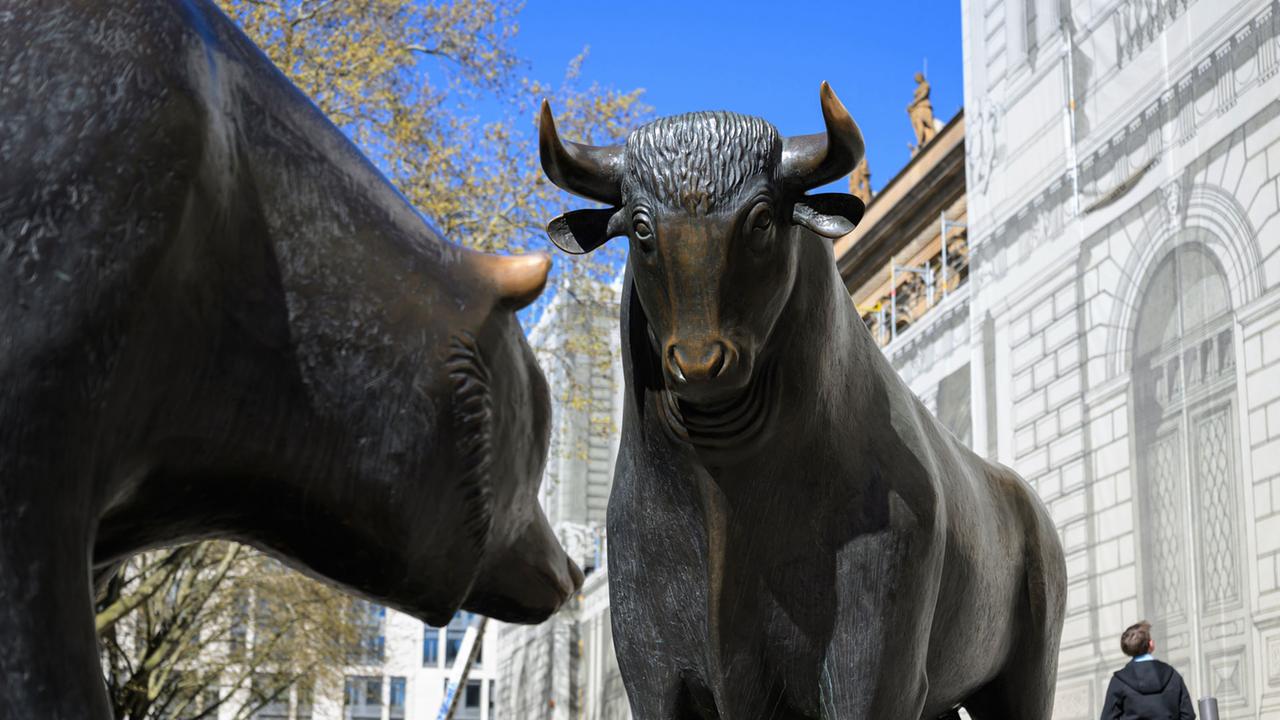
Investors are advised to remain vigilant. The coming months will likely see continued volatility as the market digests the full impact of the oil price shocks and monitors whether the central banks will be forced to shift their stance if inflation continues to trend above the 2% threshold. For now, the DAX serves as a barometer for a nation trying to maintain its industrial footing while the ground beneath it shifts. The "Bulls and Bears" statue outside the Frankfurt Stock Exchange remains a fitting symbol for a market that is constantly being pulled in two opposing directions.