The structural integrity of German professional football—specifically the transition from the regional amateur levels to the fully professional 3. Liga—has long been a source of intense debate, friction, and procedural complexity. At the heart of this ongoing evolution is the German Football Association (DFB), led by President Bernd Neuendorf, which is currently championing the so-called "Compass Model" as the definitive solution to reform the promotion process. As the sport seeks a more equitable and meritocratic pathway for clubs, this proposed framework is gaining traction among key stakeholders, including traditional clubs like FSV Zwickau and Erzgebirge Aue.
The Core Conflict: Why Reform is Necessary
For years, the German football pyramid has faced a structural bottleneck. While the Bundesliga and 2. Bundesliga operate under a straightforward promotion and relegation system, the Regionalliga (fourth tier) is divided into five separate leagues. Historically, this has meant that the champions of these five leagues did not automatically earn a place in the 3. Liga. Instead, a complex system of direct promotion and play-off matches was required to decide which clubs would rise to the professional ranks.
This system has been criticized for being inherently unfair. A champion from one of the stronger, larger regional leagues might be forced into a grueling play-off against a champion from a smaller, less competitive region, leading to situations where elite-level clubs are denied promotion despite dominant seasons. The "Compass Model" aims to replace this unpredictability with a more stable, data-driven, and rotation-based approach that guarantees a fairer distribution of promotion slots.
A Chronology of the Debate
To understand the current momentum behind the Compass Model, one must look back at the years of frustration regarding the previous status quo.
- 2018–2020: The DFB initially attempted to bridge the gap between regional champions by introducing a temporary play-off system. This was met with backlash from fans and clubs who felt the "all-or-nothing" nature of a two-leg tie undermined the merit of a year-long league campaign.
- 2021: As the COVID-19 pandemic disrupted seasons across the country, the fragility of the existing system was laid bare. Financial instability across the fourth tier made it clear that a more permanent, reliable structure was needed for clubs aspiring to professional status.
- 2022: Discussions regarding the "Compass Model" gained steam. The concept was designed to provide a "compass" or guide for long-term planning, ensuring that every regional league has a defined cycle for direct promotion, reducing the reliance on high-pressure, high-risk play-off matches.
- 2023–2024: The DFB executive committee, under the guidance of Bernd Neuendorf, solidified its support for the model. The focus shifted from debating the need for change to fine-tuning the mechanics of the rotation, ensuring that the strongest regions are represented while maintaining the "pan-German" spirit of the third division.
Supporting Data: Understanding the "Compass"
The Compass Model is not merely a political compromise; it is a mathematical attempt to balance regional representation with sporting excellence. Under this system, promotion slots are allocated based on a rotating schedule that accounts for:
- Club Density: The number of clubs in a specific region.
- Infrastructure Scores: The ability of clubs to meet the strict licensing requirements of the 3. Liga (stadium capacity, financial guarantees, youth academy standards).
- Historical Success: A weighted average of how teams from these regions have performed when they have reached the professional tier in the past.
By using this data-driven approach, the DFB argues that it can predict which regions are ready to sustain a professional club, thereby preventing the "revolving door" effect where newly promoted teams immediately face bankruptcy or relegation due to a lack of professional infrastructure.

Official Responses and Stakeholder Perspectives
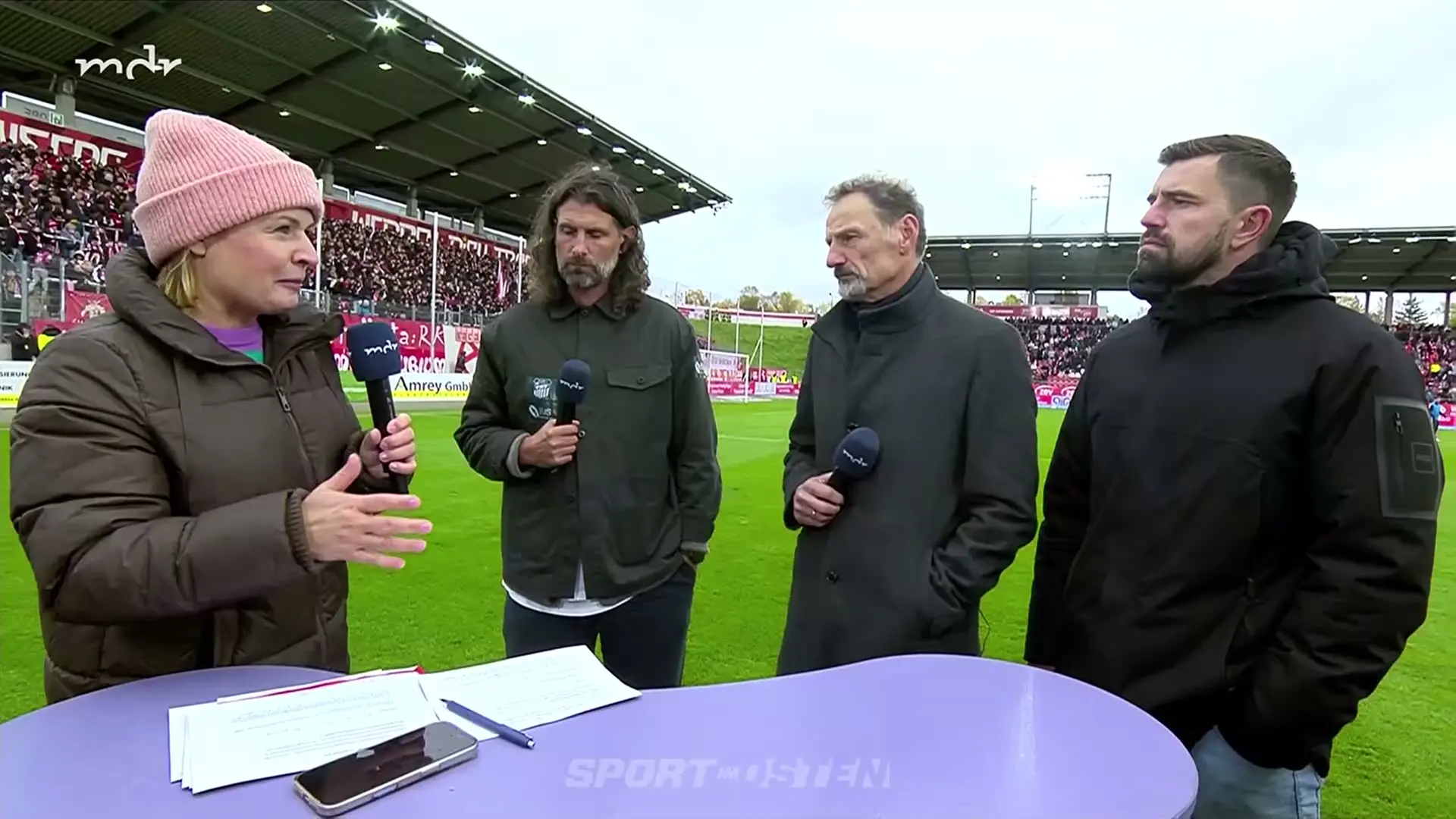
The reception among clubs has been cautiously optimistic. For clubs like FSV Zwickau and Erzgebirge Aue, the model represents a lifeline.
In recent press statements, officials from these clubs have praised the DFB’s shift toward a more transparent system. "We want a path to professional football that is determined on the pitch, not by a lottery of play-off draws," one club representative noted. "The Compass Model gives us a roadmap. If we know exactly what is required—not just in terms of points, but in terms of the rotation cycle and infrastructure—we can build our budgets and our squads with long-term certainty."
Bernd Neuendorf has been a vocal proponent, emphasizing that the DFB’s role is to ensure the "pyramid remains healthy." In a recent address to regional association heads, Neuendorf stated, "We cannot have a professional league that feels inaccessible to the regional level. The Compass Model is about reliability. It is about telling a club in the northeast or the southwest that if they win their league, they have a legitimate, clear path to the professional tier."
Implications for the Future of German Football
The implementation of the Compass Model holds profound implications for the structure of German football.

1. The Professionalization of the Regionalliga
If the DFB successfully implements this model, it will likely trigger a "trickle-down" effect of professionalization. Clubs, knowing they are in a rotation cycle for potential promotion, will be incentivized to invest in their infrastructure earlier. This leads to better stadiums, improved youth training facilities, and more stable financial reporting even before they reach the 3. Liga.
2. Reduced Regional Friction
Historically, the five regional associations have been at odds, often lobbying for more slots or better terms for their respective champions. By standardizing the rotation, the DFB is effectively neutralizing this political infighting. The "compass" removes the subjective nature of the decision-making process, replacing it with a cold, hard, and public schedule.
3. Financial Sustainability
Perhaps the most critical implication is financial. The 3. Liga is a notoriously difficult league to balance financially. By ensuring that promoted clubs are the ones most prepared to handle the transition, the DFB reduces the likelihood of insolvency cases, which have historically tarnished the reputation of the third tier.
4. The Fan Experience
For the fans, the removal of play-offs—while potentially stripping away some of the "do-or-die" drama—is generally viewed as a positive. A championship title should mean promotion. When a team finishes first after 34 or 38 games, the supporters expect to see their team promoted. The Compass Model restores this fundamental sporting principle.

Conclusion: A Turning Point for the Game
As the DFB moves forward with the implementation of the Compass Model, the German football landscape stands at a crossroads. The transition from a fragmented, often chaotic promotion process to a structured, data-informed system is a necessary step in the modernization of the DFB.
While no system is perfect, and challenges regarding the sheer scale of the German amateur pyramid remain, the consensus—supported by clubs like Zwickau and Aue—is that the Compass Model offers the best path forward. It respects the regional roots of the game while acknowledging the hard realities of professional football economics.

In the coming seasons, the success of this model will be measured not just in the number of successful promotions, but in the stability of the clubs that make the jump. If the DFB can prove that this path is sustainable, it may well serve as a blueprint for other nations struggling to balance the interests of their regional and professional leagues. For now, the football community in Germany looks toward the horizon, guided by a compass that, for the first time in many years, seems to be pointing in the right direction.