Introduction: A Midnight Interception
In a case that underscores the rising tide of organized crime targeting financial infrastructure across Central Europe, the District Court of Regensburg has delivered verdicts against two individuals apprehended with a significant cache of explosives. The arrests, which occurred during a routine traffic stop on the A3 motorway in late January, prevented what authorities believe was a coordinated attempt to blow up an automated teller machine (ATM) in neighboring Austria.
Following a trial that scrutinized the suspects’ intent and the logistical realities of ATM-related organized crime, the court sentenced the female driver to one year and ten months of probation, while her male accomplice received a custodial sentence of two years and five months. The verdict, handed down on Tuesday, remains subject to appeal, marking a significant, albeit nuanced, chapter in the ongoing regional struggle against mobile criminal gangs.
Main Facts of the Case
The judicial proceedings centered on a high-stakes discovery made by the Regensburg traffic police. According to court documents and statements from a spokesperson for the Regensburg District Court, the two defendants were intercepted near the Wörth/Wiesent exit on the A3 motorway.
Inside their vehicle, officers discovered a sports bag containing high-grade explosives, meticulously prepared for use. While the prosecution had argued that the defendants were integral members of a larger criminal enterprise—specifically accusing them of conspiracy to commit severe gang-related theft—the court ultimately reached a more tempered conclusion. While the possession of the explosives was undisputed and criminalized, the court found insufficient evidence to substantiate the charge of participating in a formal, structured "gang" for the purpose of systematic theft. This distinction played a critical role in the sentencing phase, as the judge weighed the immediate danger posed by the explosives against the legal thresholds required to prove membership in an organized criminal organization.
Chronology: From Traffic Stop to Sentencing
The Interception (Late January)
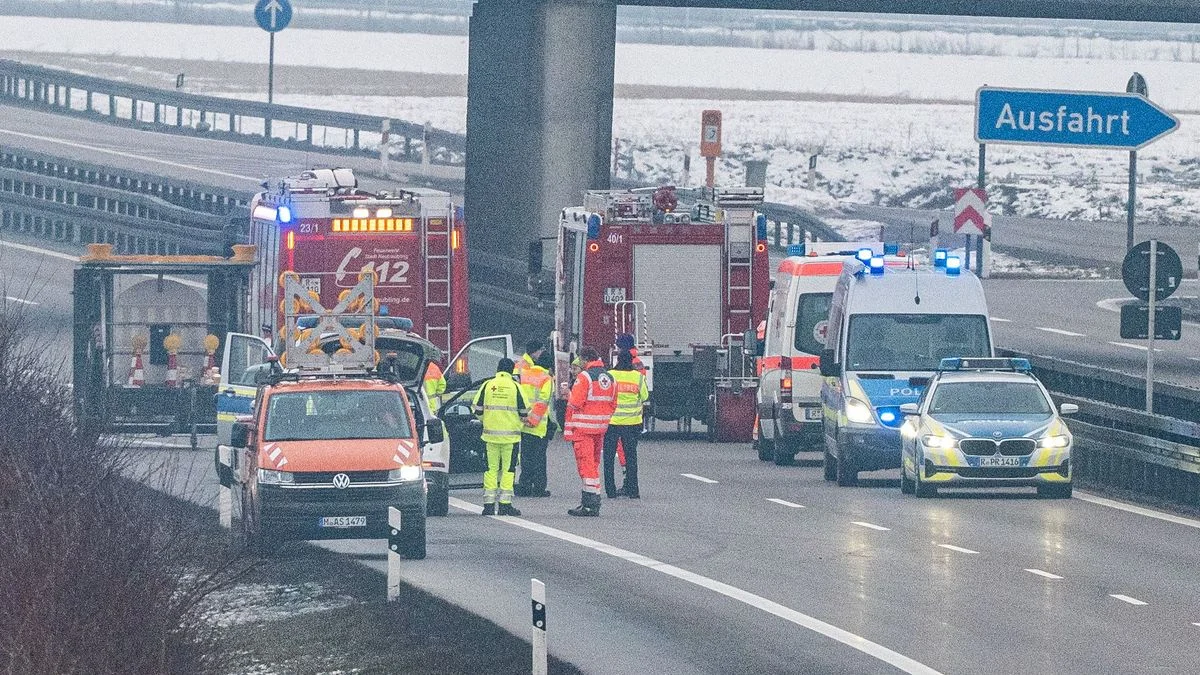
The incident began in the early hours of a late-January morning. A standard traffic patrol by the Regensburg police force identified the suspects’ vehicle traveling in the direction of the Austrian border. Given the geographical context—a major transit route frequently utilized by cross-border criminal groups—officers initiated a stop. The discovery of the explosives in a sports bag immediately transformed a routine check into a major security operation.
The Lockdown and Controlled Detonation
Following the discovery, authorities treated the scene as a high-level emergency. The A3 motorway, a vital artery for European freight and commuter traffic, was cordoned off for several hours. The closure extended well into the morning rush hour, causing significant disruption for thousands of commuters. Expert bomb disposal units were deployed to the site, where they determined that the risk of transporting the volatile material was too great. Consequently, a controlled detonation was performed on-site, neutralizing the threat but scattering evidence of the failed heist across the landscape. The two suspects were taken into custody immediately.
The Investigation
In the weeks following the arrest, investigators focused on determining the origin of the explosives and the final destination of the suspects. The investigation quickly gravitated toward the theory that the pair were operatives for one of the many "ATM-blowing gangs" that have plagued Germany and the Netherlands in recent years. These groups often operate with a "hub-and-spoke" model, moving explosives across borders to minimize the time between the acquisition of materials and the detonation at a target site.
The Trial and Verdict
The trial at the Regensburg District Court examined the evidence gathered during the months of investigation. While the prosecution sought to pin the defendants to a broader criminal syndicate, the defense argued for a focus on the specific actions of the two individuals. On Tuesday, the court delivered its final judgment, acknowledging the gravity of the possession charge but dismissing the more serious allegations of professional gang-related larceny.
Supporting Data: The ATM Crime Wave
The incident in Regensburg is not an isolated occurrence but rather a symptom of a broader, systemic issue facing European law enforcement. According to data from the Federal Criminal Police Office (BKA), Germany has seen a sustained spike in ATM bombings over the past five years.
The Logistics of Destruction
Criminal gangs targeting ATMs typically utilize solid explosives, which provide a more powerful and efficient blast than the gas-based methods used in the past. This evolution has made the devices more destructive, causing extensive collateral damage to the buildings housing the machines. The sports bag discovered by Regensburg police is a hallmark of this logistical shift: portable, inconspicuous, and lethal.
Cross-Border Dynamics
The fact that the suspects were traveling toward Austria is significant. Criminal groups often exploit the "Schengen" reality of open borders, acquiring explosives in one jurisdiction, striking in another, and attempting to reach a "safe haven" or a drop-off point in a third. Law enforcement agencies, including Europol, have intensified cooperation to combat this mobility, yet the sheer volume of transit traffic makes the detection of these "couriers" a daunting task for local traffic police.
Official Responses and Judicial Logic
The verdict has elicited a measured response from the legal community. The spokesperson for the Regensburg District Court emphasized that the sentencing reflected the court’s strict adherence to evidentiary standards.
By acquitting the defendants of the "gang-related theft" charge, the court indicated that while the intent to commit a crime was clear, the prosecution failed to prove the defendants were acting as part of a formal, enduring criminal organization—a legal requirement for the more severe sentencing enhancements associated with organized crime laws.
Critics of the sentence, however, might argue that the leniency shown to the driver—a suspended sentence—underestimates the potential for catastrophe. Had the explosives detonated during the traffic stop or during the transit, the loss of life could have been immense. The court’s decision to impose a prison sentence on the male accomplice while suspending the female driver’s sentence suggests a nuanced view of culpability and potential for rehabilitation, though it leaves the public to grapple with the perceived disparity between the danger of the materials and the final punishment.
Implications: The Future of Motorway Security
The Regensburg incident serves as a stark reminder of the vulnerability of modern infrastructure. It highlights several key implications for regional security policy:
1. The Necessity of Predictive Policing
The fact that a routine patrol discovered the explosives highlights the effectiveness of high-visibility, proactive traffic enforcement. As criminal organizations become more sophisticated, the role of local police in identifying "anomalous transit" becomes the primary line of defense.
2. Legal Challenges in Defining "Organized Crime"
The difficulty the prosecution faced in proving the "gang-related theft" charge highlights a legal loophole. As criminal groups adopt more fluid, decentralized structures—often using "gig-economy" style couriers who may not know the full extent of the organization—courts struggle to apply traditional gang-related sentencing guidelines. Legislators may need to re-examine how these laws are written to ensure that facilitators, not just the ringleaders, are held accountable for their role in the enterprise.
3. Economic and Social Impact
The multi-hour closure of the A3 is a microcosm of the wider economic impact. Beyond the immediate costs of the investigation and the damage to the ATM infrastructure, the disruption of critical logistics corridors imposes a "hidden tax" on the economy. Furthermore, as financial institutions respond by hardening ATMs—or, more drastically, removing them from service entirely—the public suffers a loss of convenience and access to cash, particularly in rural or semi-urban areas.
4. International Cooperation
The incident underscores the urgent need for harmonized laws across the EU. If criminal gangs can exploit the difference in sentencing or evidentiary requirements between Germany, Austria, and the Netherlands, they will continue to do so. A unified European strategy for tracking explosives, enhancing surveillance at border crossings, and standardizing the legal definition of organized criminal participation is essential to curbing this trend.
Conclusion
The sentencing of the two individuals in Regensburg brings a temporary closure to a case that began with a high-stakes discovery on a major German motorway. While the judicial process has concluded for the moment, the underlying issues remain. The case serves as a focal point for a larger, ongoing battle between law enforcement and the highly mobile, technologically adept criminal networks that view European infrastructure as a target of opportunity.
As the case remains open to appeal, the legal community will continue to debate whether the sentences adequately reflect the danger posed by such activities. Meanwhile, for the motorists who traverse the A3 and the institutions that maintain our financial safety, the event is a sober reminder that the risks of the digital and physical underworld are never far from the public highway. The "sports bag of explosives" is no longer just a detail in a police report—it is a symbol of a security challenge that requires a more robust, integrated, and forward-thinking response from the state.