Introduction: The Unlikely Voice of Exile
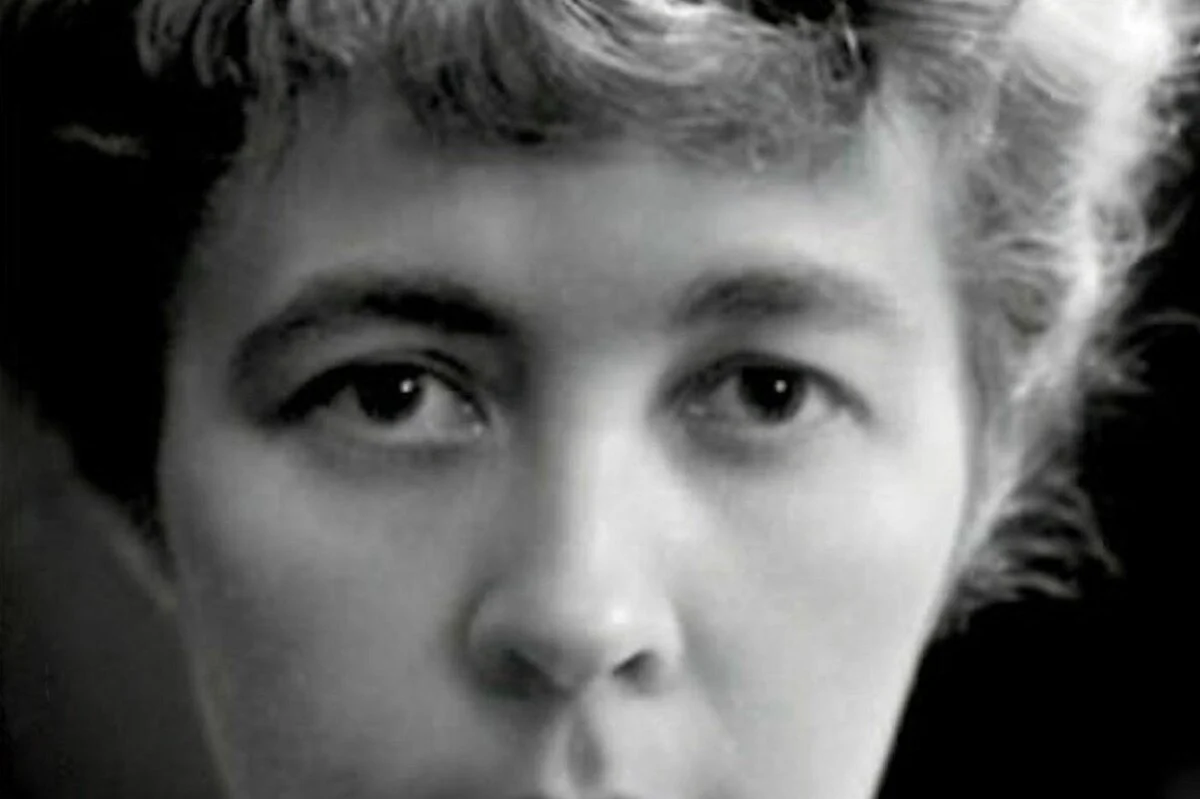
Ilse Losa, born Ilse Lieblich in 1913 in Buer, Melle, remains one of the most compelling, albeit understated, figures in 20th-century European literature. Often dismissed by herself as a writer of limited linguistic capability, Losa’s work—characterized by a stark, "new objectivity" (Neue Sachlichkeit)—stands today as a testament to the endurance of the human spirit under the pressures of exile and persecution. With the recent reissue of her debut novel, O Mundo em que vivi (The World in Which I Lived), by the Wallstein Verlag, the literary world is being invited to re-evaluate a body of work that is as much a therapeutic diary of trauma as it is a masterclass in minimalist fiction.
Losa’s prose does not scream; it whispers with a chilling, clinical precision. Her narratives—often centered on the creeping infiltration of hatred into mundane domestic spaces—capture the essence of the Jewish experience in rural Germany during the twilight of the Weimar Republic.
Chronology of a Displaced Life
To understand the gravity of Losa’s work, one must trace the trajectory of her life, which was defined by flight and the radical act of cultural adaptation.

- 1913: Born Ilse Lieblich in Buer, Germany, into a family of horse traders. Her early life in the Osnabrück region was, by her own admission, marked by a lack of literary tradition; she would later note that "no one told me stories in the parental home."
- 1934: At age 20, feeling the tightening grip of the Gestapo—specifically after being interrogated for calling Hitler a criminal on a postcard—she fled Germany. She boarded the General San Martin in Hamburg, bound for Portugal.
- 1934–1949: The period of profound linguistic and cultural metamorphosis. Arriving in Portugal with no knowledge of the language, she married the architect Arménio Taveiro Losa. Their home in Porto became a vital sanctuary for intellectuals, dissidents, and refugees.
- 1949: Publication of her first novel, O Mundo em que vivi, written in Portuguese—a language she had been speaking for only 15 years.
- 1989: In a final, perhaps overly critical reflection, Losa stated in an interview that her shift to writing in Portuguese was "a great mistake," a sentiment that scholars today categorically reject.
- 2026: The Wallstein Verlag releases a new edition of The World in Which I Lived, once again bringing her work to the forefront of German literary discourse.
The Architecture of Exclusion
At the heart of Losa’s literature is the theme of exclusion—not as a dramatic event, but as a banal, daily occurrence. In The World in Which I Lived, the narrative focuses on the protagonist, Rose Frankfurter, and the subtle, insidious way antisemitism permeates social interactions.
Losa masterfully depicts how the "evil" of the era does not always manifest in violence, but in the awkward pauses during a tea service, the judgmental stares of a lover’s family, or the silence that follows a faux pas. One poignant scene in the novel sees a suitor, Paul, become visibly pale upon discovering that his sister has left a note protesting his association with Rose. The tragedy is that the words are never spoken; the rejection is silent, total, and final.
Losa’s style is uniquely suited to this subject matter. By refusing to over-dramatize, she forces the reader to confront the cold, hard reality of the social ostracization that preceded the physical horrors of the Holocaust.

Supporting Data: Literary Value and Therapeutic Necessity
Ilse Losa’s contribution to literature is multifaceted. While her work serves as a vital historical document of Jewish life in the rural German provinces, it is also a profound study in autofiction.
Therapeutic Origins
It is a documented fact that Losa began writing in the mid-1940s under medical advice to help manage depression. This intersection of personal psychological necessity and the desire to document her own "homelessness" gives her prose a raw, visceral quality. She does not merely write about displacement; she reconstructs the sensation of it through the layering of memory, present-tense reflection, and fragmented timelines.
Cultural Translation
Losa did not only produce original literature; she served as a vital bridge between cultures. She was instrumental in introducing the Portuguese-speaking world to seminal German-language works, including those by Bertolt Brecht, Anna Seghers, Max Frisch, and the Diary of Anne Frank. Her ability to inhabit both the German and Portuguese languages allowed her to translate not just words, but the very soul of the European experience during the mid-century crisis.

Official Perspectives and Critical Reception
Critics and scholars have long grappled with Losa’s self-deprecating views on her own writing. Her insistence that her "lack of linguistic competence" forced her into a "lackluster" style has been widely debunked as a manifestation of the "imposter syndrome" common among those who reinvent their identities in exile.
The Wallstein Verlag’s decision to reissue her work is a recognition of the fact that Losa’s "lack of ornament" was actually a deliberate aesthetic choice—a form of Neue Sachlichkeit that remains as powerful today as it was in 1949. While some critics have noted that the use of a generic Edvard Munch painting on the cover of the new edition feels like a missed opportunity to showcase Losa’s own unique identity, the consensus remains that the text itself is an essential addition to any library of exile literature.
Implications: Why Losa Matters Now
The resurgence of interest in Ilse Losa is not merely an academic exercise; it has deep implications for how we understand the literature of the 20th century.

- Challenging the Canon: Losa’s success in a language she learned as an adult challenges the traditional boundaries of national literatures. She was a German-born, Portuguese-writing author whose work transcends both geographies.
- The Banalization of Evil: Her focus on the "polite" onset of hatred provides a chilling mirror for contemporary society. Her work reminds us that discrimination often begins with silence, social exclusion, and the quiet enforcement of invisible boundaries.
- The Power of the Outsider: Losa’s perspective as an outsider—both in her home country and in her adopted one—granted her a unique vantage point. She saw the social fabric of both nations with the clarity of someone who was never fully integrated into either.
As we look toward the future of European memory, authors like Losa are essential. They provide the "ground-level" view of history that official records often overlook. Her prose, once deemed "flawed" by its own creator, is now seen as the precise, unflinching language of a witness who survived to tell the story—not with hyperbole, but with the quiet, devastating power of truth.
The upcoming reading in the Melle City Library (October 29th) serves as a poignant reminder that even after a century, the voice of Ilse Losa remains a vital component of the German literary landscape. It is time to move past her self-doubts and acknowledge her for what she truly was: a master of the form, an essential historian of the heart, and a writer whose work will continue to speak to the condition of the displaced for generations to come.