Executive Summary: A Security Gap at a Critical Infrastructure Node
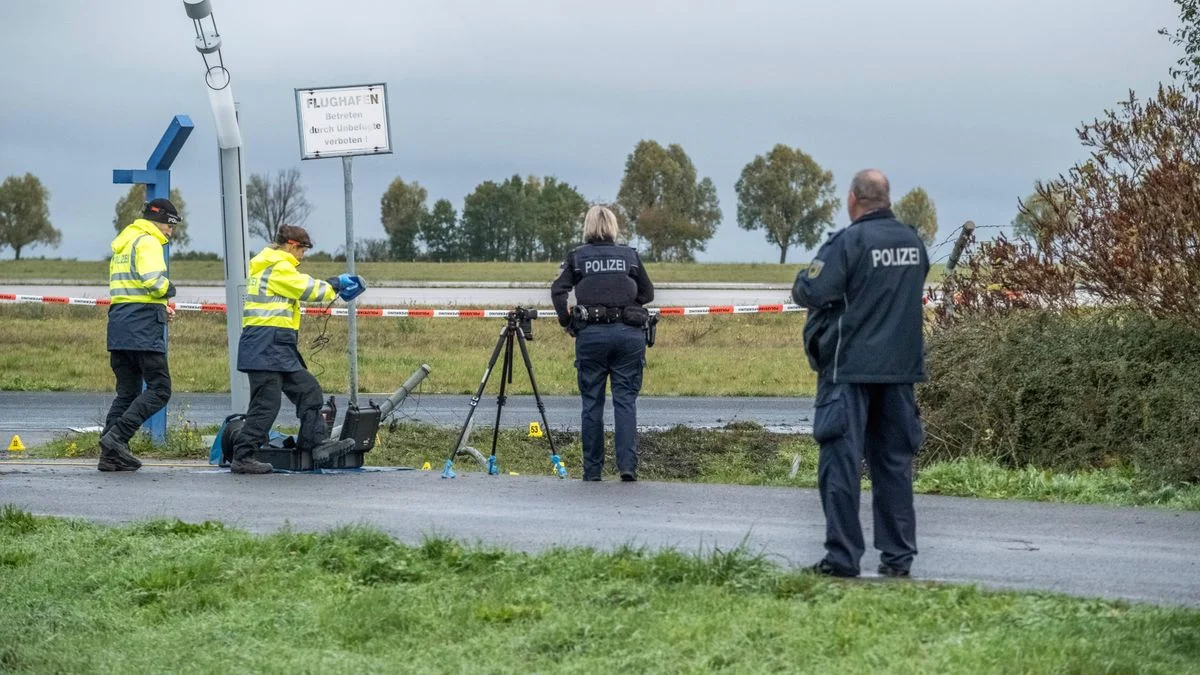
Leipzig/Halle Airport, a pivotal logistics hub in Central Germany and a critical node for both European cargo traffic and specialized aviation operations, has been thrust into the spotlight following a concerning security breach. Authorities are currently scrambling to identify the circumstances surrounding a damaged section of the airport’s perimeter fencing. While preliminary assessments by the Federal Police suggest that a vehicle may have breached the perimeter, the absence of the suspected vehicle at the scene—and the lack of an immediate explanation for the breach—has prompted a wide-reaching investigation.
As of the latest reports, the incident has not resulted in any confirmed intrusions into the sensitive airfield operations area, but the mere possibility of an unauthorized vehicle accessing the facility has reignited debates regarding the security protocols of international airports. The incident has drawn particular attention due to the presence of high-profile, grounded aircraft located within the northern quadrant of the facility, where the breach occurred.
Chronology of the Incident
The discovery of the damage was reported following standard perimeter patrols. While the exact time of the impact remains a subject of forensic analysis, the sequence of events as currently understood by investigators is as follows:
- Discovery: Airport security personnel, conducting routine inspections of the perimeter, identified a compromised section of the fencing along a public-access road adjacent to the airfield.
- Initial Response: Upon discovering the breach, airport authorities immediately alerted the Federal Police (Bundespolizei), who hold jurisdiction over the security of German aviation hubs.
- Site Containment: Security teams secured the immediate area, checking for potential intruders or abandoned evidence. Despite a thorough search of the immediate vicinity and the wider airfield, no vehicle was recovered, and no suspects were detained at the scene.
- Ongoing Investigation: The Federal Police have initiated a multi-faceted investigation. This involves analyzing surveillance footage from the vicinity, checking traffic logs, and assessing whether the breach was a deliberate criminal act, a navigational error by a civilian driver, or a localized accident.
Supporting Data and Technical Context
The damaged section of the fence is located at a specific point on the perimeter that intersects with a public thoroughfare. According to statements provided by airport representatives, this area features an emergency access point designated for external emergency services, such as the local fire department.
Infrastructure Standards
Airport security experts emphasize that the fencing at Leipzig/Halle is designed to meet stringent national and international aviation security standards. These barriers are subjected to regular inspections by civil aviation authorities to ensure they remain compliant with the security requirements of a major international cargo and passenger hub.
It is crucial to note that the damage was restricted to the perimeter fence itself, rather than the reinforced emergency gate. This distinction is significant, as it suggests the point of impact may have been a weaker structural link than the primary access gates, though officials have yet to confirm the exact mechanics of the impact. The airport management has reiterated that the facility remains compliant with security regulations, and the incident is being treated as an isolated anomaly rather than a systemic failure.
The "Antonow" Factor: High-Profile Assets Under Scrutiny
One of the primary reasons this incident has garnered national attention is the unique composition of the aircraft currently parked at Leipzig/Halle. Since the implementation of European Union sanctions against Russia in 2022, three Russian Antonow cargo aircraft have been effectively grounded at the airport, prohibited from takeoff.
Spatial Distribution
The presence of these aircraft has naturally led to speculation regarding the intent behind the breach. However, airport authorities have moved quickly to clarify the geography of the site:
- The Northern Sector: The breach occurred within the northern quadrant of the airport, the same general area where the Russian Antonow planes are stationed.
- The Southern Sector: Conversely, the Ukrainian Antonow transport fleet, which is also present at the airport, is located in the southern sector.
Airport spokespeople have explicitly stated that the southern sector was entirely unaffected by the incident. Furthermore, they emphasized that while the breach and the grounded Russian aircraft share a general area, they are not in immediate proximity to one another. The airport has declined to provide exact distances between the breach and the grounded aircraft, citing ongoing security protocols, but has characterized the distance as significant enough to minimize the risk of a direct threat to the assets in the immediate aftermath of the breach.
Official Responses and Investigative Scope
The Federal Police (Bundespolizei) have taken the lead in the investigation, working in coordination with local law enforcement and airport security. A spokesperson for the Federal Police stated to the German press agency (dpa) that the investigation is "open-ended," meaning they are not ruling out any possibilities.
The Theory of the "Accidental Intruder"
While the idea of a deliberate security breach is the most alarming, investigators are currently giving weight to the theory of a vehicular accident. Given the location of the fence along a public road, it is entirely possible that a civilian driver lost control of their vehicle, struck the fence, and subsequently fled the scene due to panic or fear of legal repercussions.
"We are investigating in all directions," the police spokesperson noted. "A traffic accident is just as much a part of our considerations as other scenarios."
Security Policy Revisions
The airport administration has pledged full cooperation with the authorities. When asked if the incident would trigger a complete overhaul of security protocols, a spokesperson noted that the airport already adheres to a rigorous, multi-layered security framework. Any changes to the current system would be contingent upon the findings of the current investigation and potential recommendations from the Federal Ministry of the Interior and civil aviation security agencies.
Implications: The Broader Security Landscape
The incident at Leipzig/Halle serves as a stark reminder of the complexities involved in securing major transportation infrastructure. Airports are unique environments that must balance the need for high-speed logistics and public access with the absolute necessity of restricted, secure zones.
The Fragility of Perimeter Security
Perimeter security at a major airport is inherently challenging. Thousands of meters of fencing must be maintained, monitored, and kept clear of obstacles. When an incident occurs, it triggers a cascade of questions:
- Response Time: How quickly did the alarm systems trigger?
- Detection Gaps: Was the damage detected immediately, or was it only found during the next scheduled patrol?
- Surveillance Coverage: Were there blind spots in the CCTV network that allowed a vehicle to approach and strike the fence without being clearly identified?
Geopolitical Sensitivity
The presence of sanctioned Russian aircraft, combined with the presence of Ukrainian strategic transport assets, places Leipzig/Halle in a sensitive geopolitical position. In an era of heightened tensions, any incident involving critical infrastructure—even one that may turn out to be a mundane traffic accident—is subject to extreme scrutiny. The potential for such sites to become targets for sabotage or symbolic protest is a constant concern for security planners.
Public Trust and Transparency
For the local community and the passengers passing through Leipzig/Halle, transparency is vital. The airport’s decision to communicate the distinction between the northern and southern sectors and to address the status of the emergency access points is a positive step in maintaining public confidence. As the investigation progresses, the release of findings—even if those findings confirm a non-malicious cause—will be essential to maintaining the integrity of the facility’s reputation.
Conclusion: Awaiting Forensic Clarity
As the investigation into the breach at Leipzig/Halle Airport continues, the public and the aviation industry await definitive answers. Whether the incident was the result of a negligent driver veering off a public road or a more targeted attempt to test the facility’s security, the outcome serves as a critical stress test for the airport’s emergency procedures.
For now, security remains heightened, and patrols are likely to be intensified in the northern sector. The authorities are continuing to scour the surrounding regions for a vehicle exhibiting damage consistent with a fence impact. The incident highlights the enduring challenge of securing vast perimeters in an open society, where public infrastructure and high-security zones must constantly intersect.
The investigation is expected to take several weeks as forensic teams analyze the structural damage and review digital footprints. Until such time, the breach remains a "mysterious" event, one that underscores the vulnerability of even the most well-regulated critical infrastructure. The airport continues to operate normally, maintaining its role as a vital hub for international cargo and passenger travel, while the silence of the investigators speaks to the gravity with which they view this unexplained intrusion.