

For years, the title of the world’s loudest bird has been held by the White Bellbird (Procnias albus), a creature of the Amazon whose mating calls have been measured at an ear-splitting 125.4 decibels—a sound profile comparable to a roaring chainsaw. However, in the high-stakes world of evolutionary acoustics, records are made to be broken. A groundbreaking study published in the journal Evolution has introduced two new contenders to the throne: the Red-legged Seriema and the Screaming Piha’s close relative, the Bare-throated Bellbird.
As researchers from the University of Massachusetts Amherst and their colleagues in Brazil push the boundaries of bioacoustics, they are discovering that the avian world is far noisier than previously imagined. With measurements reaching as high as 131 decibels, these birds are not merely chirping; they are broadcasting at a volume akin to a pneumatic drill, challenging our understanding of physical constraints and evolutionary biology.
The Main Facts: Defining the Limits of Avian Sound
The recent study, led by biologist Jeff Podos and researcher João Menezes, involved the analysis of 123 distinct bird vocalizations. The research aims to move beyond anecdotal observations, employing rigorous scientific standards to quantify just how loud these animals can get.
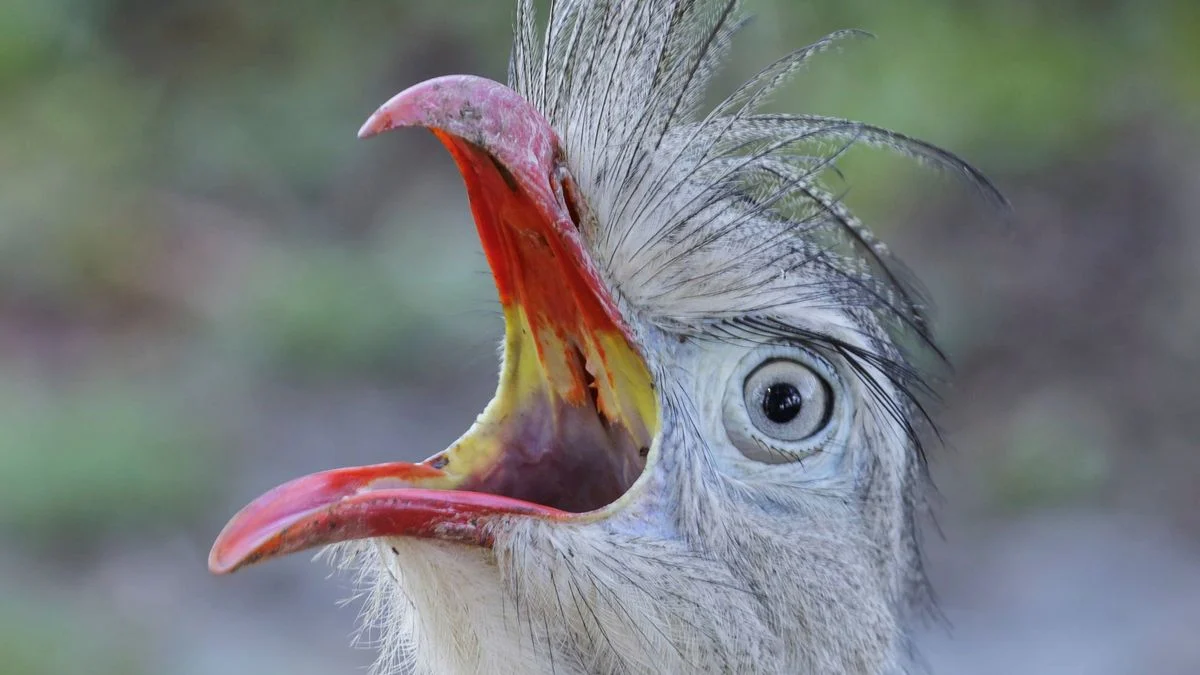
While the White Bellbird remains the gold standard for sustained, record-breaking performance, the new data suggests that the Red-legged Seriema and the Bare-throated Bellbird possess vocal capacities that, under certain conditions, surpass current records. Specifically, the Red-legged Seriema has been clocked at approximately 121 decibels, while the Bare-throated Bellbird has produced individual calls reaching a staggering 131 decibels.

However, the scientific community remains cautious. Determining the "loudest" bird is not as simple as checking a speedometer. Does the record belong to the bird with the highest single peak in decibels, or the one that maintains the highest average volume? Does the duration of the call matter, or the frequency at which it is repeated? These are the questions currently defining the debate.
A Chronological Perspective: From Silence to Sonic Boom
The journey to understand avian decibels has evolved significantly over the last decade. Historically, ornithologists struggled with the "inverse square law" of sound—the principle that sound intensity drops off rapidly as distance increases. Without precise tools to measure the exact distance between the bird and the microphone, early sound recordings were often approximations, leaving the true power of these vocalizations largely a mystery.
In 2019, the scientific world was captivated by the discovery of the White Bellbird’s extreme volume. This marked a turning point, signaling that birds were capable of producing sounds far more intense than anyone had anticipated. Following this, Podos and Menezes embarked on a more comprehensive mission. By utilizing technology borrowed from fields as diverse as professional golf and industrial safety, they have been able to standardize their data. Using laser rangefinders to calculate the exact distance to the bird and high-precision sound level meters, the team has been able to normalize their recordings to a standardized distance of one meter. This methodological shift has allowed them to compare species across disparate habitats, from the forests of Massachusetts to the dense jungles of Brazil.
Supporting Data: The Anatomy of a Scream
The researchers’ investigation has yielded more than just a list of loud birds; it has provided a look into the "hardware" required to produce such sounds. The study suggests that extreme volume is rarely an accident of evolution. Instead, it is the result of specific physical adaptations.

The loudest birds identified in the study share several distinct characteristics:
- Muscularity: These birds often possess larger, more robust muscles in their syrinx (the bird equivalent of a vocal box). This muscle mass allows for a more forceful compression of air, turning the bird’s body into a biological bellows.
- Anatomical Apertures: A common thread among the loudest species is a wider gape or beak opening. This anatomical feature acts like a megaphone, allowing the sound waves to project outward with less resistance and higher amplitude.
- Body Size: There is a clear correlation between the overall size of the bird and the potential volume of its call, suggesting that larger birds have the physical capital required to sustain high-energy vocalizations.
Of the 123 species analyzed, 113 had never before had their sound intensity formally recorded. The spectrum of sound is vast—ranging from the subtle 64-decibel hum of a hummingbird to the thunderous 131-decibel blasts of the Bare-throated Bellbird.
Official Responses and Scientific Nuance
The researchers themselves remain modest about the potential for a "new record." João Menezes, speaking to media outlets, emphasized that the goal of the study was never to produce a sensationalist headline, but to understand the "how" and "why" of bird communication.
"We know the mechanics now," Menezes explained. "We know that larger bodies and wider beaks are the secret to these intense volumes. But the question of why they need to be this loud remains a subject of intense debate."

The evolutionary purpose of such volume is the "missing link" in the study. Are these birds signaling to mates from across vast distances? Are they engaging in a form of acoustic warfare to defend territory? Or is it a runaway evolutionary trait, where females prefer the loudest males regardless of the energy cost? Because these birds are often found in environments where sound is muffled by dense vegetation, high-intensity calls may be an adaptation to ensure the message gets through the "green wall" of the rainforest.
Implications for Evolutionary Biology
The implications of this research extend far beyond the classification of record-holders. By studying these extreme examples, scientists are gaining insight into the limitations of vertebrate biology. There is a "ceiling" to how much air a small animal can push through its throat before tissue damage occurs. The fact that these birds have evolved to operate at the absolute limit of these physical constraints suggests that the survival benefits—such as attracting a mate or deterring a predator—must be enormous.
Furthermore, this study highlights the importance of interdisciplinary research. By importing tools from the golf course (laser rangefinders) and the factory floor (industrial sound meters), biologists have been able to overcome a decades-old technical barrier. This cross-pollination of methods is likely to lead to further breakthroughs in animal behavior studies.
As the team continues to gather data, they hope to expand their scope to include a much larger variety of species. With only 123 species currently documented in this specific manner, the avian world likely holds many more secrets. The "loudest bird" title may change hands again, but the true prize is the knowledge that the natural world is capable of producing, and sustaining, sounds that rival the noise of human industrialization.

In the end, whether the Bare-throated Bellbird or the White Bellbird ultimately claims the throne is secondary to the fact that we are finally listening—and measuring—with the accuracy that these spectacular creatures deserve. The quest continues, not just for the loudest, but for the most profound truths hidden in the cries of the wild.




















